

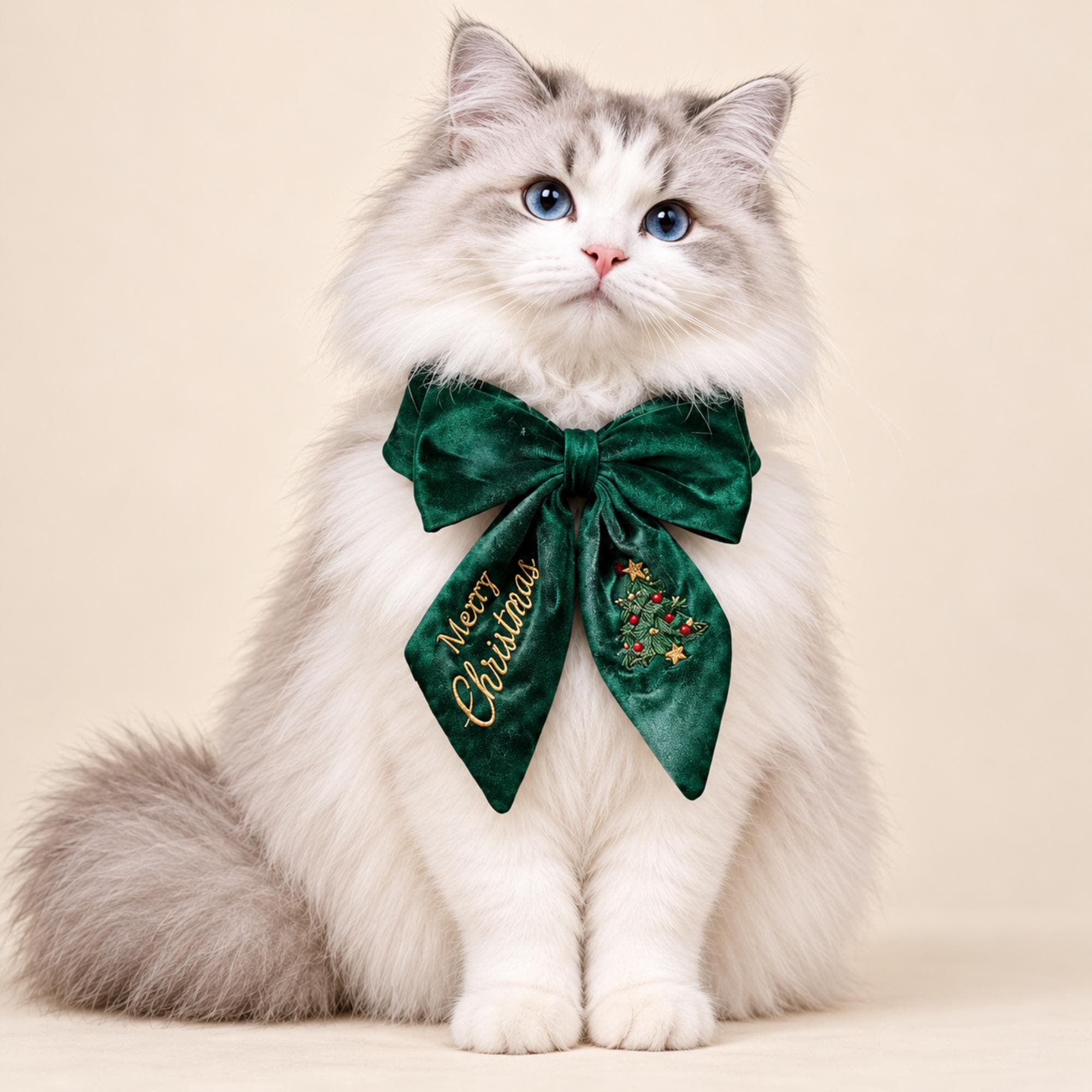
Ruffles and bows give a pet harness a dressed-up look, but a harness still has a practical job: it should fit securely and allow natural movement. When choosing one, look beyond its trim. Consider where the straps sit, how the harness closes, whether it can be adjusted, and whether your pet accepts wearing it. A charming detail is worthwhile only if the underlying fit and function suit the animal and the outing.
This guide covers fit, design, safe use, and styling for ruffle and bow harnesses. It also distinguishes walking harnesses from decorative neckwear. Catalog examples such as jeweled chokers and crystal collars can help illustrate different looks, but they are described as decorative neck accessories—not walking restraints or substitutes for a properly designed harness.
Start with the harness, not the decoration
A ruffle or bow can draw the eye, yet the harness’s construction deserves first consideration. Check how it goes on, where the straps cross the chest and body, and how the leash attaches. Look for adjustment points that let you achieve a secure fit without squeezing. The trim should not cover a buckle, interfere with adjustments, or make it hard to inspect the harness before use.
Think about the setting, too. A large bow may suit a short portrait session, while a low-profile ruffle may be less intrusive for a casual walk. Neither style automatically makes a harness more comfortable or functional. Your pet’s proportions, coat, gait, and response matter more than the size of the decorative feature. If the design distracts you from checking fit, pause and assess the harness without focusing on its styling.
Measure carefully and check the fit
Measure your pet according to the harness maker’s instructions, using a flexible tape and taking each requested measurement at the specified point. Choose by the animal’s measurements rather than relying on breed or weight alone. If the product provides a size chart, compare the numbers closely and contact the seller if a measurement falls between sizes or the instructions are unclear. Do not guess based on a photo or a previous accessory.
After putting the harness on, check that it sits as intended and does not press into the throat, armpits, or other sensitive areas. Confirm closures are secured and adjustment points remain in place when your pet moves. The decorative trim should not hide a twisted strap or a poorly seated buckle. Recheck the fit after activity, since movement can shift the harness. A harness that slips, rubs, or restricts motion is not a good choice.
Choose ruffles and bows for the right occasion
Ruffles create a soft, gathered outline and can add visual interest around the chest or back, depending on the design. A bow offers a more defined accent and may stand out in a portrait. Consider how the decoration sits when your pet turns, lies down, or walks. A feature that looks balanced while the animal is standing still might fold, swing, or catch against nearby objects during ordinary movement.
For a family photo or celebration, a more noticeable detail may be welcome if your pet tolerates it and the harness remains properly fitted. For routine walks, keep the setting in mind: trim should not snag on branches, furniture, or other surroundings. There is no need to dress a pet for every occasion. A plain, correctly fitted harness—or no outfit during a particular activity—may be the better choice.
Keep decorative collars separate from walking gear
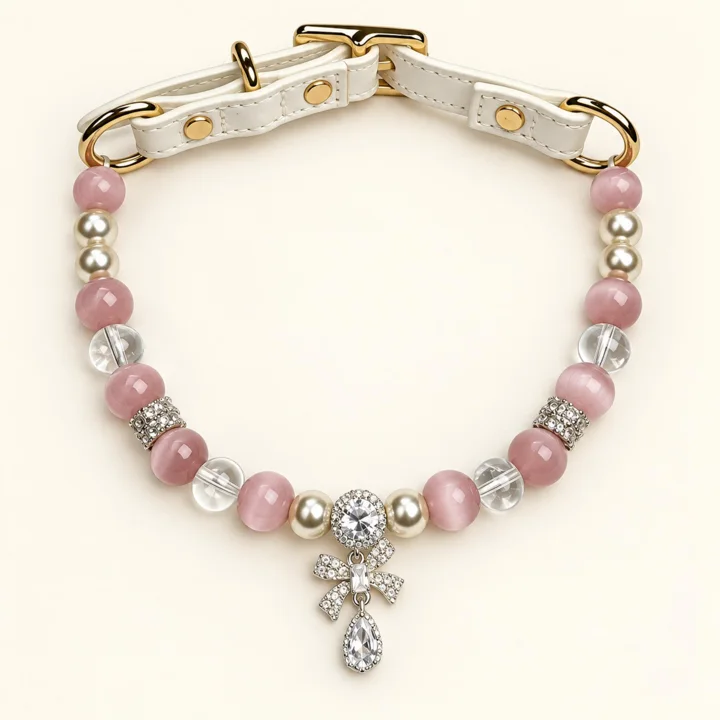
A necklace-style collar, choker, or jeweled accessory is not a walking harness. For example, Paw Dazzle’s Boho Pet Choker has a woven band, decorative stone settings, and tassels; its description presents it as a neck accessory for styling and occasions. The Pearl Dog Collar with Crystal Beads is likewise described as decorative wear. These are examples of neckwear, not evidence that a decorative accessory can safely manage leash pressure.
The Aqua Crystal Dog Collar pairs an ivory-white collar with aqua-colored decorative beads, clear faceted beads, and a heart-shaped centerpiece. Its jewelry-inspired design can complement a dressed-up look, but it is still a collar, not a harness. Do not attach a leash to decorative neckwear unless its description explicitly identifies it as walking equipment. When a walk calls for a harness, use a product designed and described for that purpose.
Make introductions brief and supervised
Let your pet inspect a new harness before attempting to put it on. Move slowly, use a calm voice, and follow the product’s instructions for dressing and fastening. For a first try, keep the session short and supervised. Watch for repeated attempts to remove it, freezing, tucked posture, agitation, or changes in movement. A pet’s tolerance can vary from one day to another, so one successful fitting does not settle the question for every occasion.
Stop if your pet seems uncomfortable, and remove the harness if doing so is safe. Do not force an animal to wear it for a photograph or event. Check that bows, ruffles, and straps do not obstruct the eyes, ears, mouth, or normal movement. Stay close while the harness is on, particularly when decorative details could be mouthed or caught. If your pet does not accept the outfit, choose a simple photo without it.
Match the style without overloading the look
A harness with prominent ruffles or a bow is already a focal point. Coordinate any additional accessories by color or mood rather than piling on several statement pieces. A soft, simple background can make a decorative harness easier to see in photos; a busy outfit or backdrop may compete with its detail. For an event, consider the setting and how long the pet will be dressed, not only the finished picture.
Decorative neckwear can offer a separate styling option for portraits when it is appropriate for the individual pet. The Boho Pet Choker, with its geometric band and tassel fringe, has a different visual character from the Pearl Dog Collar’s bead-and-charm design. Neither needs to be paired with a bow harness. If you do combine accessories, ensure they do not overlap, tangle, obstruct movement, or distract you from monitoring the pet.
Inspect details and follow care instructions
Before each use, look over the straps, seams, fasteners, adjustment points, leash attachment, and decorative trim. Check for loose threads, damaged closures, shifting embellishments, or anything sharp or rough that could touch your pet. A bow that has come loose or a ruffle that catches on a strap can change how the harness sits. Do not use a damaged item; consult its product information or the seller about appropriate next steps.
Follow the care instructions supplied for the specific harness. Do not assume that a decorative fabric, jeweled accent, or closure can be washed or dried in a particular way without instructions. After cleaning, inspect the item again before use. Store it where a pet cannot chew or swallow small decorative pieces. If the product description does not explain an important feature or care requirement, ask before purchasing rather than relying on assumptions.
Account for cats and individual preferences
Cats may reject apparel, and a harness that fits a dog is not automatically suitable for a cat. Follow the specific product’s sizing and use guidance, introduce it gradually, and supervise closely. Stop at signs of discomfort or restricted movement. Never leave a dressed cat unattended, and do not let decorative pieces obstruct vision or interfere with normal grooming and movement. If the cat resists, leave the outfit off.
The same individual approach applies to dogs: age, body shape, coat, mobility, and experience with clothing can all affect acceptance. Try a brief, calm fitting at home before planning to wear the harness somewhere busy. If your pet moves oddly, repeatedly paws at the harness, or cannot settle, remove it and reassess. A photo opportunity or matching outfit is optional; your pet’s response should guide the decision.
A thoughtful next step
Choose a ruffle or bow harness by checking its intended use, sizing guidance, construction, and fit before weighing its appearance. Inspect it regularly, supervise your pet, and stop if the harness causes discomfort or interferes with movement. Keep decorative collars and chokers separate from walking gear unless their descriptions explicitly say otherwise. The best styling choice is one your pet can tolerate safely—and sometimes that means leaving the outfit off.
Explore our Collars & Accessories collection, check measuring and fit guidance, or ask us about a product detail before choosing.
Pieces mentioned in this guide
These are catalog examples, not a promise of fit or availability. Read each listing and confirm the details before ordering.