

A festive bow or bright collar can make a pet look ready for a family photo, but appearance and walking function are different jobs. Decorative neckwear is chosen for its look; everyday walking gear is chosen to connect a pet safely to a leash and give the person handling it control. Treating the two as interchangeable can lead to a loose accessory, an awkward walk, or a pet wearing something that gets in the way.
The right choice depends on the occasion, the animal, and what the accessory is designed to do. A decorative collar may suit a short, supervised celebration, while a properly fitted walking setup is needed for outings that involve a leash. Some pets are happiest wearing no decoration at all. Knowing the distinction helps you plan for both style and practical needs without expecting one item to do everything.
Two accessories, two different jobs
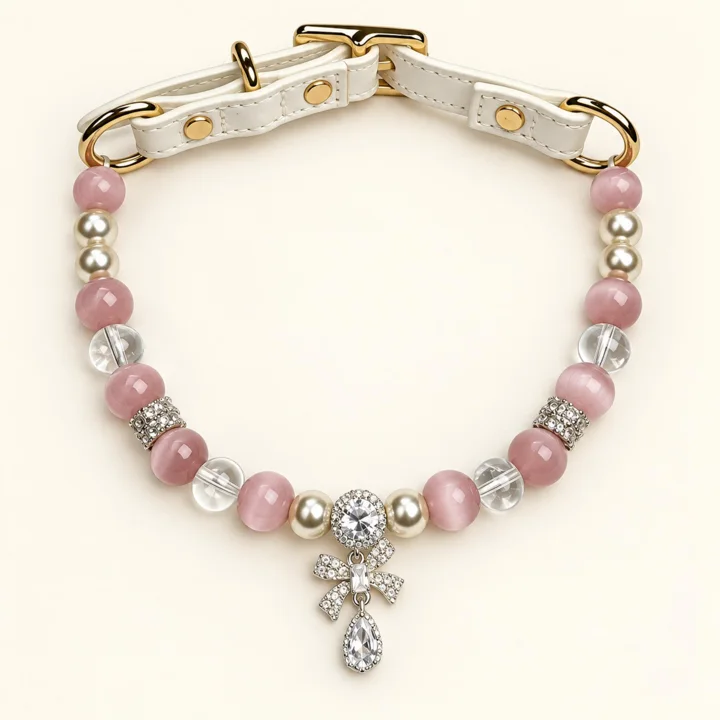
A decorative collar or neck accessory adds visual detail. It might feature a bow, bell, seasonal colors, or another embellishment intended to complete a look. An everyday walking setup, by contrast, is the equipment used to attach a leash and guide a pet outdoors. Depending on the animal and the handler’s routine, that setup may involve a collar designed for leash use or a harness, along with a leash. Decoration alone does not establish that an item is suitable for restraint.
That difference matters even when both items sit around the neck. A statement bow can shift, dangle, or catch on surrounding objects, and a decorative clasp should not be assumed to have a particular safety function. Before a walk, use gear explicitly intended for that purpose and check that it fits. Keep special-occasion neckwear separate unless its product details clearly describe it as walking equipment and its fit is appropriate for your pet.
Match the gear to the outing
For a neighborhood walk, think first about the route, your pet’s behavior, and the equipment you normally use to manage the leash. The walking setup should be familiar, correctly fitted, and free of damage before you leave. A decorative piece can be left at home, or used for a brief photo before the walk, rather than added to equipment if it could tangle with a leash or interfere with your grip.
A quiet indoor gathering or a few supervised portraits may be a better setting for elaborate neckwear. For example, a Christmas velvet bow collar is described as a decorative accessory for holiday occasions and photographs. Its festive appearance may suit a seasonal portrait, but that description does not make it a leash attachment. Remove it before an outing if it is not designed for walking or if its shape, tails, or bell seem likely to bother your pet.
Fit is about more than neck measurement
Start with the fit guidance supplied for the specific item rather than relying on a general size label. Measure as directed, compare the result with the listing information, and consider the accessory’s shape and weight as well as its circumference. A structured bow, long decorative tails, or a bell may sit differently from a plain collar. If you cannot confirm that the fit is appropriate, do not guess or force the item onto your pet.
Once it is on, look for signs that the accessory is pressing, sliding, restricting movement, or catching on fur. Watch how your pet turns its head, walks, and rests. A piece that seems acceptable while standing still may become bothersome once the animal moves. Take it off if it shifts toward the face, limits movement, or prompts repeated scratching or attempts to remove it. Supervise wear, and choose no outfit when that is the kinder option.
Keep identification separate from decoration
Identification is a practical consideration, not just a styling detail. If your pet wears a collar for identification, make sure the contact information is accurate and readable. A decorative piece should not be the only place you expect someone to find a way to reach you unless it actually carries suitable identification. Likewise, do not assume every fashion collar has an attachment point or that its construction is intended to hold a leash or tag securely.
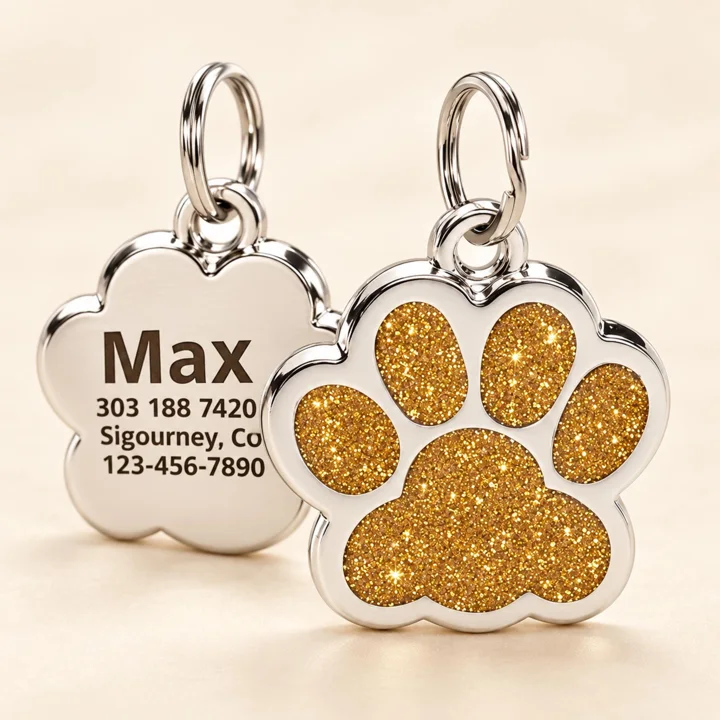
A personalized glitter paw pet ID tag is one catalog example of a separate identification accessory. Its description says the back can be engraved with a pet’s name and contact details, and that it includes an attachment ring. Check the product instructions and confirm the engraving information before ordering. Keep any contact details current, and attach the tag to an appropriate collar rather than assuming a decorative bow or bib can serve as the tag’s support.
Cats may have different limits
Cats can be particularly wary of clothing and neck accessories, even if they tolerate a collar at other times. A bell, dangling tails, or an unfamiliar shape may draw attention or cause irritation. Introduce an accessory briefly and calmly, without holding the cat in place or turning the moment into a struggle. If the cat freezes, crouches, bats at the item, or tries to escape it, remove it and give the animal space.
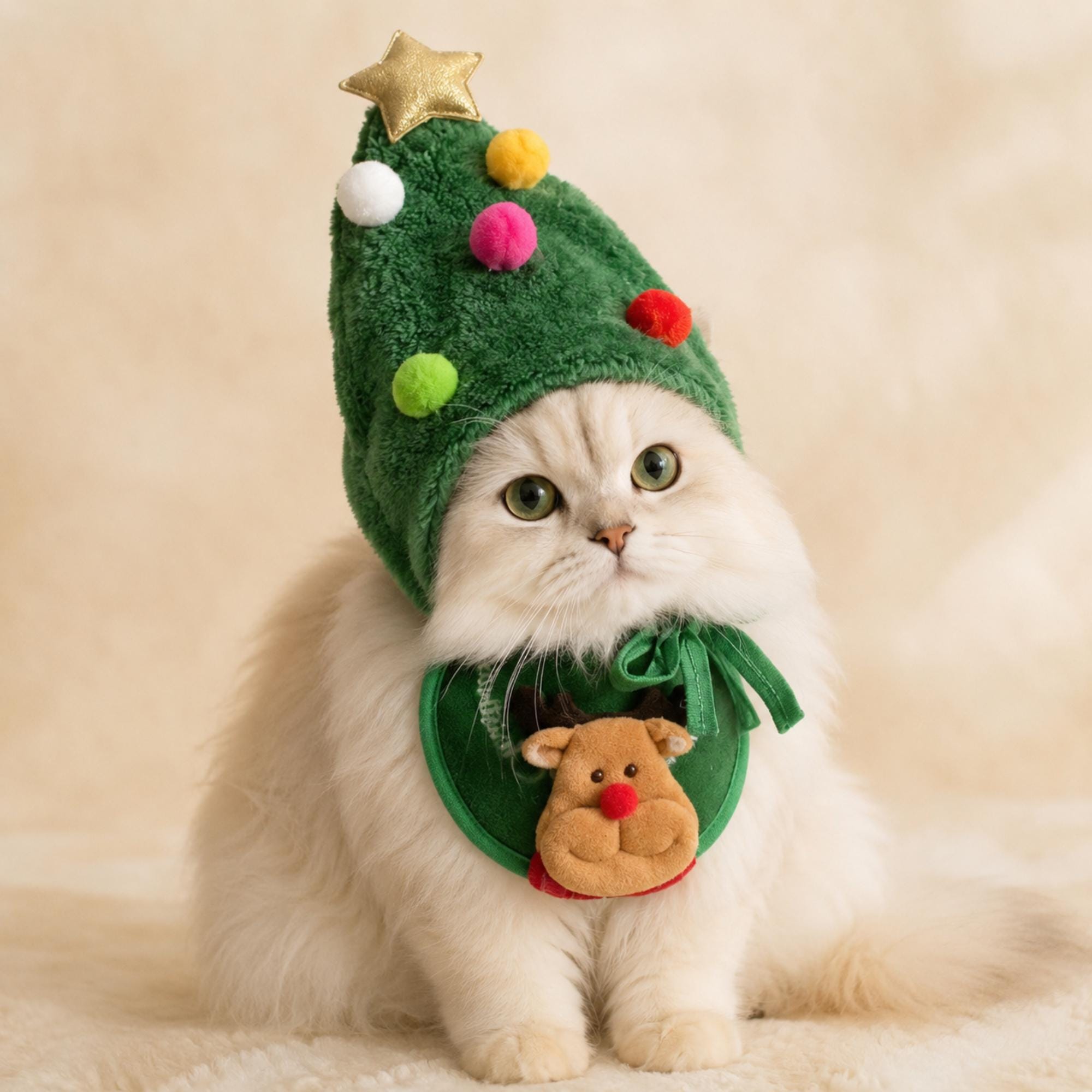
A Christmas tree hat and reindeer bib set is described for appropriately sized cats and small dogs, making it an example of occasion wear rather than ordinary walking gear. Suitability in a product description does not mean every cat will accept it. Keep wear supervised, ensure the hat or bib does not obstruct vision or movement, and stop if the cat appears uncomfortable. A quick photo without an outfit may be the better choice.
Avoid tangles and distractions
Extra decoration can create practical complications when a pet is moving through a busy room or near a leash. Long tails may swing into the pet’s face; a dangling bell or trim may catch on a crate, furniture, or another animal. Before putting on a decorative accessory, consider where the pet will be and what it may brush against. Do not leave a pet unattended in an item that could snag, and remove it before crating or other situations where it might become trapped.
Walking gear also needs a clear path of movement. Check that straps, tags, and leash attachments are not twisted or rubbing, and that the pet can walk without decoration covering its eyes or restricting the neck and shoulders. Keep the leash clipped only to equipment intended to bear that connection. If you notice a pet repeatedly turning to bite at an accessory or becoming distracted by it, pause and remove the extra item rather than trying to finish the outing with it on.
Plan for the occasion, not just the photo
A photo session is usually short, but a party can last for hours and involve visitors, food, open doors, and other animals. Decide in advance when the decorative piece will be worn and when it will come off. Take pictures early, while the room is calm, then remove the accessory if your pet wants to nap, eat, play, or move away from the activity. A costume does not need to stay on for the whole event to serve its purpose.
Choose a simpler look when the setting is active or crowded. An elaborate holiday bow might be suitable for a supervised portrait, while a low-key family visit may be easier for the pet without extra neckwear. Keep everyday walking equipment available for bathroom breaks or walks, and do not swap in an ornamental collar just because it looks more coordinated. Comfort and reliable handling matter more than matching the room’s decorations.
Check details before you buy
Read the product description for what the item is and how it is intended to be used. Look for whether it is decorative, whether sizing instructions are provided, and whether any attachment or personalization details are specified. Do not infer a breakaway clasp, leash rating, special cleaning method, or particular material when the listing does not say so. When a measurement or feature is unclear, ask for confirmation before ordering instead of relying on a photograph.
Personalized items deserve an extra review because a small typing error can make contact details less useful. Confirm spelling, phone number, and any optional address or message exactly as you want them shown. For neck accessories, compare your pet’s measurement with the supplied size chart, and account for the item’s shape rather than choosing by breed alone. If the listing does not answer a safety or fit question that affects your decision, wait for clarification.
A thoughtful next step
Keep the distinction simple: decorative neckwear is for appearance, while everyday walking gear is for managing a leash and should be chosen for that job. Check fit and product details, keep identification current, supervise any special-occasion accessory, and remove it at the first sign of discomfort or obstruction. When the setting or the pet calls for it, skip the decoration altogether. A brief, comfortable photo is a better result than an outfit that gets in the way.
Explore our Collars & Accessories collection, check measuring and fit guidance, or ask us about a product detail before choosing.
Pieces mentioned in this guide
These are catalog examples, not a promise of fit or availability. Read each listing and confirm the details before ordering.