

A bandana and collar can work together as a coordinated outfit, but the best pairing is not always the most elaborate one. Color, pattern, fabric bulk, and the way each piece sits around the neck all affect the finished look. A little planning helps the bandana stand out without hiding the collar or crowding your pet.
Start with the collar your pet actually wears, then treat the bandana as an optional decorative layer. Check that both pieces fit and stay clear of the face, throat, and legs. For cats in particular, clothing and accessories are not worth forcing: if your cat resists or seems uncomfortable, remove the bandana and let the collar—or no outfit—be enough.
Decide which piece should lead
Choose one focal point before combining anything. If the collar has a bright color, a large bow, or decorative details, use a quieter bandana that supports rather than competes with it. If the collar is plain, a patterned bandana can take center stage. This simple decision keeps the pairing intentional, especially in photos where two equally bold pieces can merge into visual clutter.
Think about where the outfit will be seen, too. A small, simple pattern may read clearly in a close-up, while a bold color contrast is easier to notice in a full-body picture. For a family gathering or portrait, coordinate with the setting without matching every detail. Your pet’s markings and the collar’s shape should still be visible.
Build a color combination that feels balanced
A reliable starting point is one shared color between the bandana and collar. For example, a navy bandana can pick up a navy accent in a patterned collar, while the remaining colors stay different. You can also pair neighboring shades, such as rust and warm brown, for a softer effect. If you prefer contrast, keep one piece mostly neutral so the brighter color has room to show.
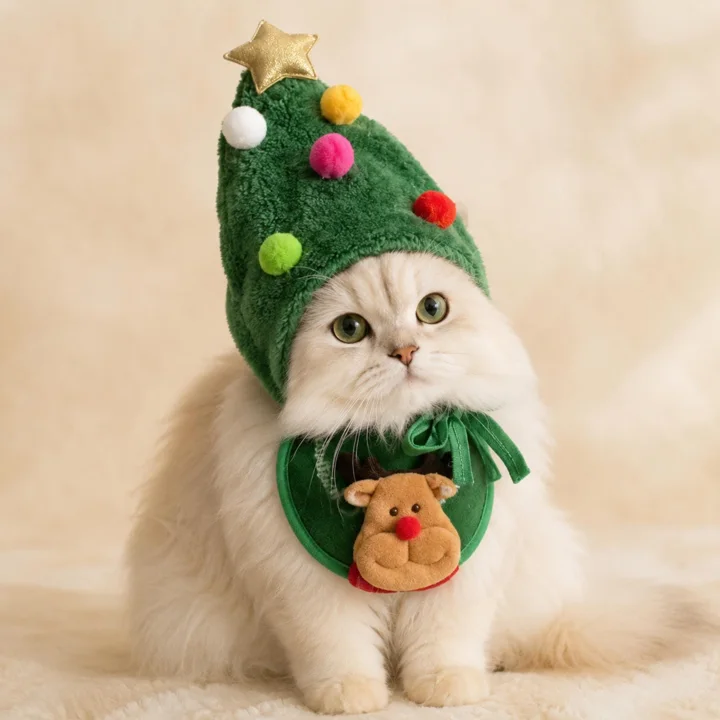
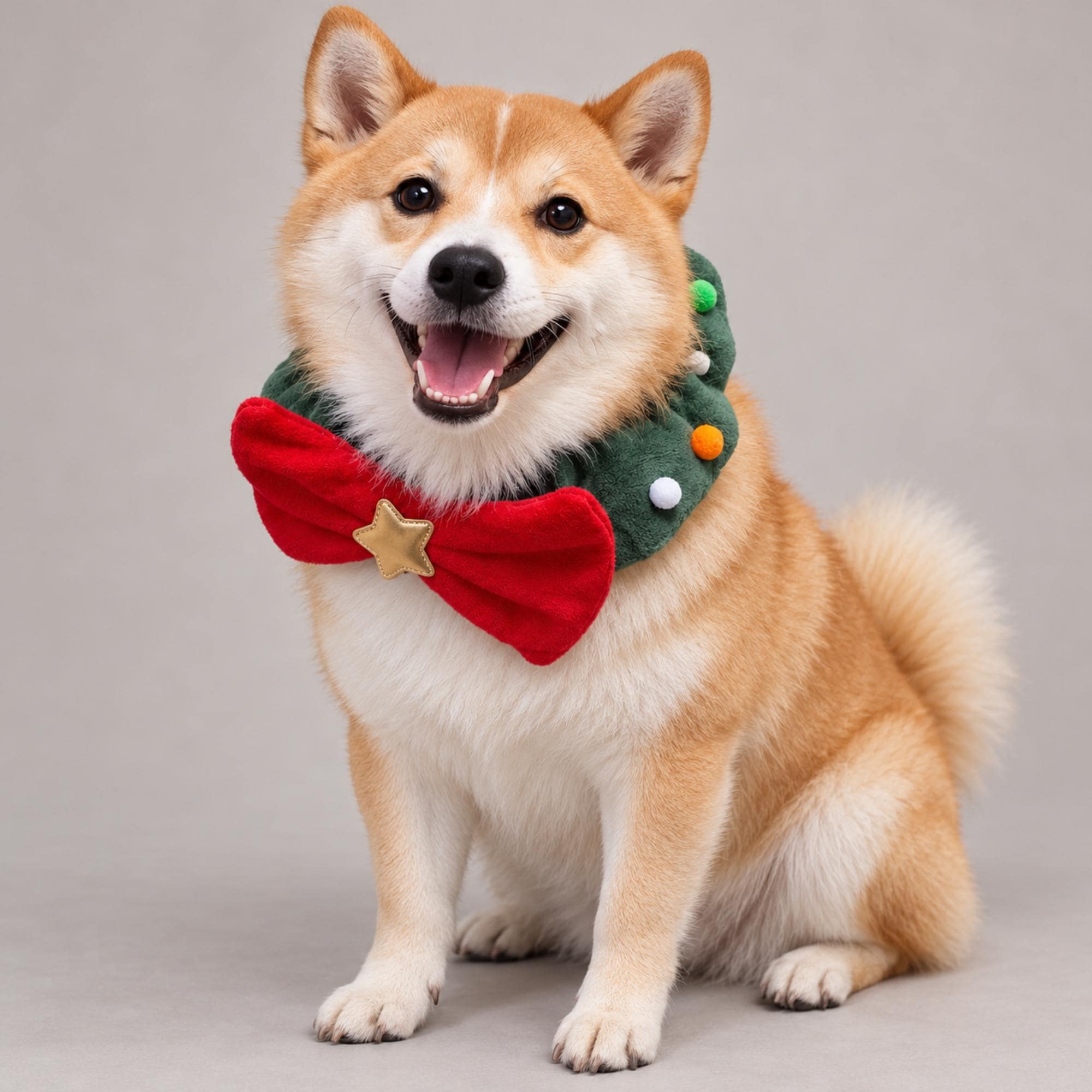
Holiday styling offers an easy color cue. A red-and-green collar can pair with a solid cream bandana, or a simple red bandana can echo an oversized red bow without adding another print. The Christmas Wreath Pet Collar, with its green gathered shape, red bow, gold star, and pom-pom accents, already has several visual elements; a restrained bandana would let those details remain legible.
Mix patterns with a light touch
Two patterns can work together when their scale or visual weight differs. Try a small check on one piece with a larger, more open print on the other, or combine a fine stripe with a bandana that has one central motif. Keeping a color in common helps the mix feel connected. If both patterns are dense and multicolored, step back and see whether either piece disappears.
Texture counts as visual detail, even when a collar has no print. A woven band, shiny decoration, or fringe can make a patterned bandana feel busy. The Boho Pet Choker, for instance, has geometric weaving, decorative stones, and tassels. It may pair more cleanly with a plain bandana than with another intricate pattern. Treat each catalog piece as a styling example, not as a walking restraint.
Check scale and placement on your pet
A bandana should suit your pet’s frame and the collar’s width. A large triangle can overwhelm a small neck, while a tiny print may vanish against a broad chest. Fold or position the bandana so its visible area sits neatly below the collar, rather than bunching beneath a buckle or gathering into thick layers. The goal is a clear outline, not maximum fabric.
Look at the pairing from the front and both sides. Make sure the bandana does not cover identification information, block your view of the collar’s fit, or hang where it can catch on nearby objects. Keep fabric away from the mouth and eyes, and check that your pet can turn the head and move naturally. If the pieces shift, loosen the styling or remove one.
Fit both pieces independently
A good-looking combination still needs a careful fit. Measure your pet’s neck and follow the sizing information for each item rather than choosing by breed or appearance alone. A bandana should not be tied tightly, and adding fabric should not make the collar feel snug. Check the fit again after arranging the layers, since a knot or fold can change how everything sits.
Decorative neckwear is not a substitute for a walking collar or harness, and a decorative collar should not be assumed to have a breakaway clasp or a safety rating. Do not attach a leash to a bandana, choker, or decorative collar unless its description specifically identifies it as walking equipment. Supervise your pet while dressed and remove loose or snag-prone pieces when you cannot keep an eye on them.
Match the level of dress to the occasion
For a casual outing or everyday photo, a plain bandana with a simple collar usually feels more natural than a full set of accessories. For a birthday or portrait, you might choose a stronger contrast or a more distinctive pattern. Keep the setting in mind: a busy backdrop calls for simpler styling, while a neutral wall can make a colorful pairing easier to appreciate.
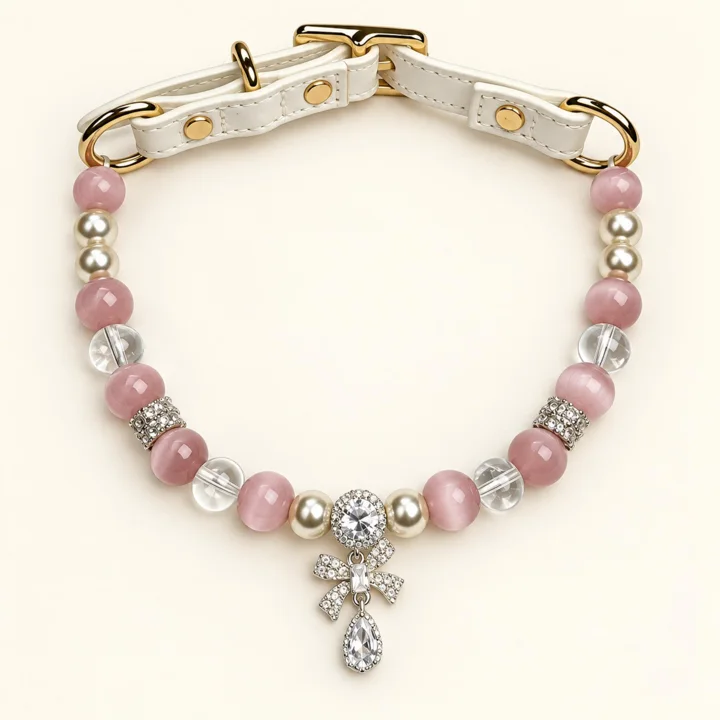
A jewelry-inspired piece changes the balance. The Pearl Dog Collar With Crystal Beads and Purple Charm already has pearls, crystal details, and a pendant, so a bandana with a quiet solid color is likely to compete less than another embellished layer. Its listing describes it as decorative wear and photography styling; do not treat it as equipment for leash walks. Confirm sizing before ordering.
Consider coat color and individual preference
The same pairing can look different on two pets. A light bandana may blend into a pale coat, while a deeper shade can create a distinct outline; on a dark coat, a lighter accent may show more clearly. Check the combination in natural light if you can. A quick photo can reveal that a pattern is hard to see or that a bow sits behind the bandana.
Appearance is only one part of the decision. Some dogs ignore a loose bandana, while others paw at it or try to chew it. Cats may dislike clothing or neck accessories altogether. Introduce a new piece briefly, watch body language, and stop if your pet freezes, struggles, hides, or repeatedly tries to remove it. A comfortable collar alone—or no accessory—is a perfectly good choice.
Use a quick check before photos or outings
Before taking pictures, inspect the collar and bandana separately for loose threads, damaged closures, or decorations that have shifted. Confirm that nothing presses against the throat and that the bandana cannot cover the face. Take a few steps with your pet and watch for rubbing, snagging, or restricted movement. A pose that looks tidy while sitting may shift once your pet starts walking.
Remove decorative layers for unsupervised time, crate time, rough play, or any setting where fabric could catch. Follow the care information supplied for each item; do not assume that a particular fabric or collar can be machine washed. After removing the outfit, check the skin and coat for redness or tangles. If anything seems uncomfortable, leave the accessory off.
A thoughtful next step
For a polished pairing, pick one focal point, repeat or complement a color, and keep patterns and embellishments in balance. Measure and fit each piece independently, then check movement and placement before heading out or taking photos. Keep decorative neckwear separate from walking equipment, supervise your pet, and remove anything that shifts or causes discomfort. The best combination is the one your pet can comfortably skip.
Explore our Collars & Accessories collection, check measuring and fit guidance, or ask us about a product detail before choosing.
Pieces mentioned in this guide
These are catalog examples, not a promise of fit or availability. Read each listing and confirm the details before ordering.