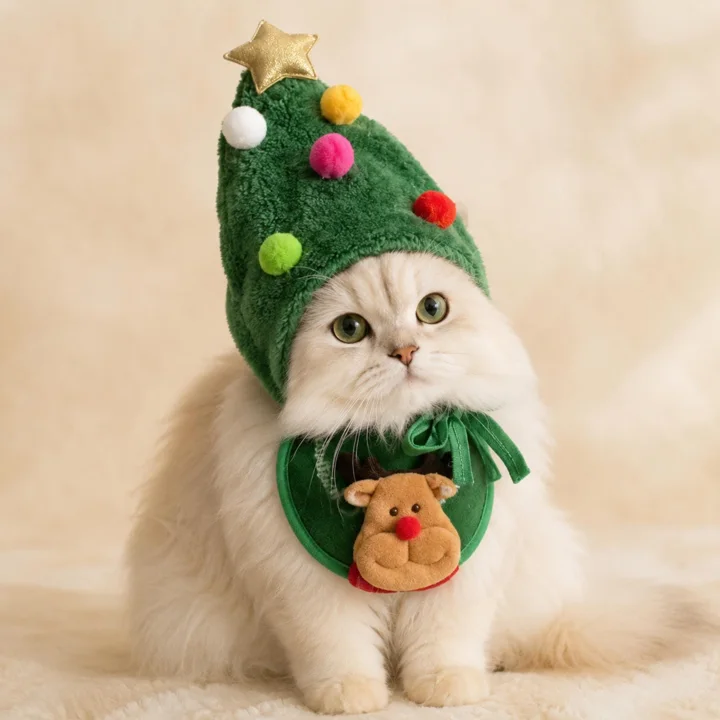


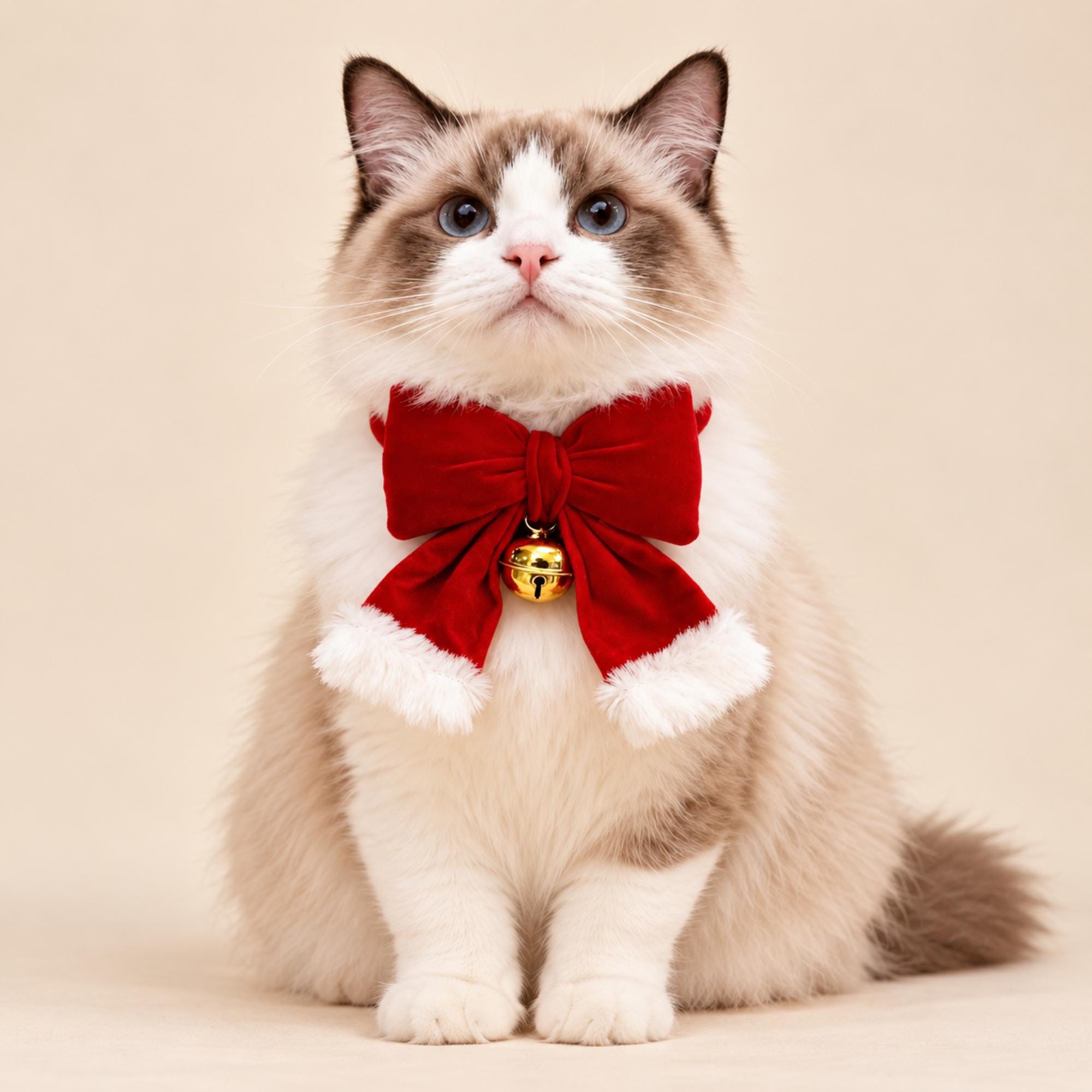
A bow collar can make a pet’s portrait feel dressed for the occasion, whether the backdrop is a holiday tree, a birthday banner, or a simple patch of afternoon light. The best accessory supports the picture without taking over the experience. Start with your pet’s tolerance, the outfit’s fit, and the setting; then choose a color and shape that complement the scene.
Decorative neckwear is for appearance, not a substitute for a walking restraint. Cats and dogs may react differently to clothing or dangling details, and some pets would rather pose without anything around their neck. Plan a short, supervised photo session, watch for signs of discomfort, and be ready to remove the accessory or take the picture without it.
Choose a Bow That Fits the Occasion
For a holiday card, a clear seasonal accent can help the image read at a glance. The Christmas Pet Bow Collar, for example, pairs a large red velvet-style bow with white trim, long decorative tails, and a gold-tone bell. Its red, white, and gold palette suits traditional holiday settings. A birthday portrait may call for a softer, less seasonal detail, while a wedding photo often benefits from a restrained accent that does not compete with the couple.
Think about the whole frame before choosing a bow. A large structured shape will stand out against a plain background but may crowd a busy arrangement of flowers, wrapped gifts, or patterned clothing. Look at the colors your pet will wear alongside, if any, and decide which detail should attract the eye. If the bow is the statement, keep the rest of the scene relatively quiet.
Check Fit Before the Camera Comes Out
Measure your pet’s neck and compare that measurement with the sizing information supplied for the specific item. Do not estimate from breed, weight, or a collar already in the drawer; neck proportions vary, and a decorative accessory may sit differently from everyday gear. The Christmas bow collar listing directs shoppers to measure and compare with the size chart in its photos. Follow the listing’s instructions rather than assuming one size will suit every cat or dog.
Once it arrives, check the fit calmly before planning a full photo session. The accessory should not obstruct breathing, swallowing, vision, or normal head movement, and it should not be positioned so tightly that it presses uncomfortably. Inspect how decorative tails and a bell sit when your pet turns or lowers its head. If anything shifts into the face or your pet keeps pawing at it, remove it and choose another approach.
Keep Decorative Neckwear Separate from Leashes
A bow collar is a styling piece, not walking equipment. Do not attach a leash to decorative neckwear or assume its clasp, fabric, or ornamentation is designed to bear pulling force. For an outdoor portrait, use a properly fitted walking setup appropriate to your pet, and keep the decorative accessory separate. If a product is specifically described as a harness, read its own listing and use it only as directed; a harness and a decorative collar are not interchangeable.
The Princess Pet Harness is one catalog example of a different kind of item: its description identifies a vest-style harness with adjustable straps and back attachment hardware, alongside a ruffle and bow. That makes it distinct from a bow collar, though fit still matters and the product description should guide use. For any photo involving a leash, prioritize the restraint intended for that purpose and avoid relying on decorative details.
Make the Session Short and Low-Pressure
Let your pet investigate the accessory before you attempt to put it on. Offer a familiar, quiet space, keep the camera ready, and take a few pictures during a brief period when your pet is relaxed. A patient helper can reward calm behavior or gently attract attention toward the lens. There is no need to insist on a perfect pose; candid photographs often capture more personality than a carefully staged shot.
Watch the pet rather than the camera screen. Repeated scratching, freezing, trying to escape, flattened ears, tense posture, or unusual agitation are reasons to pause and remove the accessory. A cat that rejects neckwear should not be forced to wear it for a photograph. Take a portrait without the bow, place the accessory nearby as a prop, or end the session. Stop whenever your pet seems uncomfortable.
Compose the Scene Around Your Pet
Choose a stable, familiar place where your pet can stand, sit, or rest naturally. A favorite blanket can make a simple portrait feel personal; a plain wall may keep attention on a richly decorated bow. For a holiday image, try a few feet of distance between the pet and the tree so the background lights soften rather than overwhelm the subject. Keep breakable decorations, cords, food, and small objects out of reach during the session.
Get down near your pet’s eye level and leave a little breathing room around the ears and bow in the frame. Shoot several compositions: a close portrait that shows facial expression, a wider view that includes the celebration, and a candid moment between poses. If a bell or long tails are part of the design, make sure they are visible without concealing the face. Natural expressions matter more than perfect symmetry.
Coordinate Colors Without Overstyling
A coordinated palette helps photos feel intentional without requiring a full costume. Red and cream can echo a holiday table, while blush, beige, blue, or lavender offer a softer party mood. The Princess Pet Harness is described in four pastel color options and includes a bow and ruffle details, so it may suit a portrait where a harness is appropriate. Consider the pet’s coat color, the backdrop, and the occasion before settling on a shade.
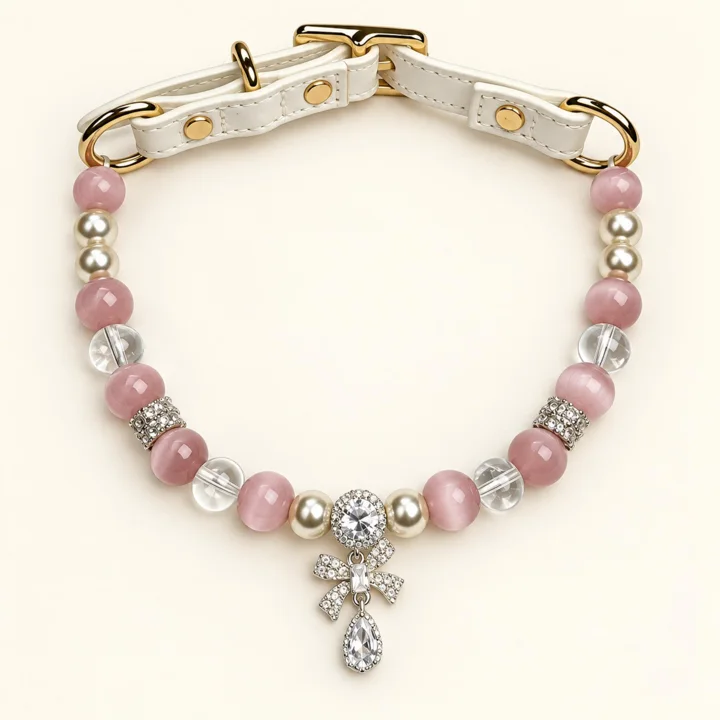
Accessories can also work as small accents rather than a complete look. The Rose Quartz Pet Collar is described with a blush-pink collar and a detachable crystal strand, which can be worn with or without that decorative strand. For a celebration portrait, a simpler arrangement may keep the image balanced. Avoid adding multiple pieces that jingle, dangle, or compete for attention, especially if your pet is unfamiliar with wearing accessories.
Use Extra Care with Dangling Details
Oversized bows, hanging tails, beads, and bells add visual interest, but they also create details to monitor. Supervise your pet whenever an accessory is on, and do not leave it in place for unsupervised play or rest. Check that decorative pieces remain clear of the mouth, eyes, paws, and nearby objects. If your pet tries to chew or pull at an ornament, end the session and remove the item rather than redirecting the behavior repeatedly.
A bell can be noticeable to both the photographer and the pet, so observe your animal’s response before continuing. Likewise, a long tail may move as your pet turns or brush against a surface. Keep the photo area clear of snag points, and avoid placing a pet where the accessory could catch on furniture, branches, or decorations. These simple checks help keep a brief portrait session controlled and attentive.
Plan for Real-Life Celebration Moments
Photos at parties can be harder than portraits at home: guests move around, doors open, and food or decorations may be within reach. Take the picture in a quieter spot before the gathering gets busy, or ask one familiar person to help while another handles the camera. Keep your pet supervised and give them a clear route away from the scene. A peaceful five-minute window can produce a better image than posing amid commotion.
For a family card, capture a few frames with the bow and a few without it. That gives you options if your pet becomes restless or the accessory shifts. At weddings or other formal events, check with the host before bringing a pet into a photo area and consider whether the setting suits the animal. The celebration should remain enjoyable for the pet, not just visually coordinated for the photograph.
A thoughtful next step
Before the next celebration, measure carefully, review the specific product details, and try the accessory briefly in a quiet setting. Keep decorative neckwear separate from walking gear, supervise throughout, and remove anything that bothers or obstructs your pet. Then work with the expressions and poses your animal offers. A relaxed portrait—bow or no bow—is the one worth keeping.
Explore our Collars & Accessories collection, check measuring and fit guidance, or ask us about a product detail before choosing.
Pieces mentioned in this guide
These are catalog examples, not a promise of fit or availability. Read each listing and confirm the details before ordering.