

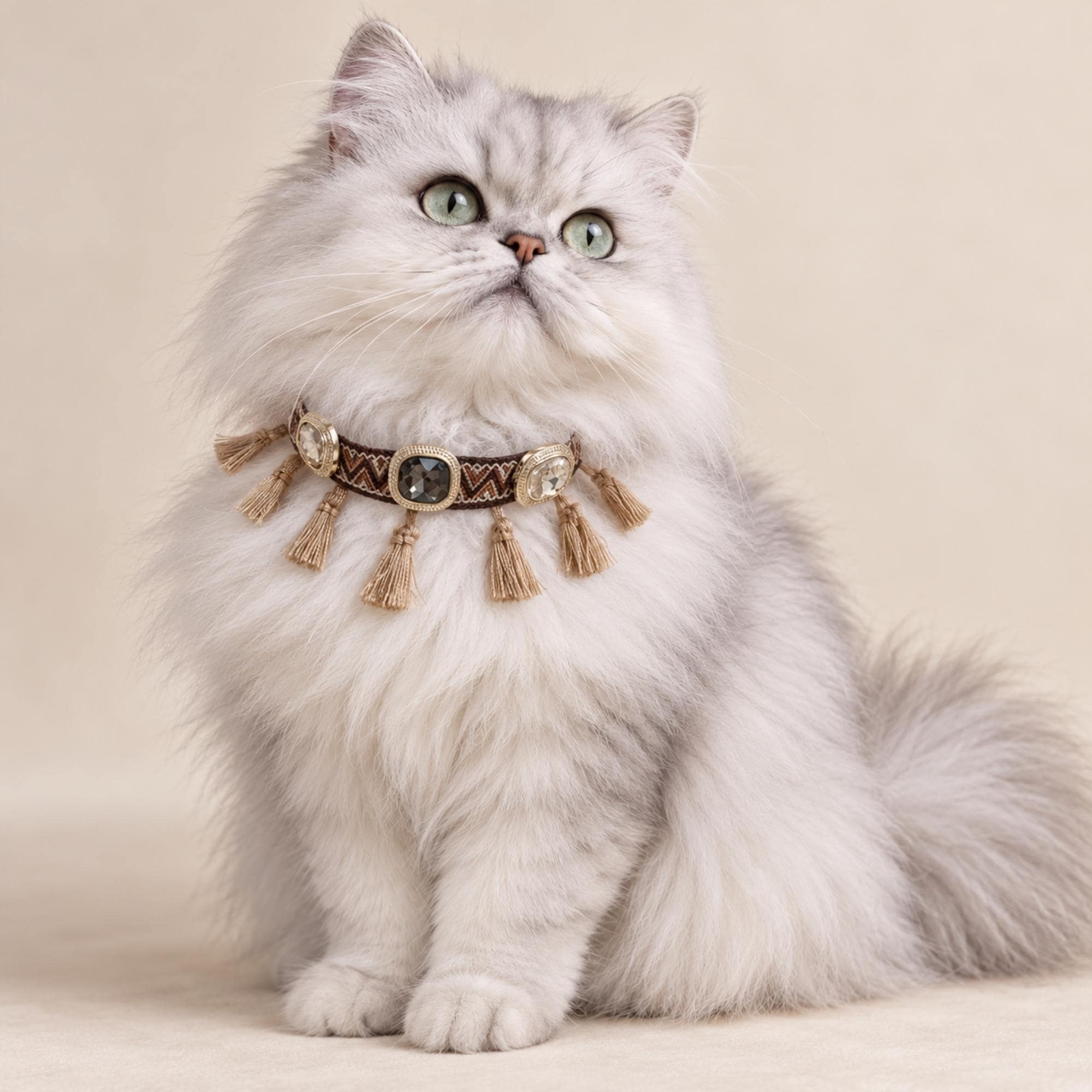
Tie-on neckwear can add a distinctive detail to a portrait, celebration, or everyday look. The best fit is not simply the one that looks neat in a photo: it should sit without squeezing, rubbing, or limiting your pet’s ordinary movements. A careful measurement and a short, supervised fitting help you judge whether an accessory suits the individual animal.
Treat decorative neckwear as an accessory, not as a leash attachment or a substitute for a properly fitted walking harness or collar. Cats may dislike apparel, and some dogs will paw at unfamiliar details. If your pet seems uneasy, remove the piece and choose a simpler look—or no outfit at all.
Start with the purpose
Decide when and where your pet will wear the neckwear before choosing a style. A brief portrait session calls for a different level of attention than a busy gathering, where people, furniture, and other animals can create more chances for fringe or ties to catch. For a quick occasion, plan to put the accessory on shortly before the activity and take it off afterward.
Also consider your pet’s habits. A calm dog who is comfortable being handled may tolerate a decorative choker for a supervised photo, while a cat who dislikes collars may find even a light accessory stressful. There is no need to persuade a pet to wear something ornamental. The animal’s behavior, not the outfit, should determine whether it stays on.
Measure the neck without guessing
Use a flexible measuring tape to measure around the part of the neck where the accessory is intended to sit. Keep the tape against the coat without pulling it tight or leaving it loose enough to slide down. If your pet has a thick coat, note how the tape sits through the fur; a measurement over fluffy hair can differ from the fit against the neck.
Write down the measurement and compare it with the seller’s sizing information before ordering. Do not estimate from breed, weight, or the size of another pet. If the listed sizing guidance is unclear, ask for clarification rather than choosing at random. The supplied product description for the Boho Pet Choker, for example, advises measuring the neck and comparing it with its sizing information.
Check tie placement and tension
When tying a neck accessory, position it evenly rather than letting the knot or bow pull the piece toward one side. The tie should hold the accessory in place without drawing the band tightly into the neck. Check the fit with your fingers and watch how the material settles when your pet turns its head, looks down, or lifts its chin.
A tie that loosens easily, shifts toward the throat, or leaves a visible indentation needs attention. Do not compensate for a poor fit by pulling harder on the ends. If you cannot make the accessory sit securely without pressure, remove it. Follow any fit guidance supplied for that specific item; do not assume every tie-on design adjusts in the same way.
Inspect decoration, fringe, and edges
Look over the whole accessory before each use. Check that decorative elements are attached, edges are not rough against the skin, and there are no loose threads or damaged ties. Pay particular attention to dangling pieces: tassels, charms, or fringe can brush the face, invite chewing, or catch on nearby objects. Supervision matters whenever an accessory has moving or raised details.
The Boho Pet Choker is one catalog example of a statement design, with decorative stone settings and champagne-brown tassel fringe. Those details may suit a closely supervised portrait, but they also make a careful visual inspection and observation worthwhile. The item is described as decorative neckwear for cats and dogs when correctly sized; its description does not identify it as walking equipment.
Keep neckwear separate from walking gear
Do not attach a leash to decorative neckwear unless the product is explicitly designed and described for that purpose. A tie, choker, or ornamental band should not be treated as a walking restraint. Pulling force can strain a decorative fastening or put pressure on a pet’s neck, and appearance alone does not establish that an accessory is suitable for leash use.
For walks, use appropriate walking equipment fitted according to its own instructions. The catalog’s Pastel Bow Pet Harness is described as a vest-style harness with a back D-ring and sizing guidance for neck and chest measurements. That makes it a separate product category from decorative neckwear—not a reason to connect a leash to a choker or assume the two accessories serve the same function.
Introduce it gradually, then observe
Let your pet sniff the accessory before trying it on. If the animal remains relaxed, place it gently and keep the first fitting brief. Offer a familiar, pleasant activity nearby, such as quiet attention or a favorite treat, without holding the pet in place. A short trial gives you a chance to see whether the tie shifts or the decoration causes an unexpected reaction.
Watch for repeated pawing, freezing, hiding, attempts to bite the accessory, flattened ears, or unusual agitation. These signs are reasons to stop, not challenges to overcome. Remove the neckwear calmly and give your pet space. For cats in particular, willingness can change from one day to another, so a previous successful fitting does not mean the accessory must be worn again.
Choose a suitable setting and duration
A quiet room with clear space is a better first setting than a crowded event. Keep your pet away from open flames, rough play, climbing areas, and objects where ties or tassels could snag. Stay close enough to intervene, and never leave a pet unattended while wearing decorative neckwear. Remove the accessory before your pet rests in a crate or sleeps.
Set a short, practical time limit, especially for a first use. Take the piece off as soon as the photo or occasion is over, or sooner if your pet becomes distracted or uncomfortable. A decorative look does not need to last through an entire party. If the setting is too busy for close supervision, skip the accessory and take the picture another way.
Recheck fit and skin after use
After removing the neckwear, check the skin and coat where it rested. Look for redness, a pressure mark, tangled fur, or any area that seems tender. A temporary impression can happen when something has been worn, but persistent irritation or signs of pain call for stopping use. If you are concerned about your pet’s skin or reaction, consult a veterinarian.
A pet’s fit can change as its coat grows, weight changes, or the accessory is retied. Recheck the measurement and condition of the item before another occasion rather than relying on memory. Follow the care directions provided for the specific product. Do not assume a decorative piece is washable or that a particular cleaning method is suitable unless its instructions say so.
A thoughtful next step
Before putting on tie-on neckwear, measure the intended placement, compare the result with the item’s sizing guidance, inspect its ties and decorations, and make a brief supervised trial. Keep decorative pieces separate from walking equipment, remove them when your pet shows discomfort, and never leave them on unattended. If the fit or your pet’s response is uncertain, choose no neckwear. A good accessory is optional; your pet’s ease and safety come first.
Explore our Collars & Accessories collection, check measuring and fit guidance, or ask us about a product detail before choosing.
Pieces mentioned in this guide
These are catalog examples, not a promise of fit or availability. Read each listing and confirm the details before ordering.