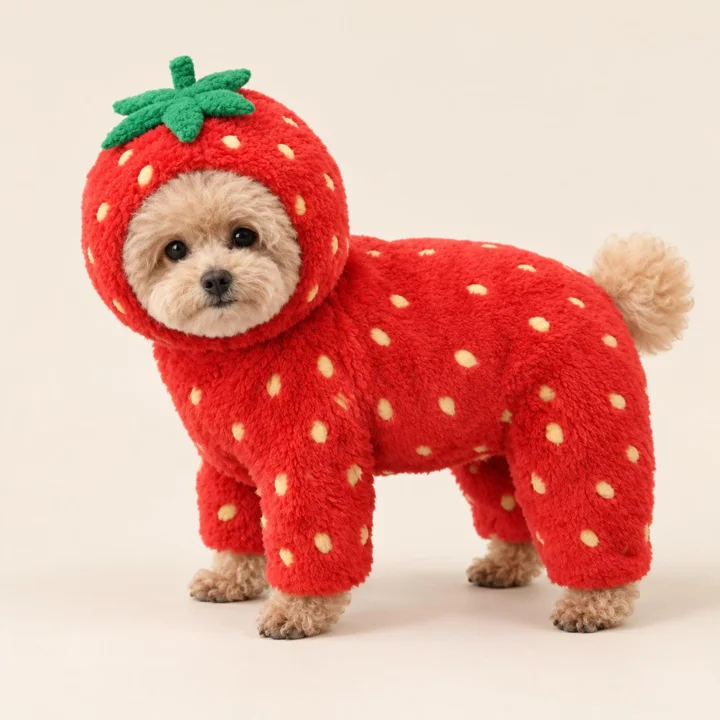


A pet apparel description is more than a list of colors and cute details. It should help you work out what the garment covers, how it is intended to fit, which measurements matter, and whether its design makes sense for your pet. Reading carefully can prevent a costume meant for a short photo session from being mistaken for practical everyday clothing.
Start by separating concrete details from promotional language. “Hooded cape,” “short sleeves,” and “measure chest circumference” tell you something specific. Words such as “cozy” or “perfect for every occasion” express a general impression, not a fit guarantee or a promise that your pet will enjoy wearing the item. The guide below shows what to look for, what to question, and when to skip a purchase.
Identify what kind of garment it is
First, determine whether the listing describes a cape, hoodie, sweater, or full-body costume. Those categories cover different parts of the body and can suit different occasions. A cape may drape over the back, while a full-body outfit has more coverage and may include sleeves. Do not assume two items with similar photos will feel or fit alike; the written construction details help set realistic expectations.
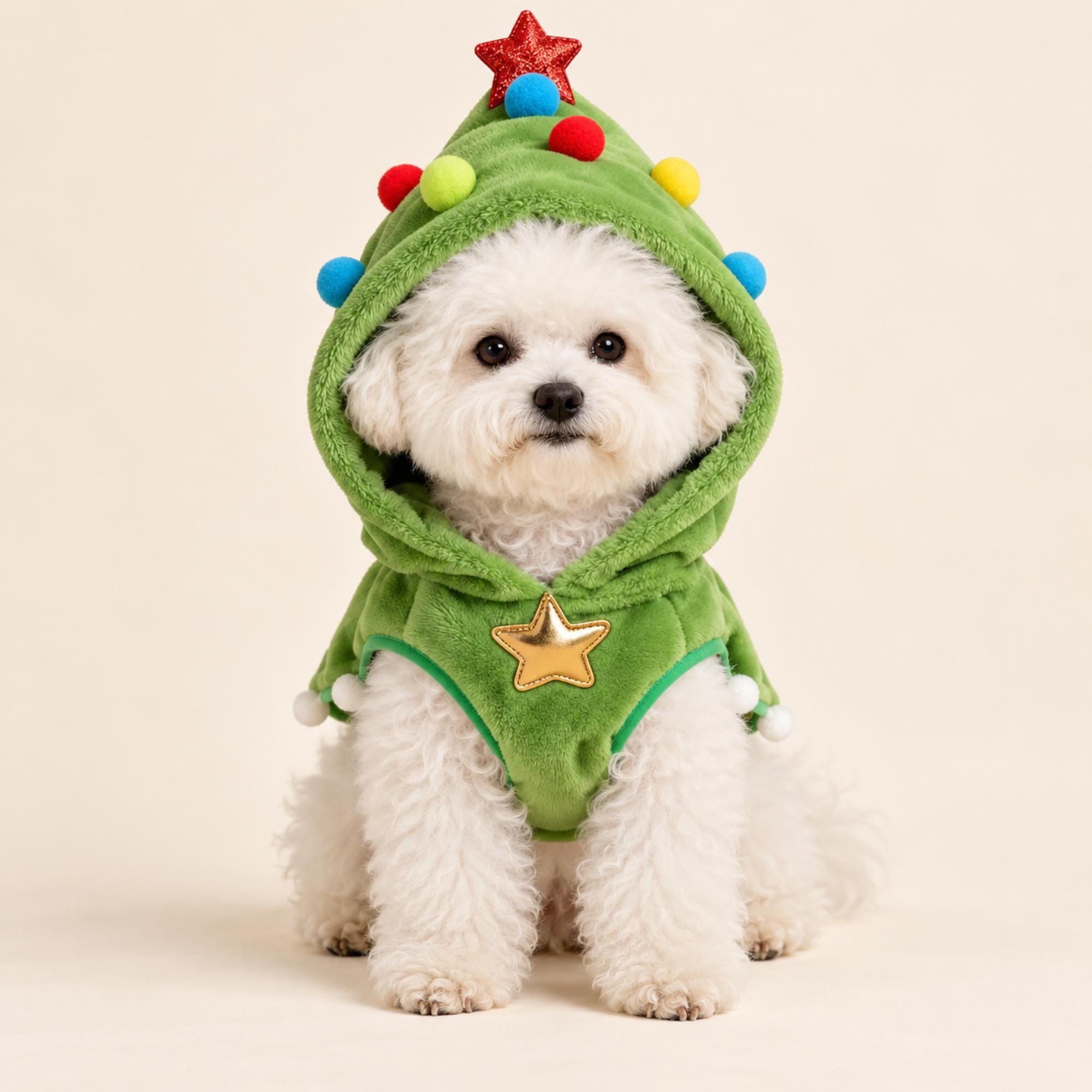
For example, the Christmas Tree Pet Cape is described as a green hooded cape with pom-poms and a gold star detail, and as a lightweight alternative to a full-body costume. The Cow Pet Costume, by contrast, is described as a full-body design with short sleeves and a hood. That distinction matters when you want a quick photo prop rather than an outfit covering more of your pet.
Translate promotional words into useful facts
Descriptions often mix observable features with broad adjectives. “Black-and-white cow print” names a visible pattern; “cozy” and “adorable” are subjective. Treat style words as a clue to the intended look, not as proof of a particular fabric, warmth level, or fit. If a material is not named, do not infer one from phrases such as “soft sweatshirt-style body” or “plush-style appearance.”
Look for details you can verify against your needs: attached hood, short sleeves, ribbed cuffs, or decorative tassels. The Polka Dot Dog Hoodie, for instance, lists a rounded hood, a fluffy pom-pom, braided side decorations, short front sleeves, and ribbed cuffs. Those specifics give a clearer picture than “playful and cozy” alone, though they still do not establish exact fabric composition or how the garment will feel on an individual dog.
Read the sizing instructions before choosing a size
A size label is not a substitute for measurements. If the listing gives measuring guidance, follow it and compare your pet’s actual measurements with the size information provided. The Cow Pet Costume asks shoppers to check neck circumference, chest circumference, and back length. Those points describe different aspects of fit: where the opening sits, how the body wraps, and how far the garment extends.
Do not choose by breed, age, or weight alone when a listing directs you to measure. Animals of similar weight can have different proportions, and a costume’s cut may change which measurement is most limiting. If the page does not provide a size chart or the needed garment dimensions, avoid guessing. Ask the seller for clarification before ordering, especially when a close fit could restrict movement.
Check coverage, openings, and movement
Match the listed shape to how your pet moves. Note whether the garment has sleeves, where the hood sits, and whether the description identifies a cape or a full-body design. A photo can help show the intended appearance, but it may not reveal how an outfit sits while a pet walks, lies down, or turns. Read the text for construction clues, then consider your pet’s body shape and usual activity.
Decorative features deserve the same attention as coverage. Pom-poms, tassels, horns, and other raised details can affect how an outfit feels or catches on nearby objects. Listings for the Christmas Tree Pet Cape mention colorful pom-poms and a chest star; the Cow Pet Costume lists soft horns and ears on its hood. Supervise dress-up, check that nothing obstructs movement or vision, and remove the outfit if your pet seems uncomfortable.
Match the stated use to your actual plan
A listing’s “Perfect For” section suggests occasions, not a guarantee that the garment suits every setting. A product described for holiday photos, parties, or portraits may be best treated as occasional dress-up. An outfit labeled for everyday wear still needs to fit your pet and work for the conditions where you plan to use it. Consider duration, activity, and whether your pet already accepts clothing.
The Christmas Tree Pet Cape is presented for photos and seasonal gatherings, while the Polka Dot Dog Hoodie is described for everyday wear as well as photos and outings. These use cases help you compare the listings, but they do not establish that either item is right for every dog, cat, or event. A quiet portrait session and an active outing place different demands on a garment.
Check which pets the listing actually names
Do not assume an item suits a species just because the store sells clothing for both cats and dogs. Look for the intended pet stated in the description, then confirm that sizing information is relevant to your animal. The Cow Pet Costume is described for cats and dogs and gives three measurements to check. The Polka Dot Dog Hoodie, in contrast, is described as designed especially for small dogs.
Even when cats are explicitly included, individual tolerance varies. A hood, sleeves, or full-body shape may be unacceptable to a cat that dislikes clothing. Introduce an outfit briefly and calmly, supervise the entire time, and stop if your cat resists, freezes, or tries to remove it. If the description or fit leaves doubt, no outfit is a better choice than forcing dress-up.
Notice what the description does not tell you
A useful shopping habit is to make a short list of missing information. A description may not state exact fabric content, garment dimensions, closure type, washing instructions, or whether a feature is adjustable. Do not fill those gaps by guessing from a product photo or a general phrase. If an answer affects fit, care, or safe use, contact the seller before placing the order.
Likewise, decorative neckwear should not be treated as walking restraint, and apparel should not be assumed to provide heat protection or medical benefits. A costume’s seasonal theme does not establish that it suits every temperature, and a “cozy” label is not a promise of comfort. Read only what the product page supports, and plan to remove clothing when your pet needs a break.
Compare listings with a simple checklist
When two outfits appeal to you, compare like with like: garment type, body coverage, named details, intended pet, available sizing guidance, and suggested occasions. Note which listing answers your practical questions and which leaves them open. This keeps a colorful photograph or a long feature list from distracting you from the basics, such as whether the cut matches your pet’s proportions.
For example, compare the cape’s stated lightweight alternative to a full-body costume with the Cow Pet Costume’s listed full-body design and measurement points. Then ask whether you need a brief seasonal look or greater coverage, and whether the required measurements are available. A clear mismatch is a reason to keep browsing. A missing measurement is a reason to ask, not to select a size at random.
A thoughtful next step
Before buying, read the description once for the look and again for the practical details: garment type, coverage, sizing instructions, intended pet, and stated use. Separate specific features from broad claims, and ask about information the listing does not provide. After the outfit arrives, supervise the first fitting and remove it if it interferes with movement or your pet shows discomfort. The right choice is the one that suits the occasion and your individual pet—not simply the one with the most appealing description.
Explore our Apparel & Costumes collection, check measuring and fit guidance, or ask us about a product detail before choosing.
Pieces mentioned in this guide
These are catalog examples, not a promise of fit or availability. Read each listing and confirm the details before ordering.