

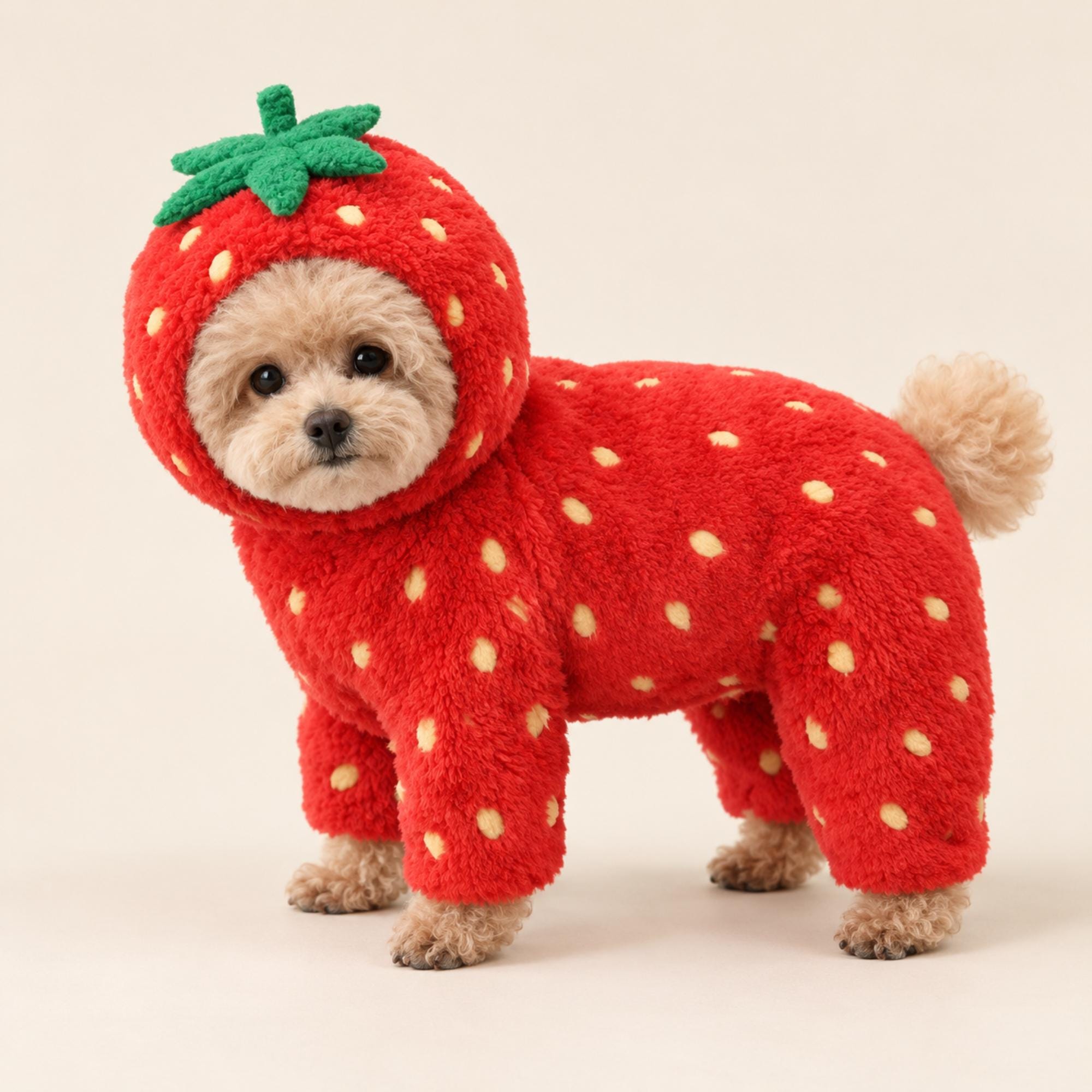
A pet costume can look simple in a product photo, but the details matter once you are choosing a size, planning a photo, or deciding whether your pet will tolerate wearing it. Online, you cannot check the fabric in person or see how a particular outfit moves. A few focused questions can help you compare listings, avoid preventable sizing mistakes, and decide whether a costume suits your pet and the occasion.
Start with your pet rather than the picture: consider body shape, ordinary movement, and past reactions to clothing. Then check what the listing actually says about measurements, coverage, and design. A strawberry jumpsuit, a hooded reindeer outfit, and a mouse costume offer different looks and fit considerations. Treat the product description as the source of known details, and ask the seller when an important point is unclear.
What measurements does the size chart require?
Ask which measurements determine the size, and take those measurements before ordering. Several costume listings ask shoppers to check neck circumference, chest circumference, and back length; the reindeer and mouse costumes, for example, specify those three points. Use a flexible tape and follow the chart’s measuring guidance if provided. Breed names and weight alone are poor substitutes: two pets with the same weight can have different proportions, and a costume’s cut may not suit both.
Compare your pet’s actual numbers with the chart rather than selecting the size that sounds familiar from another brand. If a measurement falls between listed sizes, or the chart does not explain how to choose, ask the seller which measurement takes priority. Do not assume a larger size will solve every fit issue; extra length or looseness can create new problems. Make the purchase only when the listing gives enough information to make a reasoned choice.
How much of my pet’s body does the costume cover?
Check the silhouette and coverage, not just the theme. The strawberry dog costume is described as a four-leg, full-body jumpsuit with a hood, while the mouse outfit has short sleeves and a hood. Those descriptions suggest different amounts and kinds of coverage. Look closely at product images and written details to understand where the garment sits, what it surrounds, and whether any design pieces are positioned near the face or legs.
Ask whether the cut leaves room for normal movement and whether the openings suit your pet’s proportions. The listing may not answer every question about leg openings or the way a hood sits, so contact the seller rather than guessing from a posed photograph. Avoid any outfit that obstructs vision, breathing, walking, or other ordinary movement. If the design cannot be used without restricting your pet, choose another costume—or skip clothing altogether.
Will my pet tolerate a hood or other details?
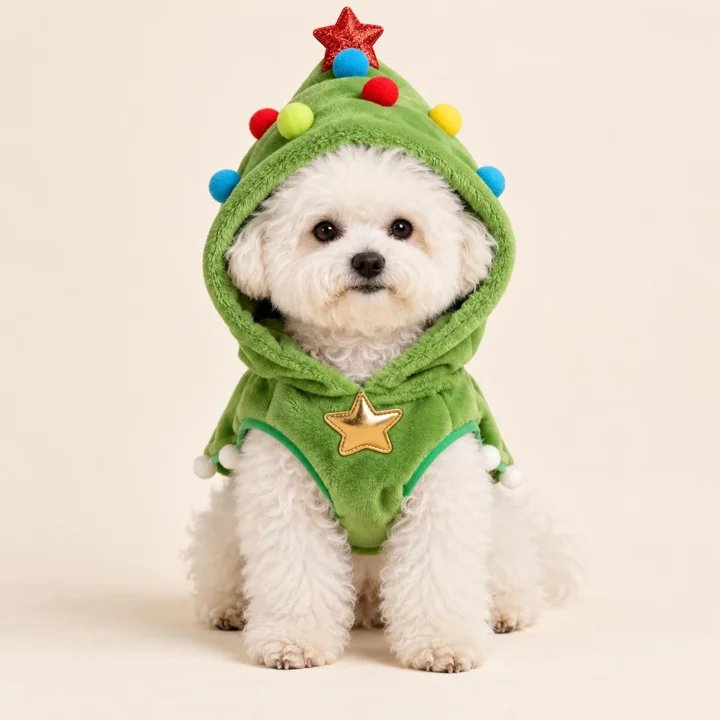
A costume’s most recognizable features may also be the parts your pet notices most. The reindeer outfit has a hood with antlers and ears, and the mouse design includes oversized ears and a cheese decoration on its hood. Ask how the hood is intended to sit and whether your pet’s face remains unobstructed. Product photos can show the look, but they cannot tell you how an individual animal will respond to something near its head.
Think about your pet’s history with clothing, hats, or handling around the head before buying. If your cat has never accepted apparel, a costume is not a good experiment to force for a holiday photo. Let your pet’s behavior guide the decision, and stop at signs of discomfort or distress. A brief, supervised introduction may be appropriate for a willing pet, but no photograph or event is worth continuing when the animal wants the outfit removed.
What exactly is included in the listing?
Read the description to distinguish the costume itself from styling shown in photos. The strawberry listing describes a red plush-style body, seed details, a green leaf cluster and stem on the hood, and a four-leg silhouette. The mouse listing describes its ears, cheese decoration, bow, and short sleeves. Confirm whether the listed pieces are part of the outfit and whether any pictured props or accessories are sold separately; never infer that an item is included from a staged image alone.
Check the color and design options as well. The mouse costume is described as available in gray and brown, so make sure the selected option matches what you intend to order. If a title, photo, and written description seem inconsistent, pause and ask for clarification before checkout. This is especially useful when a decorative detail matters for a planned group costume or photo. Rely on confirmed listing information, not assumptions about what a costume usually includes.
Does the design suit the occasion and setting?
Match the costume to the actual plan, not just the holiday label. A reindeer outfit may fit a supervised family photo or gathering, while a strawberry jumpsuit could suit a themed picture. Consider how long your pet would be asked to wear it, whether the setting is familiar, and whether people or other animals might crowd around. A quiet photo at home calls for different preparation than a busy party where your pet may need room to move away.
Ask whether the costume will be practical for the activities you have in mind. If your pet needs to walk, use a litter area, or take a break, the outfit must not get in the way; remove it whenever it does. Costumes are for appearance, not walking restraint, so do not use decorative elements to attach a leash. For outings, plan how you will manage the leash separately and leave the costume off if it interferes with safe handling.
What do the product details say about the material?
Look for specific material information rather than relying on words such as “soft” or “cozy” in promotional copy. The strawberry listing calls its body plush-style, but that phrase alone does not answer every question about fiber content, lining, stretch, or construction. If those details matter to you or your pet, ask the seller for clarification. Do not assume that a costume has a particular fabric, finish, or feature unless the product description confirms it.
Care instructions are another point to verify rather than guess. If the listing does not state how to clean the costume, ask before purchasing, especially if you expect it to be worn for food-themed photos or an outdoor event. Avoid assuming that a garment is machine washable, waterproof, or suitable for a particular cleaning product. Clear answers help you decide whether the outfit is a practical match for your plans and your willingness to care for it.
Can I order in time, and what if I need help?
Check the seller’s current delivery estimate and ordering details before paying, particularly for a fixed-date event. Do not assume that a costume will arrive by Halloween, a birthday, or a holiday gathering simply because it is seasonal. If the listing does not provide a clear estimate, ask the seller. Leave time to inspect the item and consider the fit before the occasion, rather than making your pet’s first try-on happen just before guests arrive.
Review the shop’s stated exchange, return, and customer-service policies, and ask questions while you still have time to consider alternatives. Do not assume that a costume can be returned after it has been worn or that a particular remedy is available. Keep your order details and the size information you used. If an answer about fit, included pieces, or timing is vague, treat that uncertainty as a reason to pause rather than placing an order under pressure.
How will I introduce and supervise the costume?
Plan a calm, short first try-on well before the event. Let your pet inspect the costume, then introduce it gradually only if the animal remains willing. Check that the fit does not block sight, breathing, walking, or access to ordinary needs. Watch for attempts to escape, unusual stillness, repeated pawing, or other signs that your pet is uncomfortable. Remove the garment promptly if you see a problem; do not rely on a costume becoming acceptable through prolonged wear.
Supervise your pet whenever the costume is on, and do not leave the animal unattended in it. Decorative parts, including hoods, bows, ears, or other attached details, deserve attention during wear. Follow the product’s confirmed instructions and keep the outfit away from situations where it could snag or interfere with movement. If your pet cannot wear it comfortably and safely, take the photo without a costume. Participation is optional, and a relaxed pet matters more than a coordinated look.
A thoughtful next step
Before checkout, make a quick list: measurements checked against the size chart, coverage and design understood, important material or care questions answered, timing confirmed, and a plan for a brief supervised try-on. For a cat or a pet that dislikes clothing, be ready to stop or choose no outfit. If a listing leaves a key detail uncertain, ask the seller or select a clearer option. The best costume purchase is one your pet can wear without obstruction—and can decline when it is not working.
Explore our Apparel & Costumes collection, check measuring and fit guidance, or ask us about a product detail before choosing.
Pieces mentioned in this guide
These are catalog examples, not a promise of fit or availability. Read each listing and confirm the details before ordering.