

Pet apparel can pick up fur, dust, drool, food smudges, and outdoor debris in a single outing. A careful cleaning routine helps you deal with ordinary messes without treating every garment as if it can go straight into a washer. The right approach depends on the item’s construction and care instructions, so start by checking its label or product guidance rather than assuming all pet clothes can be cleaned the same way.
Plan to clean outfits when they need it, not simply because they were worn once. A quick inspection after use can help you decide whether brushing, spot cleaning, or a more thorough wash is appropriate. Costumes with raised details, decorative pieces, hoods, or multiple fabric sections call for extra attention. If your pet seems bothered by clothing, remove it and give them a break; keeping an outfit clean is never more important than your pet’s comfort.
1. Check the garment before cleaning
Begin with the care label or the seller’s specific instructions. Look for guidance on washing, water temperature, drying, and whether the garment should be cleaned by hand or professionally. If instructions are missing or unclear, avoid guessing about machine settings or cleaning products. A cautious approach—such as removing loose debris and testing a hidden spot with a damp cloth—can help you assess the item before committing to a full wash.
Inspect seams, closures, trim, and any attached decorations. Note loose threads, damaged stitching, or pieces that could snag or come away during cleaning. For a garment with a dimensional detail, such as the plush hamburger decoration on a hamburger pet sweatshirt, gently check around the attachment point without pulling. If an item is already damaged, set it aside until you can decide whether it is safe to use or can be repaired.
2. Remove fur and loose debris first
Take the garment off your pet before cleaning it, then shake it gently over a wastebasket or outdoors to dislodge loose dirt. Remove visible hair with your fingers, a lint roller, or a soft clothes brush, using light strokes that follow the fabric rather than scraping across it. This simple step keeps loose fur from spreading during spot cleaning and makes stains easier to see.
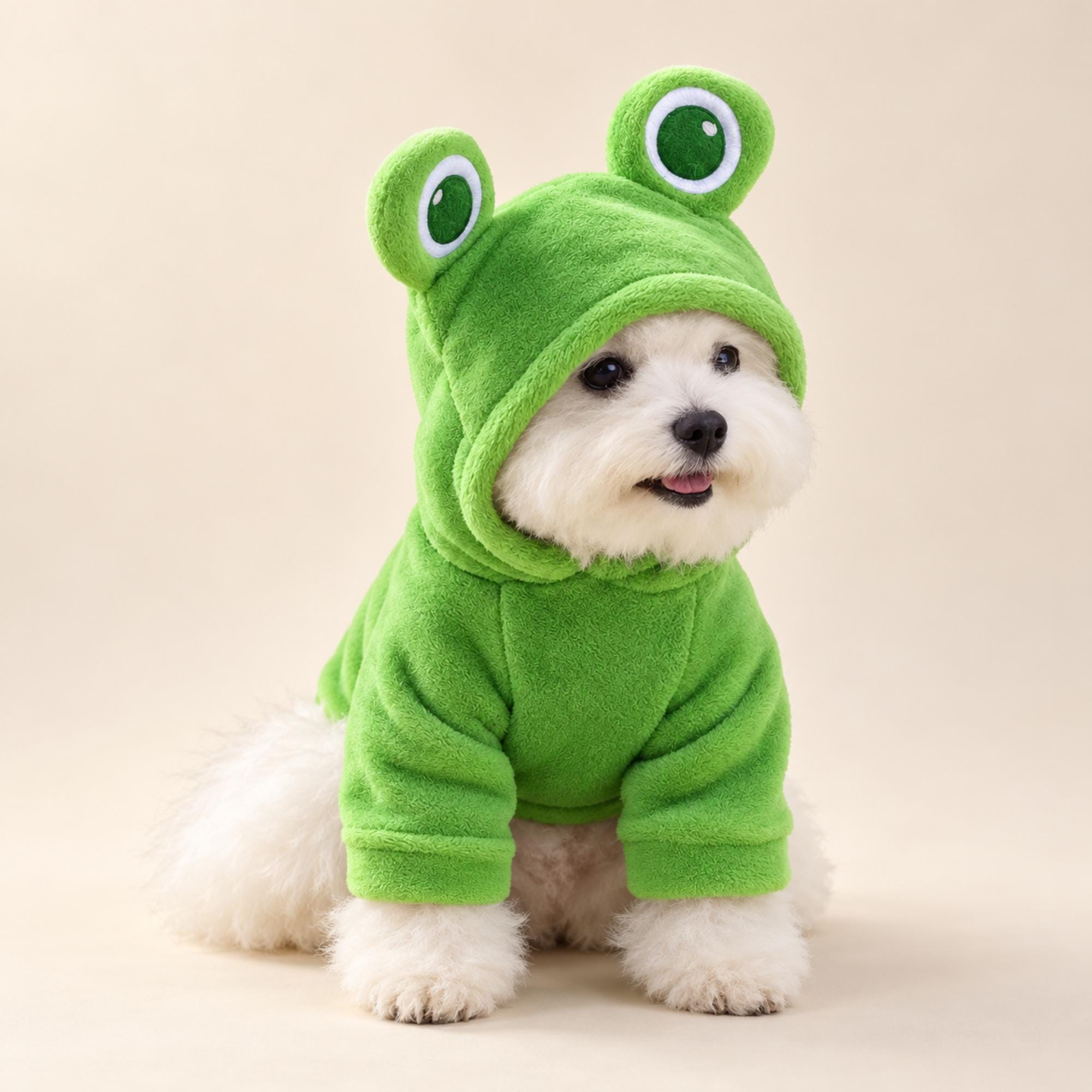
For a hood, sleeves, or leg openings, check folds where hair and crumbs can collect. Avoid pulling at raised decorations or forcing a brush into narrow seams. A frog pet hoodie, for example, has two raised frog eyes on its hood, so clean around those features with care instead of pressing or dragging over them. Pause if the fabric begins to snag or the decoration shifts.
3. Treat small spots with a light touch
For a small fresh mark, use a clean cloth dampened with cool or lukewarm water, unless the care instructions say otherwise. Blot from the outside edge toward the center to keep the spot from spreading. Do not rub hard: friction can distort some fabrics, rough up plush surfaces, or push a stain deeper. Use a small amount of a suitable cleaner only when the garment’s instructions allow it.
Test any cleaner on a concealed area first and follow its directions. Keep cleaning products away from your pet, and rinse the treated area as instructed so residue does not remain where your pet’s skin or mouth could contact it. Never mix cleaning chemicals. If the stain persists, the fabric’s color changes, or a decoration loosens, stop and consult the garment’s care guidance rather than escalating to a stronger product.
4. Choose a wash method by construction
Use a washing machine only when the care instructions specifically permit it. If machine washing is allowed, follow the stated settings and consider placing the garment in a laundry bag to limit tangling or friction. Fasten closures as directed and keep the outfit separate from items that could snag it. Do not assume a gentle-looking costume or sweatshirt is machine washable simply because it resembles ordinary clothing.
When hand washing is recommended, use a clean basin and the water temperature specified by the care instructions. Move the garment gently through the water rather than twisting, scrubbing, or stretching it. Pay close attention to seams and trim, where soil may collect, but avoid harsh handling of attached features. Rinse as directed until cleaning solution is gone; lingering residue can irritate skin or attract more dirt.
5. Give costumes and details extra care
Costumes often combine shapes and features that are more delicate than a plain shirt. Hoods, dimensional ears, appliqués, embroidery, and plush elements may need spot cleaning or hand care, depending on the product instructions. Avoid soaking an entire outfit unless its care guidance allows it. A full-body panda jumpsuit, for instance, has a hood and four-leg construction; check all openings and seams rather than focusing only on the visible front.
Do not pull, flatten, or wring decorative parts to speed up cleaning. If the instructions do not explain how to clean a feature, keep treatment conservative and avoid putting the garment through a process that could damage it. Afterward, inspect each detail for movement or loose stitching. Retire an outfit from use if a piece becomes detached or creates a chewing, swallowing, snagging, or movement hazard.
6. Dry completely before putting away
Follow the garment’s drying instructions, since heat, direct sun, or aggressive wringing may be unsuitable for some fabrics and decorations. If air drying is permitted, lay the item in its natural shape or hang it as directed in a clean, well-ventilated place. Reshape sleeves, hems, and openings gently while the fabric is damp, without stretching them. Keep the outfit away from heaters and other sources of intense heat.
Check thick sections, folds, and attached decorations before storing the garment. A surface may feel dry while a seam or layered detail remains damp. Let the item dry fully; putting it away damp can leave it musty and may encourage fabric damage. Keep it out of your pet’s reach while drying, especially if the garment has strings, loose embellishments, or parts that attract chewing.
7. Know when an outfit needs a break
Cleaning does not make an uncomfortable garment suitable to wear. Before dressing your pet again, check that the clothing is dry, intact, and free from detergent residue or loose pieces. Make sure the fit does not obstruct breathing, vision, walking, or access to a litter box. Supervise your pet while they wear apparel, and remove it if they resist, seem distressed, or have trouble moving normally.
Cats may reject clothing, and some dogs may dislike a particular outfit or wearing apparel at all. Do not keep an outfit on a pet who is trying to escape it, chewing at it, or showing signs of discomfort. A clean garment can wait; choosing no outfit is a reasonable option. For neckwear, remember that decorative accessories are not walking restraints unless their product description explicitly says otherwise.
8. Store clean apparel where it stays ready
Once an outfit is completely dry, store it in a clean, dry place away from pet food, litter, and damp towels. Fold it loosely if that suits the garment, taking care not to crush raised details or bend decorative features. Keep costumes with small or delicate parts separate from everyday clothing so they are easy to inspect before the next photo, party, or outing.
A simple rotation can prevent forgotten outfits from collecting dust: place freshly cleaned garments together and move worn items to a separate laundry spot. Use a breathable storage container or shelf and avoid packing clothing so tightly that it becomes misshapen. Before each use, give the outfit a quick check for odors, stains, damage, and fit. Clean storage helps, but it does not replace that inspection.
A thoughtful next step
A gentle routine is mostly a sequence of small decisions: check the care instructions, remove loose debris, treat spots carefully, wash only as directed, and let the garment dry fully. Inspect decorations and seams before storing, then check fit and condition before the next wear. When care guidance is unavailable or a garment seems damaged, take the cautious route—and let your pet go without apparel whenever that is the better choice.
Explore our Apparel & Costumes collection, check measuring and fit guidance, or ask us about a product detail before choosing.
Pieces mentioned in this guide
These are catalog examples, not a promise of fit or availability. Read each listing and confirm the details before ordering.