

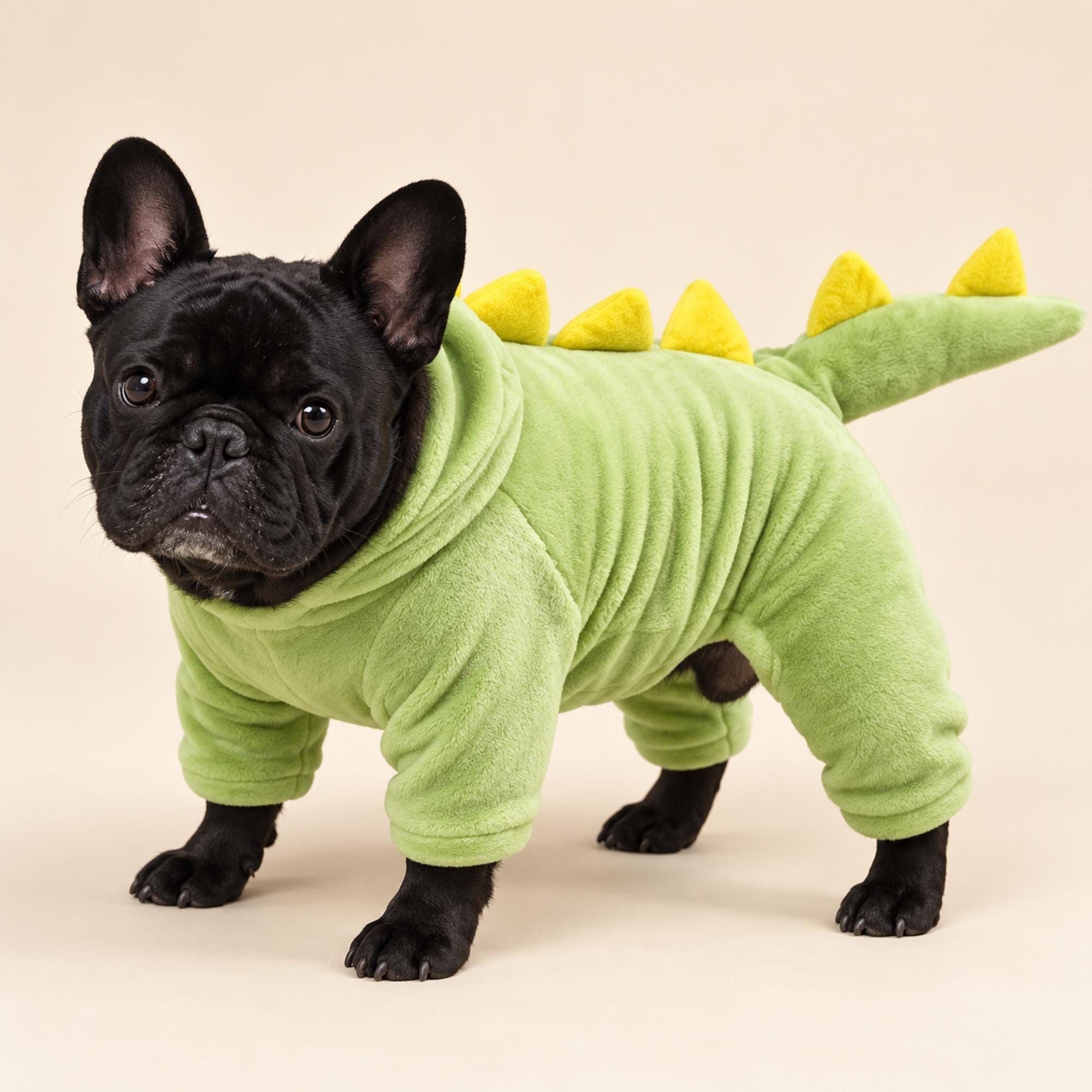
A quick inspection before dressing your pet can catch loose stitching, a damaged closure, or a decoration that has started to come away. These checks matter most when an outfit has several parts or raised details, but even a simple shirt deserves a close look after storage or repeated wear. Think of the check as part of getting dressed, not a guarantee that an item will stay secure once your pet starts moving.
Choose a bright, uncluttered spot and examine the garment before it goes on. Then check the fit and watch your pet while the outfit is worn. A costume that looks intact on a hanger may shift, rub, or draw unwanted chewing once it is on a moving animal. If anything seems loose, restrictive, or distressing, take the outfit off and reassess rather than trying to make the photo or occasion work.
Start With a Clear, Well-Lit Inspection
Lay the garment flat where you can see its whole shape, then turn it over to inspect both sides. Good light helps reveal broken threads, small holes, uneven edges, and decorations that blend into the fabric. Remove lint or loose fur only if it can be done without pulling at the garment. Keep pets away from loose bits you find during the check, especially if they tend to investigate with their mouths.
Look over the outfit from one end to the other rather than checking only the most colorful area. A four-leg jumpsuit such as a dinosaur costume has openings, a back detail, and a tail to review, while a shirt has a neckline and sleeve edges that can be overlooked. Check the inside as well as the outside, since rough or loose stitching may be easier to notice against the lining or reverse side.
Trace Seams and Stress Points
Follow each seam with your eyes, paying extra attention to places that bend or bear movement: leg openings, the neck, the chest, and joins between panels. Watch for skipped stitches, fraying, gaps, or fabric pulling away from a seam. A small flaw can widen with movement, so do not assume that a garment is ready simply because the damage is not obvious from a distance.
Gently spread the fabric beside a seam to see whether the stitching holds together; avoid forceful tugging that could worsen a weak spot. Check where attached features meet the main garment, too. On a costume with a tail or raised back details, examine the attachment points and the nearby fabric. If a seam opens or a piece shifts freely, set the outfit aside until it can be assessed or repaired safely.
Check Every Fastener and Opening
Find each closure, if the garment has one, and operate it slowly. Look for bent, cracked, missing, or snagging parts, and confirm that the surrounding fabric is not torn or stretched. Check that closures meet as intended without forcing them. A fastener that catches on fur, skin, or another part of the garment can make dressing unpleasant and may become harder to manage once your pet is moving.
Inspect openings even when there is no separate fastener. Necklines, sleeves, and leg openings should lie flat and allow the pet to move without pinching or blocking movement. Do not assume that a decorative collar or costume detail is a walking restraint; use appropriate walking equipment separately. If an opening is difficult to put on or take off, or seems likely to restrict movement, choose another outfit or leave clothing off.
Examine Embellishments and Raised Details
Look closely at anything attached to the garment: embroidery, appliqués, padded shapes, decorative spikes, tails, or other raised features. Check for loose edges, exposed threads, holes, and pieces that wobble or lift away from the fabric. Pay attention to small components that could detach. Do not let a pet chew or mouth an outfit, whether it is being worn or waiting nearby.
The monster pet shirt, for example, has embroidered facial features on its back, so inspect the stitching around the eyes, mouth, and other details. A baker costume includes dimensional padded arms and a plush baguette across the front; check those attached elements and the fabric around them before use. If a decoration is coming loose, do not rely on supervision alone to make the garment suitable.
Assess Fabric, Edges, and Hidden Damage
Scan the main fabric for thinning, snags, holes, stiff or rough spots, and marks that may conceal damage. Turn up hems and inspect the edges, where wear can start before it becomes visible across the garment. Run your fingers lightly over accessible seams and trim to notice anything sharp, scratchy, or unusually rough. Stop if handling reveals a defect rather than pulling at it to see how much it can withstand.
Pay special attention to areas that will sit against the pet or bend during ordinary movement. An inside surface that feels uncomfortable to your hand may also irritate an animal, but a visual and touch check cannot predict every response. Consider the pet’s behavior as part of the inspection: if they resist a particular area being handled, do not force the garment onto them. A sound-looking outfit is not automatically a good choice for every pet.
Check Fit and Movement After Dressing
Once the garment passes the visual check, put it on gently and confirm that the fit still looks right. Follow the product’s sizing guidance rather than choosing by breed or weight alone; the dinosaur jumpsuit listing, for instance, advises checking neck, chest, and back measurements. A garment that twists, bunches, slips, or pulls at its seams may not be suitable, even if it appeared intact while lying flat.
Stay beside your pet and observe a few ordinary movements, such as standing, turning, and walking a short distance. Make sure the outfit does not cover the eyes, nose, or mouth, catch on the legs, or interfere with natural movement. Watch for repeated scratching, freezing, trying to escape, chewing, or other signs of discomfort. Remove the outfit promptly if your pet seems uncomfortable or movement is obstructed.
Use Extra Caution With Cats and Costume Pieces
Cats may reject clothing even when it appears to fit, and a costume can add more unfamiliar shapes and sensations than a plain garment. Keep the first try brief and closely supervised. Do not restrain a cat to complete dressing or insist on keeping an outfit on for a photograph. If the cat resists, becomes distressed, or cannot move normally, remove the garment and choose no outfit instead.
Costume parts positioned across the chest or back deserve a separate movement check because they may shift as a pet turns or lies down. Make sure a feature does not dangle where it can catch, press against the face, or interfere with paws. Never leave a pet unattended in clothing. For a short photo session, keep the camera ready before dressing so the outfit can come off as soon as the moment is over.
Recheck After Wear and Before Storage
After each wear, inspect the same seams, closures, and decorations again. Movement can expose a flaw that was hard to see beforehand, while fur or debris can hide an emerging tear. If you notice damage, separate the item from ready-to-wear clothing so it is not accidentally chosen next time. Do not put it back on until you have decided whether the issue can be addressed safely.
Store inspected garments so they are not crushed under heavy items or mixed with loose parts and household clutter. Follow any care instructions supplied with the particular product; do not assume that every fabric or embellishment can be washed the same way. After cleaning or storage, repeat the before-wear check. A previous inspection is useful, but it cannot confirm the garment’s condition after handling or time in a drawer.
A thoughtful next step
Before wear, take a moment to scan the fabric, trace the seams, test each fastener gently, and examine every attached detail. Then check fit and watch your pet closely. Set aside anything damaged, remove clothing at the first sign of discomfort, and remember that no outfit is necessary. These simple checks help you make a thoughtful choice each time, without treating a costume or garment as a substitute for supervision.
Explore our Apparel & Costumes collection, check measuring and fit guidance, or ask us about a product detail before choosing.
Pieces mentioned in this guide
These are catalog examples, not a promise of fit or availability. Read each listing and confirm the details before ordering.