

A pet wardrobe does not need to fill a drawer to feel complete. A few thoughtfully chosen pieces can cover the situations when clothing is useful or enjoyable, from a cool indoor evening to a family photo. The trick is to shop around your pet’s habits rather than an imagined calendar of outfits. Start with what your pet willingly wears, what fits their routine, and what you can supervise comfortably.
Think in terms of roles, not quantity: one practical layer, perhaps one playful outfit for a particular occasion, and a simple way to finish a look if your pet tolerates it. Not every animal needs all three. A dog that dislikes sleeves may be happiest with no clothing, while a cat may prefer a brief, supervised photo moment—or none at all. A small wardrobe is successful when it earns its space.
Start with your pet’s real routine
Before browsing, note when you genuinely reach for pet clothing. Does your small dog wear an outfit for a supervised indoor visit with family, a cool-weather outing, or a seasonal photo? Is there a costume party on the calendar? If the answer is “mostly never,” there is no reason to assemble a full collection. Your pet’s ordinary week is a better shopping guide than a display of appealing designs.
Include your pet in the decision. Notice whether they move, rest, and interact normally in clothing, and whether they seem eager to put it on next time. If they repeatedly resist, freeze, paw at the garment, or try to remove it, stop and take it off. Clothing is optional; no outfit is preferable to one that causes visible distress or interferes with normal movement.
Choose one useful starting piece
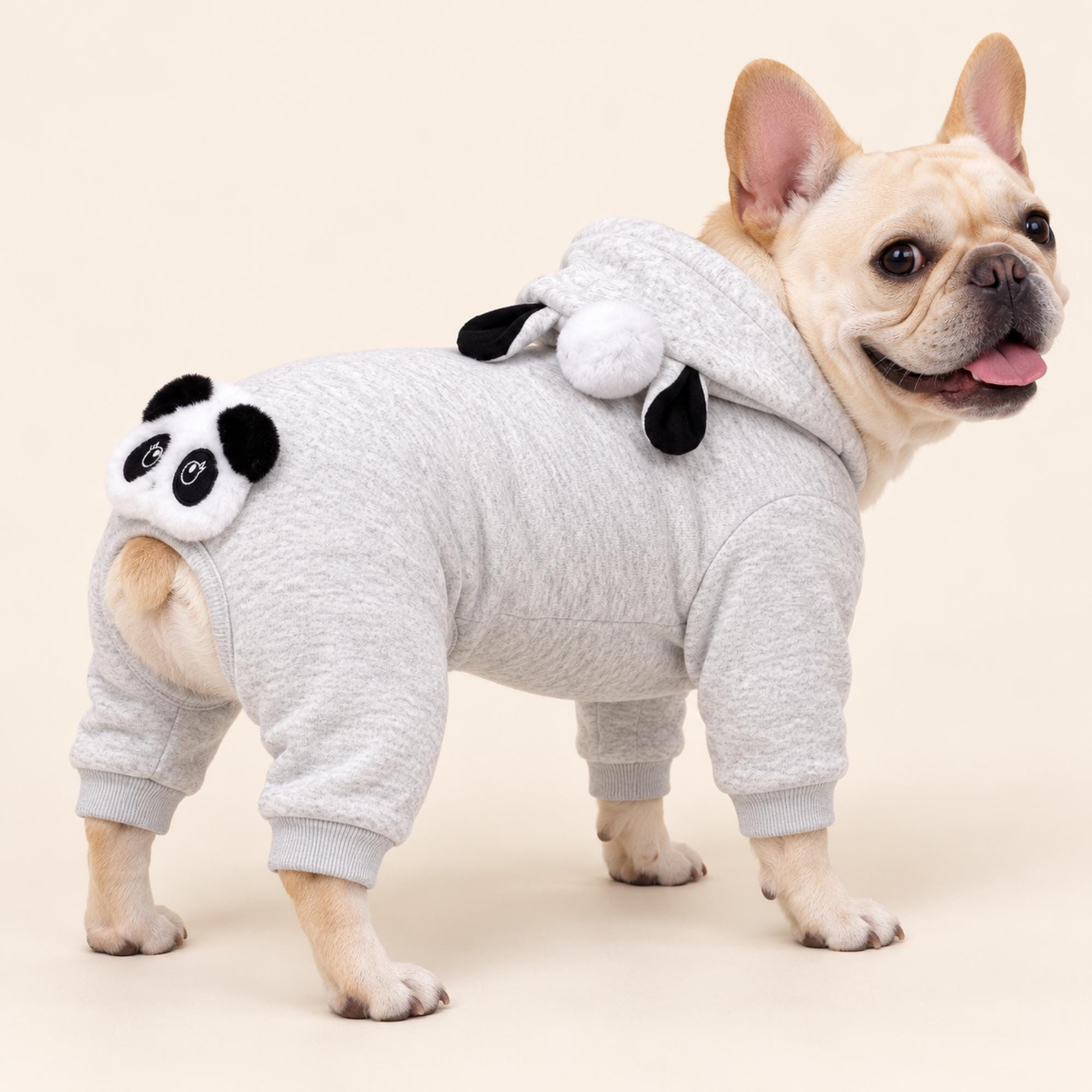
If a garment has a clear place in your routine, choose that piece first rather than buying a coordinated set. For a small dog that accepts full coverage, the Gray Panda Dog Jumpsuit is a catalog example with a heather-gray body, four-leg design, hood, and panda details. Its neutral color can suit casual photos as well as lounging, but its hood and leg coverage still make fit and your dog’s tolerance essential considerations.
A useful starting piece should be easy to imagine using more than once, not merely attractive in a product photo. Consider whether you have a suitable occasion, whether the design fits your pet’s temperament, and whether you can supervise while it is worn. A hood, sleeves, or raised decorations may be charming details, but they are not requirements. Choose a simpler option—or skip clothing—if those features get in the way.
Let fit guide the shortlist
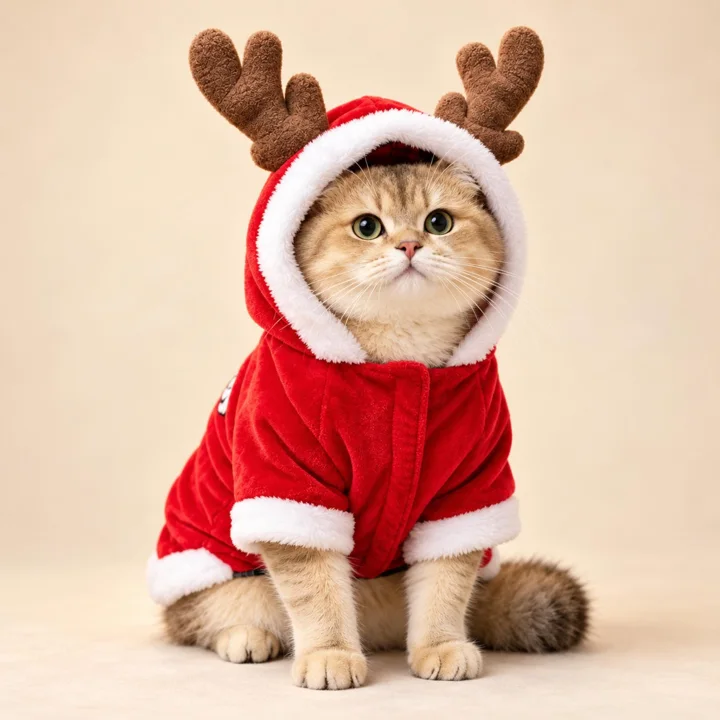
Measure your pet and compare those measurements with the specific product’s size chart before ordering. For the Reindeer Pet Costume, the listing advises checking neck circumference, chest circumference, and back length, and choosing by measurements rather than breed or weight alone. That is a useful habit for any garment: pets with similar weights can have different proportions, and a label such as “small” cannot tell you how a particular cut will sit.
When trying a piece on, check that it does not obstruct the face, eyes, ears, breathing, or ordinary movement. Watch your pet walk, sit, and lie down under supervision. Stop if the garment shifts into an unsafe position or your pet appears uncomfortable. Do not leave a dressed pet unattended, and do not treat clothing as walking equipment; use an appropriate leash and harness or collar separately.
Separate everyday wear from costume wear
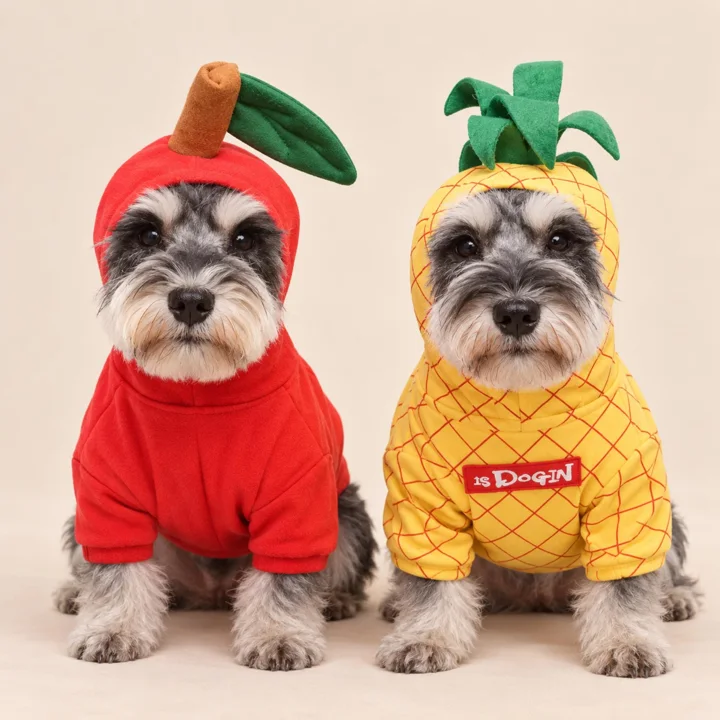
A costume earns its place through a specific use, such as a holiday gathering or a short photo session. The Strawberry Dog Costume, with its red fruit-inspired body and leafy hood, is an example of a deliberately expressive look rather than a neutral staple. If you enjoy a themed occasion and your dog is comfortable in the outfit, it may be a fun addition. If not, a photo without a costume is perfectly good.
For an everyday piece, favor a design you can picture using across more than one ordinary moment. That does not mean every garment must be plain, or that a colorful outfit cannot be worn casually. It means being honest about the difference between “I love this idea” and “my pet will wear this comfortably.” A wardrobe with one clearly chosen occasion piece can be more useful than several costumes waiting for a special date.
Build a color story without buying a set
A small palette makes individual pieces easier to combine. Start with a color already present in your pet’s collar, carrier, or favorite photo backdrop, then add one accent if you like. Gray, for example, can sit quietly beside many colors, while the panda details on the Gray Panda Dog Jumpsuit add a playful focal point. Use color as a way to make choices simpler, not as a reason to purchase matching items your pet does not need.
You can also create visual variety with one distinctive outfit rather than a stack of similar garments. A bright strawberry costume serves a different purpose from a subdued jumpsuit, so owning both only makes sense if both have a realistic use and your dog accepts them. If you are unsure, pause between purchases. Seeing how often the first piece actually gets used will tell you more than guessing about a future wardrobe.
Treat small accessories as optional
A decorative bandana, bow, or other neckwear can change the look of an outfit without adding another full garment, but only if your pet tolerates it. Check that the item does not interfere with breathing, swallowing, vision, or normal movement, and supervise while it is worn. Do not assume decorative neckwear is suitable for attaching a leash or that a particular fastening has safety features unless the product description explicitly says so.
Some pets are more comfortable with a brief accessory than with sleeves or a hood; others dislike anything around the neck. Let your pet’s response decide whether an accessory belongs in the wardrobe. If they scratch at it, become distressed, or keep trying to remove it, take it off. A collar needed for identification is a separate practical item, not a reason to add decorative pieces.
Make room for washing and storage
A small collection is easier to manage when each garment has a sensible home and you can find its care instructions. Check the product information for cleaning guidance before buying; do not assume every fabric or decorative detail can be washed the same way. Raised features, hoods, and embellishments may call for extra attention, so follow the directions supplied for the specific item rather than applying a one-size-fits-all method.
Store clothing clean and dry, away from places where your pet might chew or become tangled in it. Before each use, look over the garment for loose threads, damaged seams, or decorations that have shifted. Put it away if you spot damage. Keeping fewer pieces makes these checks more manageable and helps you notice when an item is no longer in good condition.
Use a simple before-you-buy test
Ask four questions before adding a piece: What occasion or routine is it for? Does its design suit my pet’s comfort and temperament? Can I check the fit using the product’s measurements? Will I supervise and remove it when needed? If you cannot answer one of these clearly, wait. A saved idea is not a commitment, and a smaller wardrobe leaves room to learn what your pet actually accepts.
For cats, set the bar especially carefully: many cats reject clothing, and restraint or persistent attempts to escape are signs to stop rather than reasons to keep trying. If a cat willingly accepts a brief outfit, keep the session supervised and make sure nothing obstructs movement, vision, or breathing. Otherwise, choose no outfit. The same principle applies to dogs: a photo is never worth forcing a garment onto an uncomfortable pet.
A thoughtful next step
A well-chosen pet wardrobe is measured by use and your pet’s willingness, not by how many pieces fit in a drawer. Begin with one clear purpose, check fit carefully, and add a playful option only when there is a real occasion and your pet enjoys wearing it. Keep every clothing session supervised, stop at signs of discomfort, and remember that leaving your pet as they are is always a valid choice.
Explore our Apparel & Costumes collection, check measuring and fit guidance, or ask us about a product detail before choosing.
Pieces mentioned in this guide
These are catalog examples, not a promise of fit or availability. Read each listing and confirm the details before ordering.