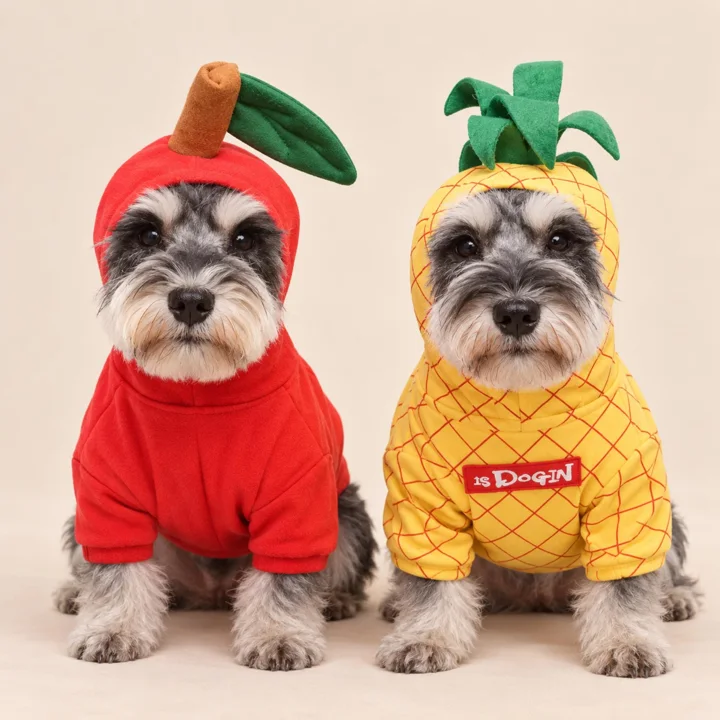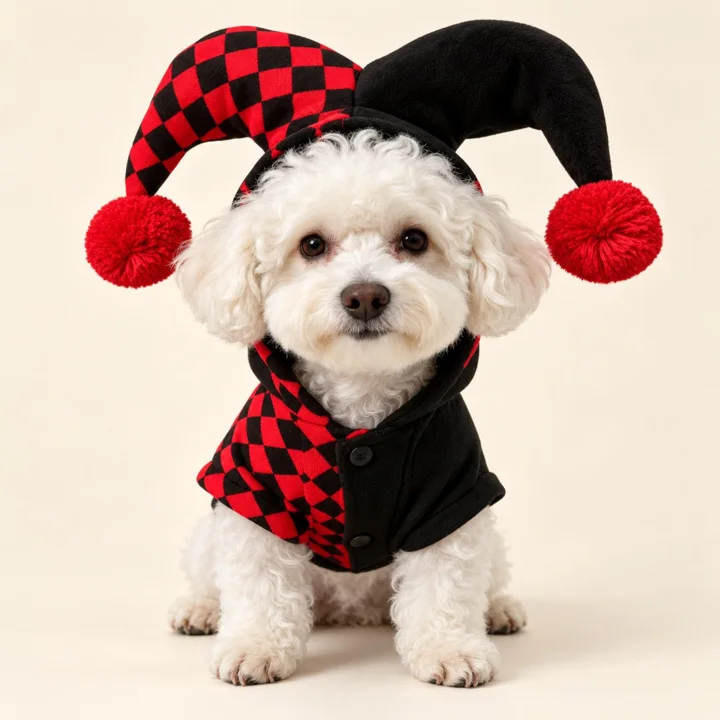


Pet sweaters, cardigans, and vests can all add a layer of style, but they create different looks and cover the body in different ways. A sweater usually gives a continuous, pullover silhouette; a cardigan suggests an open or fastened front; and a vest leaves more of the legs uncovered. Those distinctions can help you narrow your choices before considering color, pattern, or occasion.
Start with your pet rather than a trend. Consider how they move, whether they already tolerate clothing, and where an outfit would be worn. A quiet photo at home calls for a different choice than a busy gathering. The right style is not simply the most eye-catching one; it is an option that fits appropriately, does not obstruct movement, and can be removed as soon as your pet shows discomfort.
Sweater, cardigan, or vest?
A sweater is a straightforward choice when you want a continuous garment across the torso. Its familiar shape works well for a coordinated, everyday look, though the exact cut varies by design. A cardigan-inspired style offers a different visual effect, with a front opening or fastening when the garment is designed that way. Check how it closes and whether any details could catch or rub before choosing it for your pet.
A vest usually creates a lighter-looking silhouette because it leaves more of the legs uncovered. That can suit pets who resist sleeves or simply make a cleaner outline in photos. The word “vest” can describe many cuts, so look at the actual product shape instead of relying on the label alone. Whatever style you consider, it should not interfere with walking, sitting, toileting, or seeing.
Match the cut to your pet’s habits
Think about what your pet does during an ordinary day. A dog who likes to stretch out on the sofa may find a close, restrictive cut bothersome, while a pet who stands calmly for a brief photo may tolerate a simple outfit for a short time. Notice where your pet dislikes being touched, and avoid garments that press on sensitive areas or require awkward handling to put on.
Cats may reject clothing even when a design looks simple. If your cat freezes, struggles, hides, bites at the garment, or repeatedly tries to remove it, take it off rather than waiting for them to adjust. Some cats are happiest without an outfit, and that is a perfectly good style choice. If a cat accepts clothing briefly, stay nearby and keep the session short and supervised.
Make fit the first styling decision
Measure your pet according to the seller’s instructions and compare those measurements with the listed size chart before ordering. A size label alone is not a reliable guide across different cuts or products. Pay attention to the neck, chest, and body length measurements requested, and check whether the design has sleeves, a hood, or a close neckline that may affect fit.
When the garment arrives, assess it in a calm setting. It should not pull across the chest, bunch tightly, drag on the ground, or limit a natural stride. Keep an eye on the neckline and openings as your pet moves from standing to sitting. Do not leave clothing on an unattended pet, and remove it if you see rubbing, snagging, restricted movement, or signs of distress.
Choose coverage for the occasion
The occasion can guide how much visual detail you want. For a family photo, a simple vest or sweater in a color that complements the setting may be enough. A cardigan-like look can feel more dressed up, while a plain silhouette may suit a casual portrait. Think about the background, too: a bold pattern can stand out against a simple room, while a quieter color can keep the focus on your pet.
For gatherings, consider the environment as well as the outfit. Crowded rooms, other animals, children, and unfamiliar noises can make clothing less welcome. Make sure your pet can move freely and retreat from attention. An outfit is optional; never keep one on just to complete a picture or match a theme. A few comfortable moments—or no clothing at all—are better than a prolonged session your pet resists.
Build a color palette that feels natural
Start with your pet’s coat, then choose whether you want contrast or coordination. A bright shade can make a dark coat pop, while a deeper color may create a more understated look on a pale coat. You can also draw one color from a collar or a familiar blanket for a pulled-together photo. Since lighting changes how colors appear, check the garment in the room where you plan to take pictures.
Patterns can set the mood without adding extra accessories. Plaid reads as seasonal, stripes feel playful, and a solid color makes a versatile starting point. If a garment already has prominent artwork, trim, or a hood, keep other styling details restrained. Decorative neckwear is not a substitute for a walking restraint, and you should not assume a clothing item includes a safety-rated clasp or a particular care method unless its product description says so.
Layer thoughtfully, not automatically
Layering is a styling choice, not a requirement. If you are considering a vest over another garment, make sure the combined fit is not tight, bulky, or likely to shift. Two layers can bunch at the shoulders or chest and make ordinary movement harder. Try only what your pet tolerates, supervise the full time, and remove either piece if it rubs, twists, or draws repeated attempts to escape.
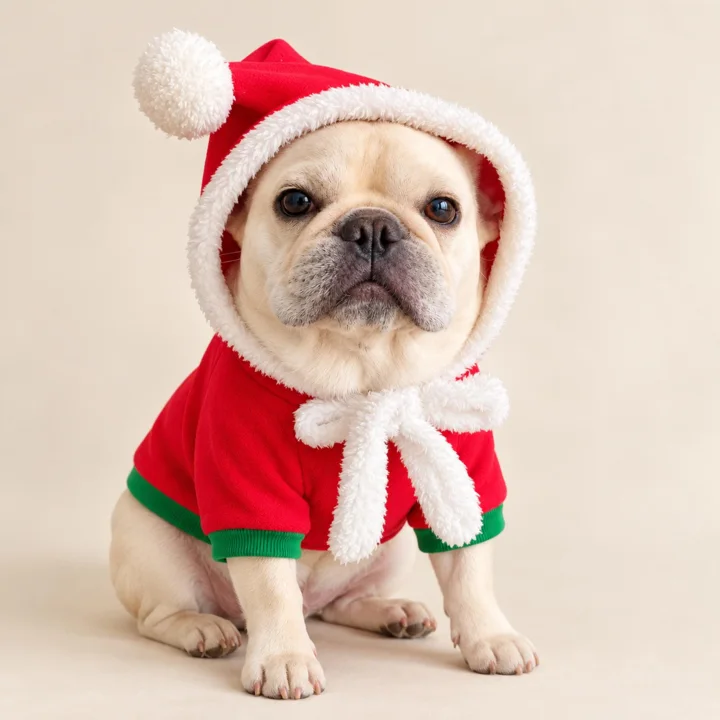
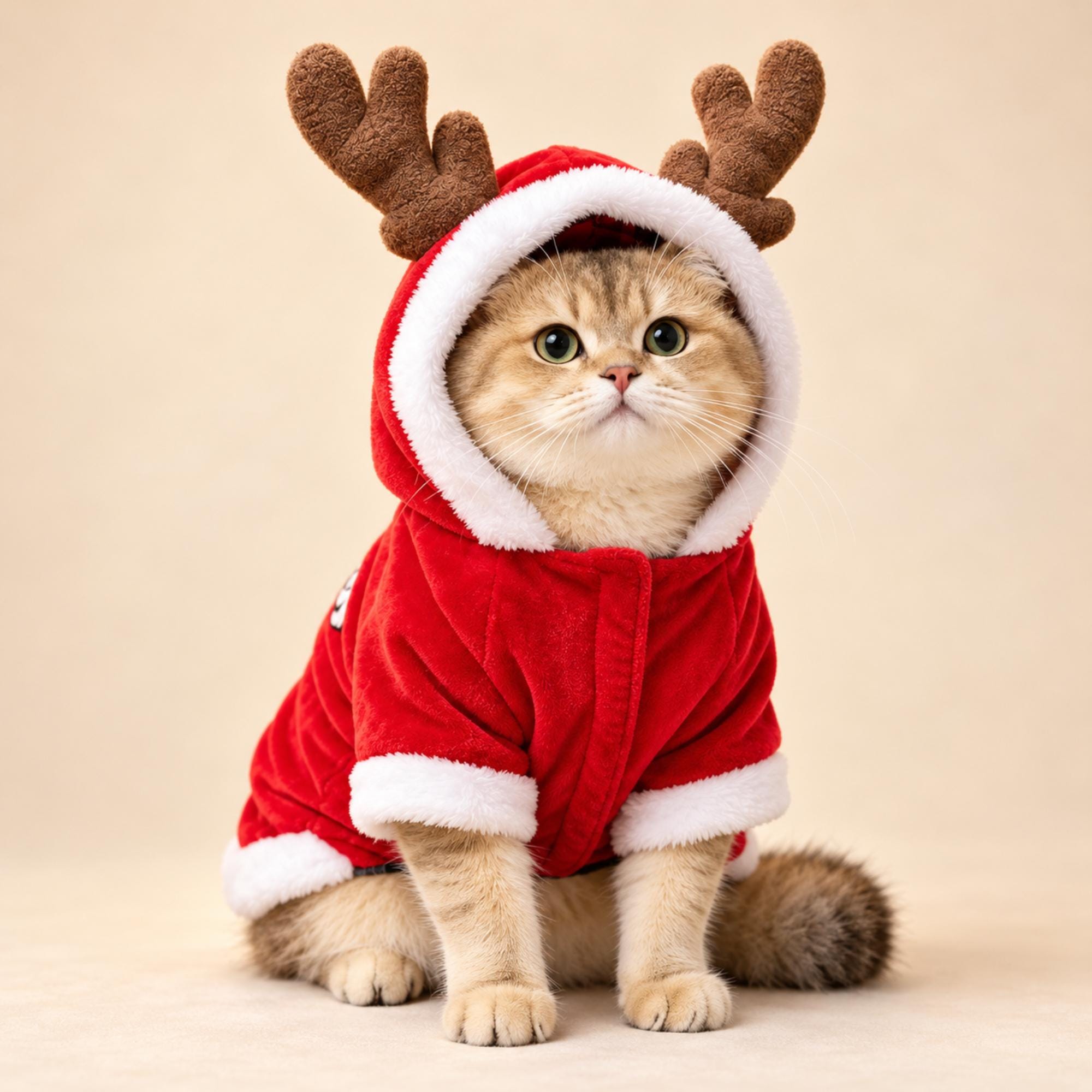
A hood can change the look considerably, but it should never cover the eyes, restrict head movement, or interfere with hearing and awareness. Some pets dislike anything near their ears or face. A catalog example such as the Christmas Reindeer Hoodie is a festive hooded outfit for cats and dogs, but its seasonal design is distinct from a basic vest or sweater. Consider the listed fit details and your pet’s response before choosing it.
Use seasonal designs with a light touch
Holiday clothing can be charming for a brief celebration or photograph, especially when the outfit does most of the styling work on its own. Paw Dazzle’s catalog includes a Reindeer Christmas Pet Hoodie with red holiday styling and dimensional antlers, as well as a Velvet Christmas Pet Shirt in red or green. These are examples of festive pet apparel, not cardigans or vests; compare the specific product shape and measurements rather than assuming the category is interchangeable.
For a seasonal look that feels balanced, choose one focal point: a strong color, a recognizable motif, or a playful silhouette. Keep the session brief and let your pet set the pace. If they seem uneasy, take the outfit off and enjoy the gathering without it. Seasonal photos can also work beautifully with a favorite blanket, a simple background, or a naturally expressive pose instead of added clothing.
Keep the look practical and simple
Before settling on a style, think about the small details that affect everyday use: how the garment goes on, whether it stays in place, and whether your pet can move naturally while wearing it. Follow the product’s care instructions rather than guessing from its appearance. If care details are not provided, check with the seller. Avoid assuming that a particular fabric is washable, that a closure is breakaway, or that a garment has been tested for a specific safety purpose.
A useful wardrobe does not need many pieces. One well-fitting, easy-to-check outfit for an occasional photo may be a better choice than several styles your pet rarely tolerates. For a first try, introduce clothing when your pet is calm, reward relaxed behavior if appropriate, and remove the item after a short interval. Stop at any sign of discomfort, and choose no outfit whenever that is the kinder option.
A thoughtful next step
For a polished choice, decide first how much coverage your pet can comfortably tolerate, then confirm the fit and select a color or detail suited to the occasion. Sweaters, cardigan-inspired cuts, and vests offer different silhouettes; none is worth keeping on if it restricts movement or causes distress. Supervise clothing sessions, follow the individual product details, and let your pet’s behavior—not the photo plan—make the final call.
Explore our Apparel & Costumes collection, check measuring and fit guidance, or ask us about a product detail before choosing.
Pieces mentioned in this guide
These are catalog examples, not a promise of fit or availability. Read each listing and confirm the details before ordering.