

Fleece pet apparel can add a soft layer and a distinctive look to a pet’s wardrobe, but fabric feel is only one part of a good choice. Fit, coverage, closures, and your pet’s reaction all matter. A garment that looks charming on a product page may be a poor match for a particular body shape or a pet who dislikes clothing.
Start by thinking about when and where the outfit will be worn, then inspect the product details before ordering. Fleece is not a promise of warmth or comfort for every animal, and clothing should never interfere with movement or supervision. These checks can help you choose thoughtfully—and recognize when a lighter garment or no outfit is the better option.
Check the fabric description, not just the word fleece
“Fleece” can be used broadly in apparel descriptions, so read the listed material details rather than relying on a product name or photo. Look for a clear description of the fabric and any lining or trim. If those details are missing and the material matters to your decision, ask for clarification before ordering. Do not assume that a plush-looking surface is fleece, or that two garments described as fleece will feel the same.
Also consider where the fabric sits against your pet. A soft outer surface does not tell you whether seams, cuffs, ties, or decorative elements may rub. For example, a hood with plush trim may look gentle in a photo, but the fit around the neck and face still needs attention. Choose based on the whole garment’s construction, not a single appealing texture.
Measure carefully and compare the garment’s size guidance
Use the seller’s measurement instructions and compare your pet’s measurements with the size chart provided for that specific item. A pet’s weight alone may not indicate whether a garment will fit its chest, neck, or body length. Measure with your pet standing naturally, keep the tape comfortably close without pulling tight, and repeat any measurement that seems inconsistent.
Do not assume that the same labeled size will fit across different styles. A four-leg jumpsuit and a short-sleeved hoodie cover different areas and may sit differently on the body. If your pet falls between listed sizes or the chart does not explain how to measure, seek clarification rather than guessing. A fit that is too tight can restrict movement; excess fabric can catch or twist.
Match coverage to your pet’s routine
Think about the actual setting before choosing full-body fleece apparel. A pet lounging indoors may have different clothing needs from one briefly wearing an outfit for a supervised photo. Consider the room, the activity, and how easily you can check your pet. Clothing is optional, and it should not be treated as a substitute for appropriate care, shelter, or attention to changing conditions.
Coverage also affects practical tasks. Check whether the garment leaves enough room for your pet to walk, sit, lie down, and use the bathroom without the fabric getting in the way. A four-leg outfit such as the catalog’s gray panda dog jumpsuit offers a different silhouette from a cape or short-sleeved top. Choose the amount of coverage your pet can comfortably tolerate, not simply the most elaborate look.
Inspect sleeves, openings, and moving parts
Look closely at every opening and attachment point shown in the description. Sleeves and leg cuffs should not appear to pinch, drag, or bunch around the limbs. Check how the garment sits at the neck, chest, and belly, and consider whether your pet’s coat or body shape may affect the fit. If a detail could limit a natural stride or turn, it deserves more scrutiny.
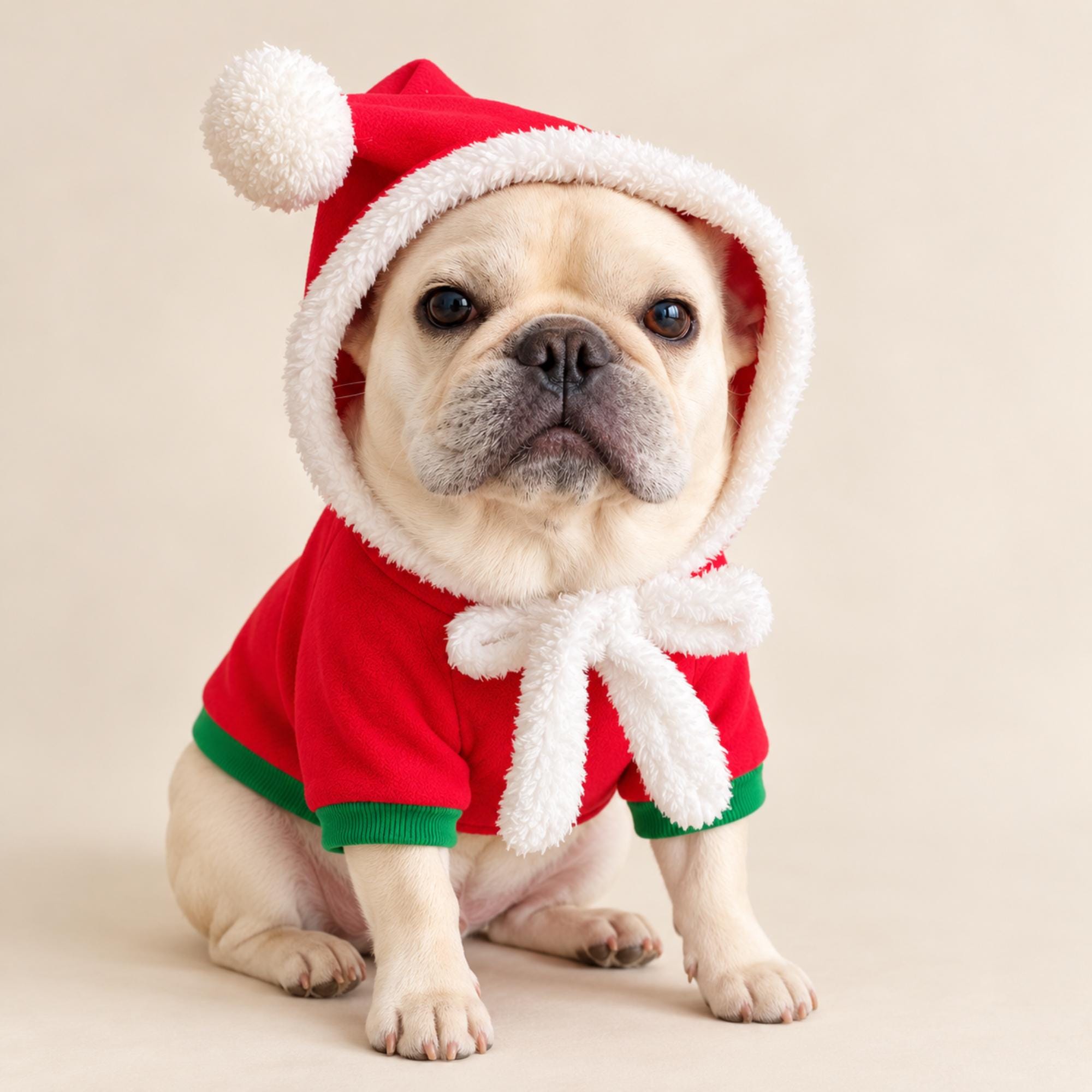
Hoods, pom-poms, bows, and ties can change how an outfit behaves when a pet moves. The catalog Christmas dog hoodie, for example, is described with a hood, pom-pom, short sleeves, and long ties intended to form a bow under the chin. Those features are decorative, not a reason to leave the garment unattended. Ensure nothing obstructs vision, breathing, or movement, and stop use if it shifts or catches.
Consider your pet’s individual tolerance
Some pets accept clothing; others find it unfamiliar or stressful. Begin with a brief, supervised introduction in a calm setting, and watch the animal rather than focusing on the outfit. Freezing, repeated attempts to remove the garment, hiding, unusual agitation, or difficulty moving are reasons to take it off. Do not force a pet to wear apparel for a photo or event.
Cats may be particularly unwilling to wear clothing, and a calm first moment does not mean they will remain comfortable. Offer a short trial only if the cat can move freely and the garment does not obstruct vision or normal behavior. Stop when the cat appears uncomfortable, and choose no outfit when that is the kinder option. A pet’s response matters more than completing a planned look.
Choose a silhouette that suits the occasion
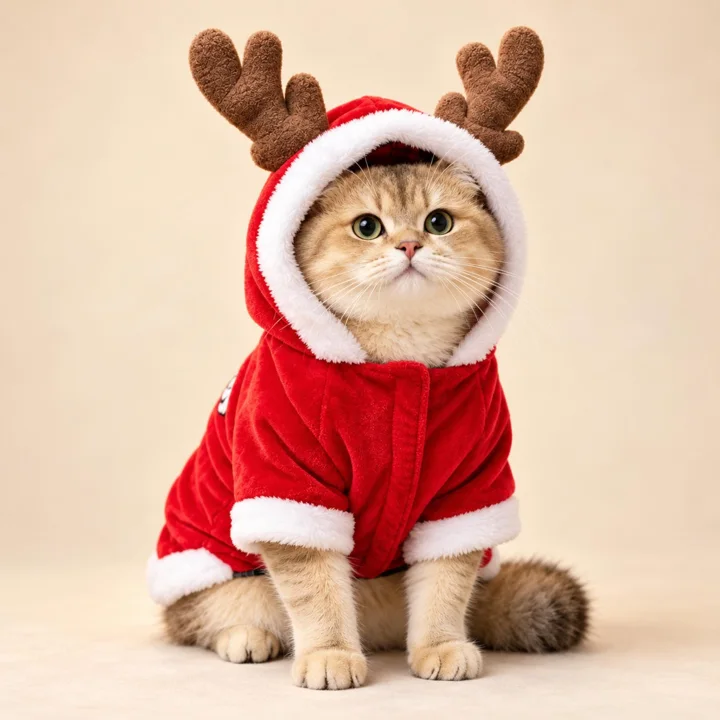
For everyday style, consider whether a simple shape fits the setting better than a costume-like design. A hooded jumpsuit can create a playful, coordinated appearance, while a cape leaves more of the body uncovered. The catalog reindeer cape, described with a hood, antlers, ears, and a front bow, is an example of a festive silhouette for a supervised occasion—not a walking restraint or an all-purpose garment.
If the outfit is for a gathering or photographs, plan for short, supervised wear and allow your pet to opt out. Props and decorative details can make a picture more distinctive, but they should not compromise a clear view of the face or free movement. For routine wear, understated designs may be easier to assess and less distracting. Let the activity and your pet’s tolerance guide the choice.
Read product details and confirm what is included
Before placing an order, check the listing’s stated design, color options, intended pet type, and sizing information. Product photographs can show styling details without answering practical questions about materials, fit, or included pieces. The Christmas hoodie listing describes red Santa and green Elf styles, while the panda jumpsuit is described as a gray, hooded, four-leg design. Treat those as specific catalog examples, not evidence that every fleece item shares their features.
Ask about any important detail the listing does not settle, including how a closure works or whether an accessory is included. Do not assume a bow, hood, or decorative piece is detachable, and do not infer a breakaway clasp or safety rating. If personalization is offered, confirm the options and details before ordering. Clear answers are more useful than relying on assumptions based on a product image.
Supervise wear and reassess as your pet moves
Stay nearby whenever your pet wears a new garment, especially during the first try. Watch for twisting, snagging, chewing, or fabric shifting toward the face or limbs. Check that your pet can move naturally and that the outfit does not obstruct breathing or vision. Remove it promptly if a fit problem appears, even if the garment looked correct while your pet was standing still.
Supervision remains important during photos, parties, and indoor lounging; decorative clothing is not designed to restrain a pet. Take the outfit off when you cannot keep an eye on your animal, when it becomes uncomfortable, or when the setting makes clothing impractical. Follow the care instructions supplied with the item rather than guessing at a washing method. Recheck fit and construction before each use.
A thoughtful next step
A thoughtful fleece apparel choice starts with accurate measurements and a clear understanding of the product description, then continues with a close look at coverage, decorative details, and your pet’s response. Introduce any garment briefly, supervise every wear, and remove it at the first sign of discomfort or obstruction. If an outfit does not suit your pet, no outfit is a perfectly practical choice.
Explore our Apparel & Costumes collection, check measuring and fit guidance, or ask us about a product detail before choosing.
Pieces mentioned in this guide
These are catalog examples, not a promise of fit or availability. Read each listing and confirm the details before ordering.