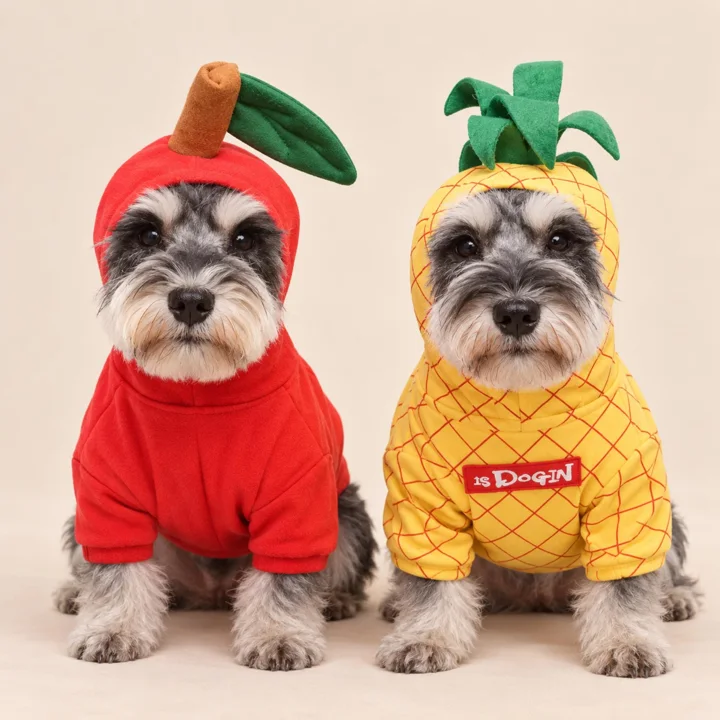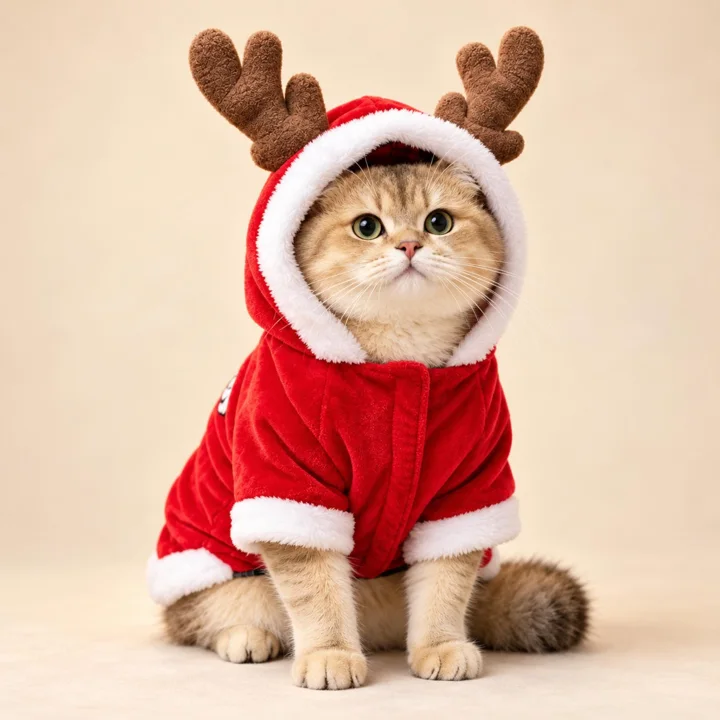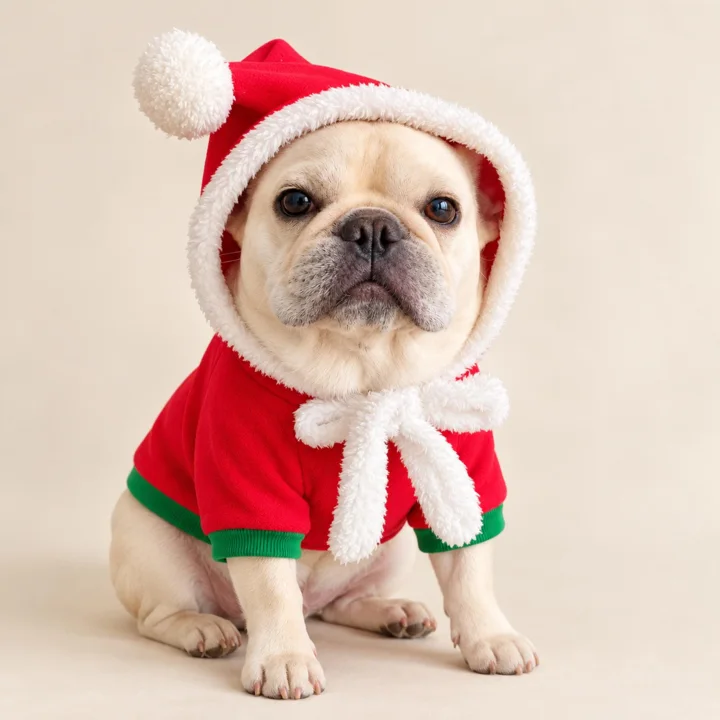


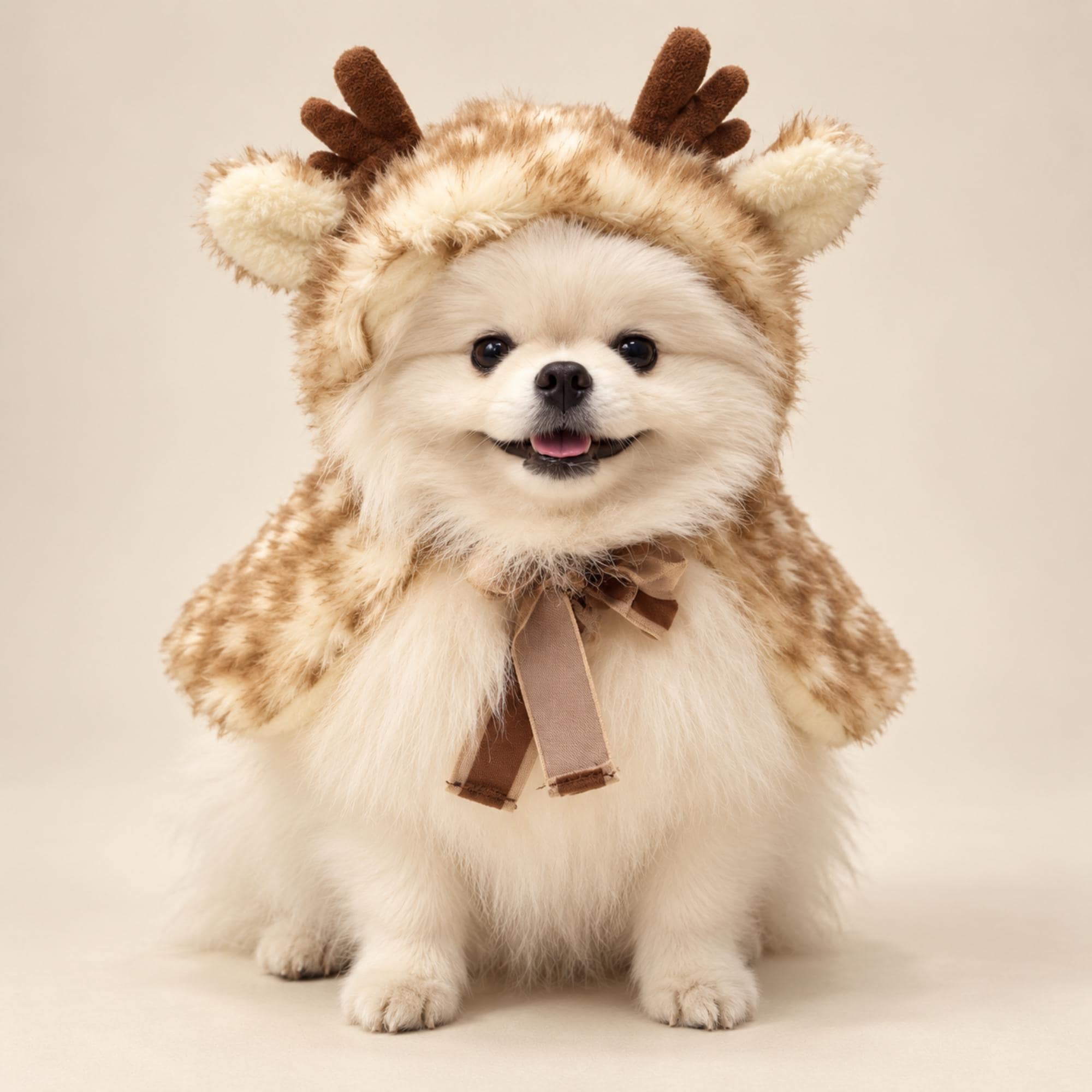
An animal-inspired outfit can give a pet portrait a clear theme before you choose a backdrop or pose. A panda hood, reindeer antlers, or strawberry-shaped costume adds a little story to the frame and gives viewers an instant clue about your pet’s character. The best photographs still feel like your pet, though—not like a costume arranged around an animal who would rather be somewhere else.
Start with the pet’s tolerance, the setting, and the image you want to make. A short portrait at home calls for a different approach than a busy gathering, and a cat who dislikes clothing may be happiest in a naturally themed scene. With a suitable outfit, a calm setup, and realistic expectations, you can make playful pictures without turning the session into a long production.
Choose a character that suits the scene
Think about the photograph’s setting before choosing an animal-inspired look. A reindeer cape fits naturally into a holiday portrait, while a panda jumpsuit can make a casual indoor picture feel whimsical without relying on seasonal decorations. A strawberry costume creates a brighter, more graphic scene for a birthday or fruit-themed setup. Matching the outfit to the occasion helps the picture feel intentional rather than like a costume selected at random.
Your pet’s personality can guide the choice, too. A dog who settles easily for a few quick pictures may tolerate a more detailed look, while a watchful or energetic pet may do better with fewer pieces and a familiar background. A costume does not need to represent your pet literally. It is a visual prompt: choose a character that makes you smile and leaves room for your pet’s own expression.
Match the outfit’s shape to the portrait
Different silhouettes tell different stories on camera. A cape creates a dramatic outline while leaving more of the pet’s body uncovered than a full jumpsuit. A hooded, four-leg outfit produces a more complete character transformation, which can work well for a seated or standing portrait. Consider how much of the costume will actually show in the final framing; a detail hidden behind a chair or cropped out of the picture may not add much.
Catalog examples include a fawn-spotted reindeer cape with antlers and a bow, a gray panda jumpsuit with a raised panda face on the back, and a red strawberry jumpsuit with seed details and a leafy hood. These designs offer distinct shapes and focal points. Check the product description and measurements before deciding whether a particular style is appropriate for your pet; do not assume that a costume will fit because it looks similar in a photo.
Let the face remain the focal point
A playful costume is most engaging when you can still see the animal wearing it. Keep the pet’s eyes, nose, and expression clear, and check that a hood or decorative feature does not slip into the face. If the outfit has a prominent back detail, such as a raised panda face, try a three-quarter angle as well as a straight-on pose. The photograph can show both the costume and your pet’s familiar features.
Use a simple backdrop when the outfit already has a bold color or dimensional details. A plain wall, uncluttered corner, or familiar blanket can give the costume room to stand out. For a more elaborate scene, limit competing props and patterns. A red strawberry outfit, for example, may read clearly against a neutral background without additional fruit decorations. Take a test picture and adjust the scene if the costume blends into its surroundings.
Check fit and movement before taking pictures
Before the session, follow the product’s sizing information and compare it with your pet’s measurements. Look for a fit that allows ordinary movement without pulling, twisting, or sitting awkwardly. Check the hood, cuffs, openings, and any decorative elements while your pet is standing and changing position. A costume that looks tidy in a product image may sit differently on an individual animal, so a brief fitting is more useful than guessing from appearance alone.
Watch what your pet does once the outfit is on. Stiff movement, repeated attempts to remove it, hiding, or visible distress are reasons to stop and take it off. Do not leave an animal unattended in clothing, and do not allow fabric or decorative features to obstruct vision, breathing, or movement. If the outfit is not working, a portrait without it is a better choice than insisting on a costume shot.
Make the camera session short and low-pressure
Prepare the camera and scene before dressing your pet so the outfit is not followed by a long wait. Keep the session brief, take several pictures in quick bursts, and pause when your pet needs a break. A familiar person nearby can help the animal settle, but avoid crowding or repeatedly repositioning them. The goal is to notice a relaxed moment, not to hold a perfect pose for as long as it takes to get one.
Use familiar cues and rewards that suit your pet, and allow them to move naturally when it is safe to do so. A dog may glance toward a sound or turn toward a person; those moments can make livelier portraits than a fixed stare. Keep any reward away from costume pieces that could be chewed or swallowed. If attention fades, end on a calm note and try again another day rather than prolonging the session.
Adapt the idea for cats and other reluctant pets
Many cats dislike wearing clothing, and an animal-themed portrait does not require a costume. Try a themed blanket, a favorite toy, or a backdrop in a complementary color while the cat remains unadorned. You can also photograph a willing cat beside an outfit rather than putting it on. This keeps the visual idea while respecting the individual animal’s preferences, which matter more than completing a costume concept.
If a cat calmly accepts an outfit, keep the trial short and supervise throughout. Stop at signs of discomfort, and make sure nothing interferes with walking, seeing, or ordinary movement. Never leave a dressed cat alone, even briefly. The same principle applies to any pet: clothing is optional, and there is no need to continue if the animal seems unsettled. A natural portrait can be just as distinctive as a dressed-up one.
Use light and angles to show the details
Soft, even light helps preserve the outfit’s colors and keeps shadows from obscuring small features. Window light can work well indoors when the pet is not facing direct glare. Outdoors, choose a calm location and avoid distracting backgrounds. Take a few test frames to see whether the costume’s defining details—the antlers, panda face, seeds, or leaf topper—are visible from the angle you have chosen.
Photograph at your pet’s eye level for an intimate expression, then step back for a full-body view that shows the costume’s silhouette. A close-up can emphasize a hood or facial expression, while a wider frame gives context to the setting. Avoid forcing the pet into a position just to display a particular detail. If the animal turns away or chooses a comfortable resting pose, work with that angle instead.
Keep the portrait idea safe and personal
Treat costume details as decoration, not as a handle or restraint. Decorative neckwear and costume pieces are not walking equipment, and a photo outfit should not be used to secure a leash unless its product description specifically identifies an appropriate attachment. Keep pets away from cords, small loose objects, and props they might chew. Supervise the entire session and remove the outfit as soon as the photographs are finished.
The most memorable result often includes a small imperfection: a curious head tilt, a mid-step pose, or a glimpse of the pet’s usual expression beneath the costume. Choose a few images that show both the playful concept and the animal’s individuality. Whether you use a reindeer cape, panda jumpsuit, strawberry costume, or no clothing at all, the portrait should feel like a moment with your pet—not a test of how long they will tolerate dressing up.
A thoughtful next step
For a playful portrait, choose a character and silhouette that suit the setting, check fit before the camera comes out, and keep the session brief. Let your pet’s behavior determine whether the outfit stays on; cats and dogs alike should be supervised, and discomfort means it is time to stop. A simple background and a few relaxed photographs can tell the whole story. The best costume picture is one your pet can take part in comfortably—or one you create without clothing.
Explore our Apparel & Costumes collection, check measuring and fit guidance, or ask us about a product detail before choosing.
Pieces mentioned in this guide
These are catalog examples, not a promise of fit or availability. Read each listing and confirm the details before ordering.