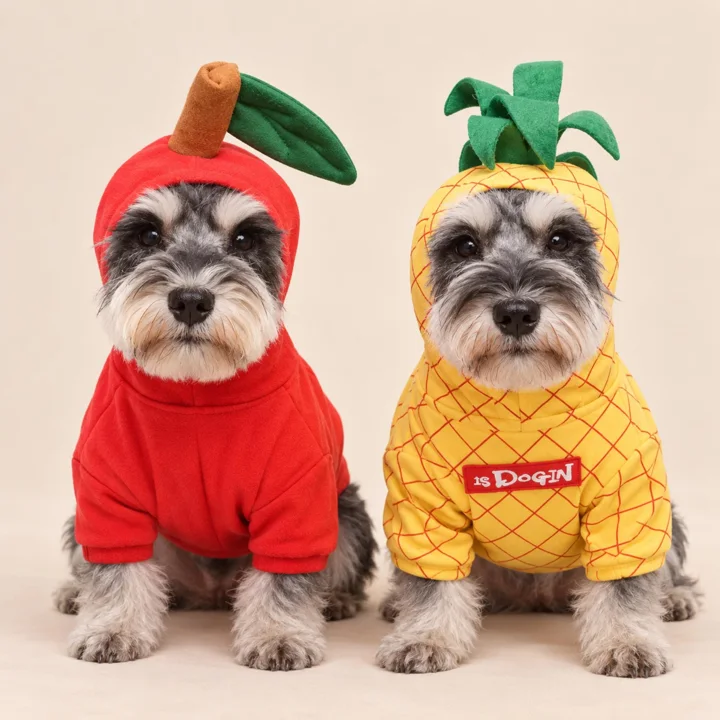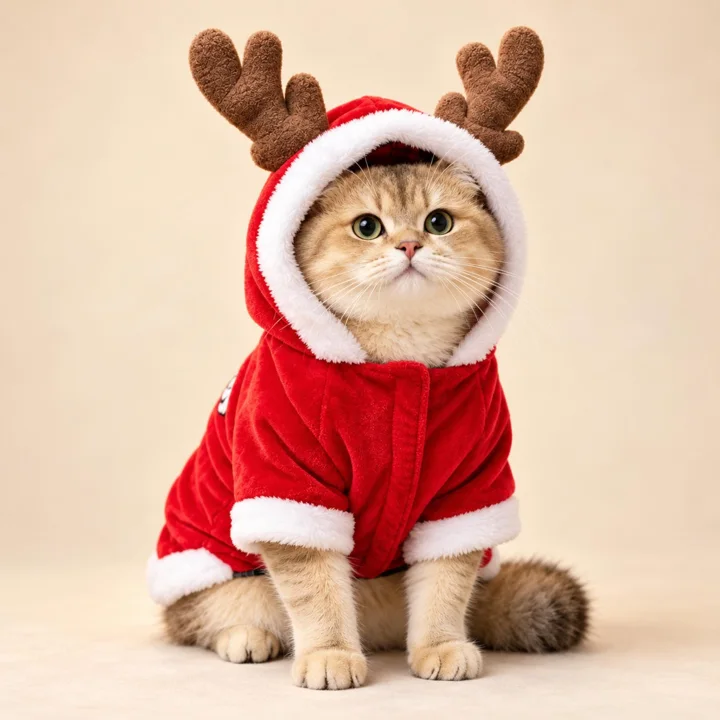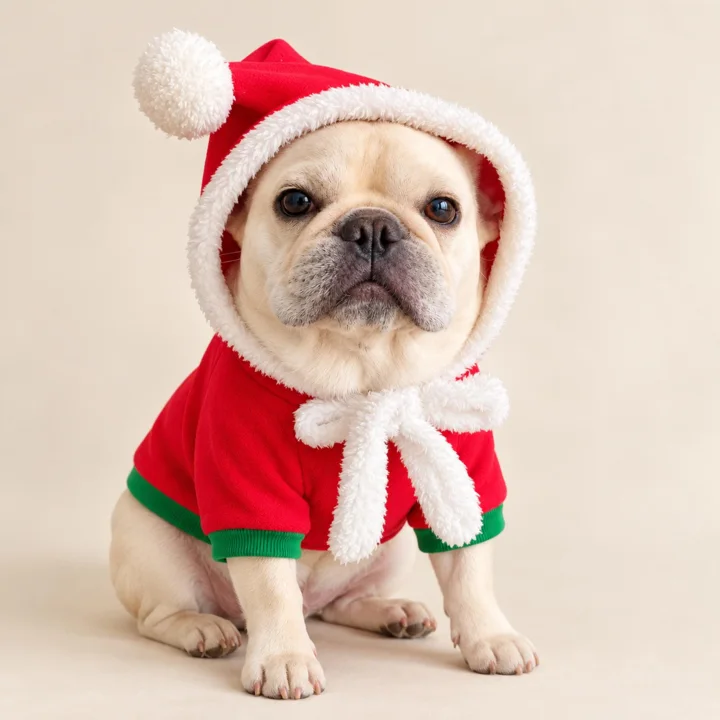


A cool-weather walk calls for practical choices, not simply the thickest or most festive outfit in the closet. The right option depends on the day, your route, your pet’s build, and whether clothing is welcome at all. A light layer may suit a breezy neighborhood stroll, while a short-haired dog may need a different plan from a dog already comfortable outdoors without clothing.
Start with the walk itself: its length, pace, surroundings, and likely weather. Then check the garment for fit and freedom of movement before deciding whether it belongs outside. Style can still be part of the fun, but your pet’s behavior and ability to walk, see, and move normally matter more than a coordinated photo.
Begin with the weather and the route
Cool weather is not one fixed condition. A dry, brisk morning on a familiar sidewalk differs from a windy route with damp ground or a long wait at a crosswalk. Consider how long you will be outside and whether your pet will walk continuously or pause often. A short-haired, small, senior, or otherwise cold-sensitive dog may have different needs from a dog with a dense coat, but individual responses vary.
Use your pet’s behavior as information rather than relying on a calendar or outfit label. If your dog is shivering, repeatedly lifting paws, slowing down, or trying to turn home, shorten the outing and head somewhere comfortable. Clothing is not a substitute for changing plans when conditions are unpleasant. For a brief errand or mild day, an accessory chosen for appearance may be all you want—or no outfit at all.
Choose a simple layer before a costume
For an ordinary walk, a straightforward shirt or other uncomplicated garment is often easier to assess than a costume with extra shapes, dangling details, or a hood. Check the supplied description for what the item actually includes, and do not infer insulation, weather resistance, or a particular fabric behavior from its appearance. A product described as playful everyday wear is not automatically suitable for every temperature or every outing.
The Teddy Bear Dog Shirt, for example, is described as a short-sleeve top with a plush bear detail on the back, in green or orange. That dimensional decoration may be charming for a casual stroll, but consider whether it catches on brush, gets handled by other dogs, or distracts your pet. A simpler silhouette may be the better pick on a route with tight spaces or active play.
Measure carefully and assess the fit
Use the product’s measurement guidance and measure your pet rather than choosing by breed name or the size worn by another animal. A French Bulldog and another dog of similar weight may have different proportions; cats and dogs also vary widely. Confirm the relevant measurements before ordering, and contact the seller if the listed guidance leaves you unsure. Do not assume a garment’s fit from a product photograph alone.
Once dressed, look for pressure, twisting, and restricted movement. Your pet should be able to walk, turn, sit, and relieve themselves without the garment pulling or shifting into the way. Check that openings do not press into the neck, legs, or belly, and that fabric does not cover the eyes or obstruct breathing. If the fit seems wrong, remove the outfit instead of hoping it will settle during the walk.
Keep the leash setup separate and clear
A decorative shirt, costume, or neck accessory should not be treated as walking restraint. Attach a leash only to equipment designed for that purpose, such as your pet’s properly fitted walking harness or collar. Keep the outfit clear of straps and buckles so it does not interfere with a secure connection, leash handling, or your ability to check the walking gear before leaving.
Before stepping outside, trace the leash path and inspect how the garment sits around it. Make sure fabric cannot bunch beneath a harness, cover its attachment point, or snag when your pet turns. If you cannot arrange the clothing and walking equipment without interference, leave the outfit off. On a busy sidewalk, predictable handling and an unobstructed leash setup are more useful than adding another decorative layer.
Keep visibility and awareness in mind
A pet should remain easy to see and able to notice what is around them. Check that clothing does not fall across the eyes, cover the ears in a way that changes how your pet responds, or muffle your view of body language. In low light, rely on appropriate visibility measures and attentive leash handling rather than assuming a colorful outfit or decorative detail will make your pet visible to traffic.
Choose routes and walking times with the same care as clothing. Stay alert near driveways, crossings, cyclists, and other dogs, and keep enough room to respond if your pet becomes startled. A dramatic outfit may suit a posed picture, but extra decoration can be a poor match for a narrow trail or crowded street. When in doubt, choose a plain, familiar setup that leaves your pet’s movements easy to read.
Treat hats and hoods as optional
Headwear can be especially unfamiliar for pets, so introduce it separately from the walk. The knitted pet hat with pom pom is described as having a folded brim, decorative yarn details, and three color choices. Its product listing suggests use for winter styling and photos, but that does not mean every dog or cat will accept it outdoors. Check the fit and observe your pet before considering a short, supervised trial.
A hat or hood must not obstruct vision, breathing, or normal movement. Remove it if your pet paws at it, freezes, shakes repeatedly, tries to escape it, or seems less aware of the surroundings. Do not keep adjusting an uncomfortable accessory while walking near traffic. Some pets are happier without headwear, and skipping it is a sensible choice—not a styling failure.
Let comfort set the pace
Put the outfit on at home, where you can watch your pet without the pressure of getting down the block. Let them move around briefly and notice whether they walk normally, settle, or keep trying to remove the garment. Keep the first outdoor test short and supervised. If your pet resists, becomes distressed, or cannot move naturally, take the clothing off and continue without it if conditions allow.
Cats may be particularly reluctant to wear clothing, and tolerance can change from one item or day to another. Do not force a cat to keep an outfit on for a walk or photograph. For any pet, pause if you see repeated scratching, crouching, unusual stillness, or a change in gait. These observations are reasons to stop and reassess, not behaviors to correct by tightening or adding more accessories.
Match the look to the outing
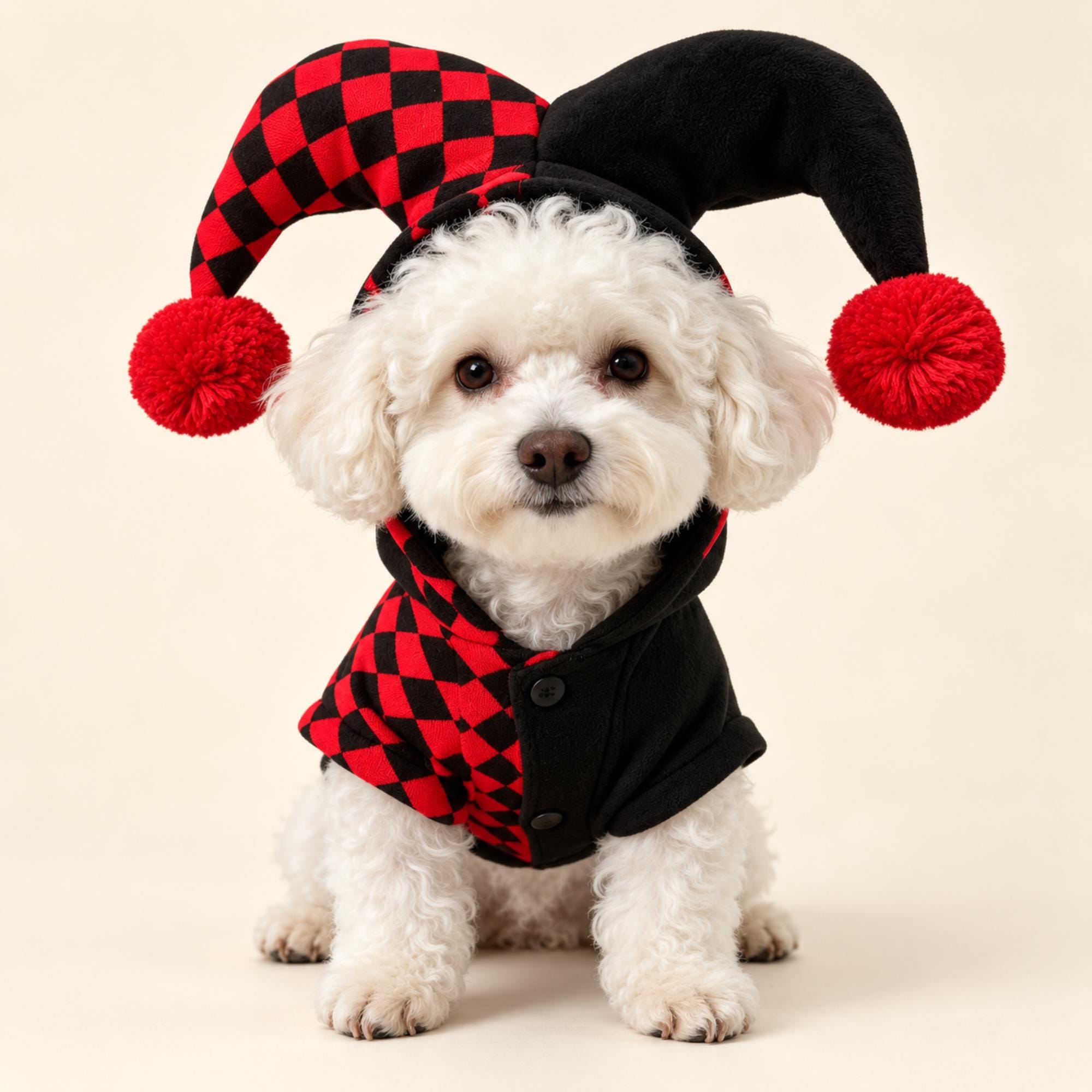
A walk is not the same as a costume party. The Halloween Jester Dog Costume is described as a red-and-black hooded design with short front sleeves, pointed details, and pom-poms. Those features make it a festive example for a seasonal photo or event, but assess each detail before using it on an actual route. A hood or dangling decoration may be less practical where there are branches, crowds, or close interactions.
For everyday styling, choose details that fit the setting and your pet’s habits. A colorful shirt may suit an easy neighborhood loop; an elaborate costume may be best saved for a brief, supervised occasion where your pet is relaxed. Check the garment again after the walk for shifting, snagging, or dampness, and follow any care instructions provided for that specific item. Do not assume a particular washing method when none is stated.
A thoughtful next step
Before leaving, make one practical check: does the outfit fit, stay clear of walking equipment, and allow your pet to move and see normally? Start with a short, supervised trial, stay attentive to changing weather and behavior, and be ready to remove the garment or turn back. The best cool-weather look is the one your pet can comfortably wear—or the decision to walk without an outfit.
Explore our Apparel & Costumes collection, check measuring and fit guidance, or ask us about a product detail before choosing.
Pieces mentioned in this guide
These are catalog examples, not a promise of fit or availability. Read each listing and confirm the details before ordering.