

A dog can match a garment’s listed weight range and still find it too tight across the chest or too long along the back. This is common in compact, muscular, or barrel-chested pets, whose proportions do not follow the tidy outline many clothing patterns assume. The right fit depends less on a breed label than on a few measurements and what the garment does when your pet stands, sits, and walks.
For a broad chest and short back, prioritize room around the rib cage, clear movement at the shoulders, and a hem that ends before it interferes with the hind legs or tail. A snug-looking photo is not proof of a good fit. Use measurements as a starting point, then check the garment on your individual pet—and take it off if it rubs, restricts movement, or causes distress.
Start with shape, not the breed label
Breed descriptions can offer a rough clue, but individual bodies vary. Two small dogs of similar weight may have very different chest girths, shoulder widths, and back lengths. A short-backed dog may need less fabric from neck to tail than a size chart suggests, while a deep or muscular rib cage may need more room around the body. Treat the chart as a matching tool, not a guarantee that one standard cut will suit every pet.
Look at your dog standing naturally before measuring. Notice where the chest is widest, how far the front legs sit behind the neck, and where the back slopes toward the hips. These proportions help you interpret a garment’s shape. A long, narrow body panel may bunch on a compact dog; a close-fitting chest panel may press against a broad rib cage. If the cut seems wrong for the outline, consider another style rather than forcing the size.
Take chest and back measurements carefully
For chest girth, wrap a flexible tape around the widest part of the rib cage, usually just behind the front legs. Keep the tape level and close to the coat without squeezing. Record the result while your dog is standing comfortably. For back length, measure from the base of the neck—where a collar naturally rests—to the point where you want the garment to end. On a short-backed dog, that endpoint matters: clothing need not reach the tail to fit well.
Measure more than once if your pet shifts or sits. Write down the figures instead of relying on memory, and check the product’s own sizing instructions for which body points it uses. A chart may ask for neck, chest, and back measurements, or may prioritize only some of them. Do not estimate dimensions from a product photo. If a listing does not provide enough fit information for your pet’s proportions, ask for clarification before ordering.
Give the rib cage room without making it loose
Chest ease is the space that lets a garment sit without compressing the ribs or pinching behind the front legs. A broad-chested dog may need a larger size for girth, but sizing up can also make the neck opening, belly panel, or back too long. Check whether the garment’s design offers useful adjustment; do not assume that a strap or decorative belt can create extra room where the pattern is too narrow.
After putting clothing on, slide your fingers beneath the chest and side areas without forcing them. Look for deep indentations, pulled seams, or fabric that stays stretched tight when your dog takes a breath or changes posture. At the same time, a garment should not swing, twist, or catch on the legs. If the chest fits only when another area hangs loose or obstructs movement, the cut may not suit your dog.
Keep the back panel short enough to move freely
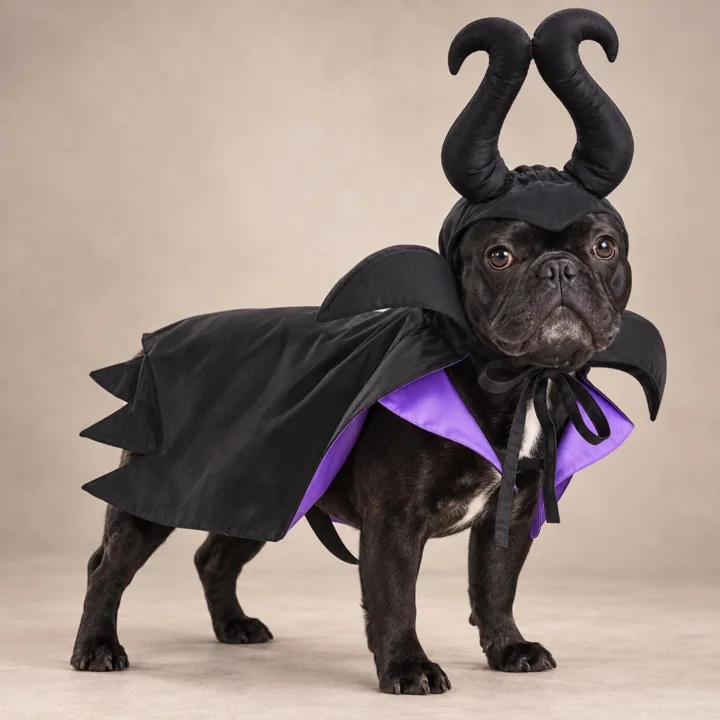
A short back changes where a garment’s hem lands. Excess fabric can fold over the hips, brush the tail, or bunch when the dog sits. These problems may not show in a standing photo, so check the hem from the side and rear during several ordinary movements. For dogs with short bodies, a shorter vest or a style with a compact back panel may be easier to assess than a long coat intended to cover more of the torso.
Do not pull a garment forward just to shorten the back. That can shift pressure onto the neck or shoulders and make the chest fit worse. Instead, compare the measured back length with the garment’s stated dimensions, if provided, and consider where the neck opening and arm openings will sit. The goal is a stable position that leaves the tail, hips, and hind legs unobstructed—not maximum coverage.
Check shoulder openings and everyday movement
The front openings matter as much as the chest circumference. On a muscular or broad-fronted dog, tight openings can rub behind the elbows or limit the reach of the front legs. Watch your pet take several steps, turn, sit, and lie down. The garment should not pull sharply at the shoulders, ride up toward the neck, or make your dog shorten a stride. A calm, still fitting session alone cannot reveal every movement problem.
A sleeveless design can leave more of the legs uncovered, but it is not automatically a good fit. For example, the Vintage Leopard Dog Vest is described as sleeveless and has a tailored silhouette. Those details may be worth comparing with a dog’s measurements, but they do not establish that it will fit a particular broad chest or short back. Check the listing’s available sizing information and assess the finished fit on your own pet.
Choose a style that matches the occasion
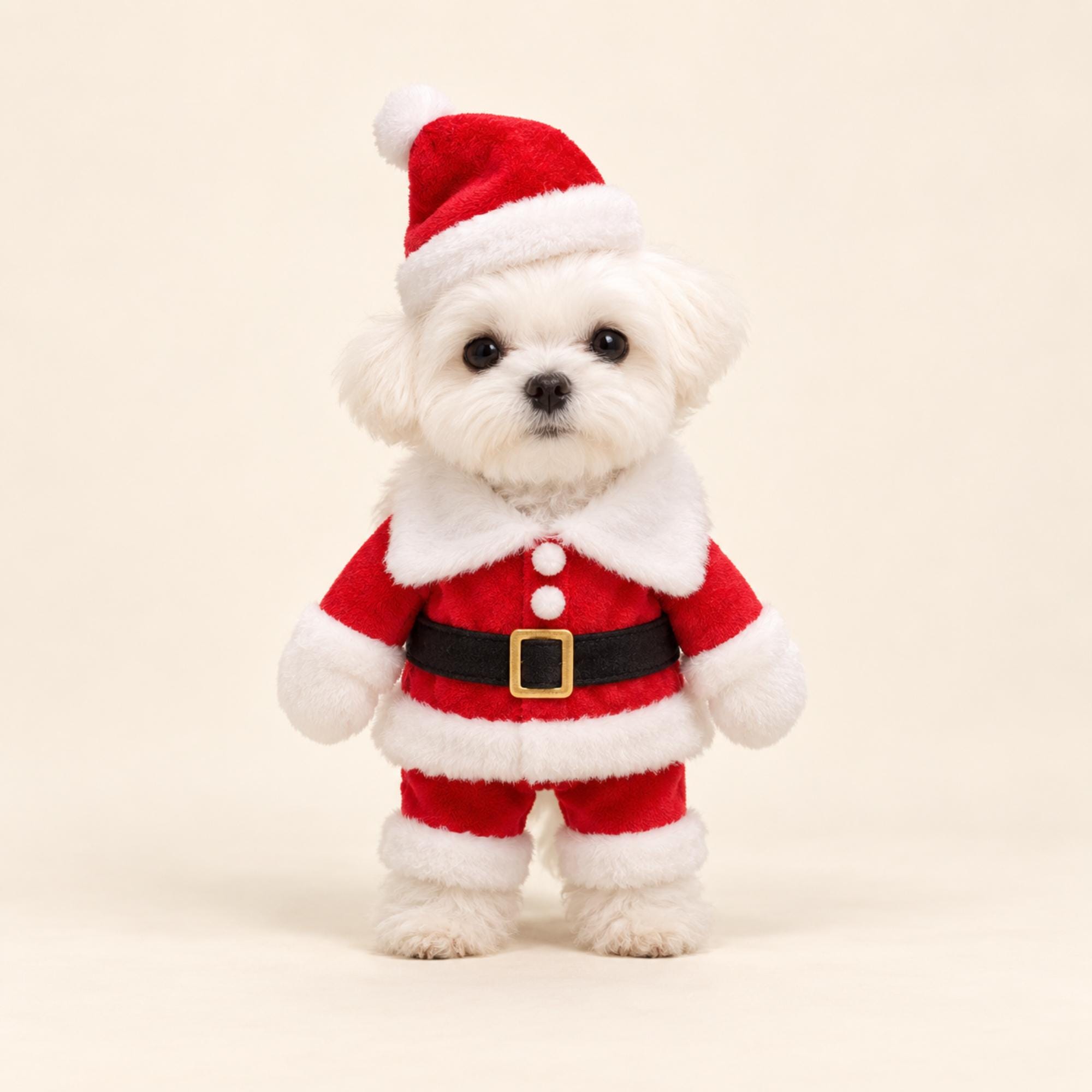
For brief photos or events, a costume can have a different purpose from a daily layer, but it still needs to sit without restricting breathing or movement. Extra trim, shaped panels, or costume features may affect where the garment rests. The Standing Santa Dog Costume, for instance, is described as a costume for small dogs and compatible cats depending on measurements. Its festive design is an example to evaluate carefully, not evidence that it suits every compact body shape.
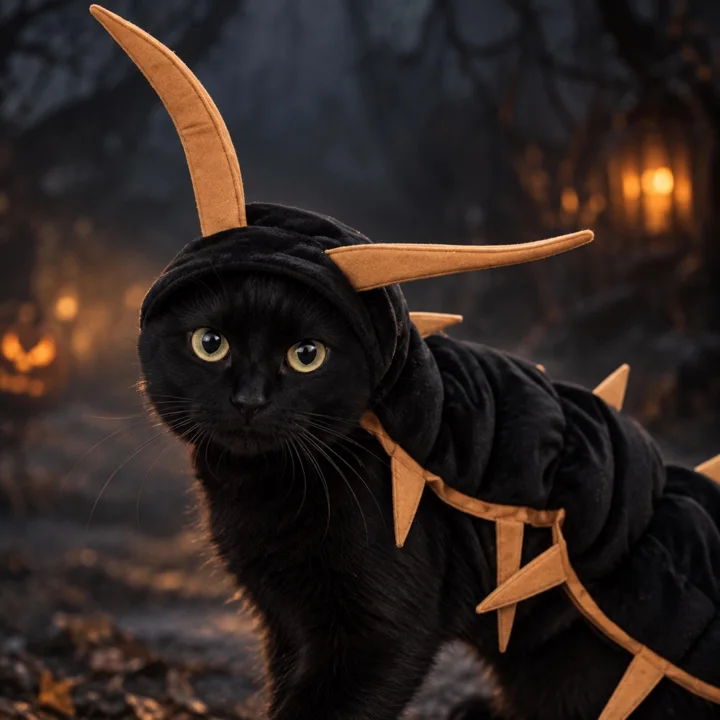
More elaborate costumes deserve a short, supervised trial before an event. The Skull Spider Pet Costume is described with multiple long legs and adjustable costume-style straps. Those visual features may be unsuitable for a pet that dislikes extra pieces or tends to catch clothing on furniture. Check that decorative parts do not obstruct vision, movement, or access to the legs. If your pet seems uneasy or the costume interferes with normal activity, remove it and choose no outfit.
Do a practical fit check at home
Try clothing in a familiar, calm space and let your dog approach it at their own pace. Once it is on, check the neck, chest, belly, leg openings, and back hem. Look for twisting, bunching, pressure marks, or fabric that catches as the dog moves. Keep the first session brief and supervised. Do not leave a pet unattended in clothing, especially if it has straps, loose elements, or a shape that could snag.
Notice behavior as well as appearance. Freezing, repeated attempts to remove the garment, tucked posture, or unusual reluctance to walk can signal that the outfit is uncomfortable or unwelcome. Take it off rather than waiting for the pet to get used to it. Cats may reject clothing, and dogs vary too. Clothing is optional; a pet that is more relaxed without it does not need an outfit.
Read product details before choosing a size
Check the actual product description for measurements, adjustment details, intended pet types, and the garment’s stated design. Do not infer fabric, stretch, fastening style, or care instructions from an image or from another item in the same collection. If the listing gives a size range but not dimensions, ask the seller what measurements the range refers to. When your pet falls between sizes, ask how the garment is intended to sit rather than automatically choosing larger.
Separate appearance from function when considering features. A built-in leash attachment ring, where a product description specifies one, is not a substitute for checking fit or confirming how the item is intended to be used. Decorative neckwear is not walking restraint. Likewise, costume details do not establish that a garment is suitable for extended wear. Choose based on your pet’s measurements and the stated product details, and leave it off when fit or intended use is unclear.
A thoughtful next step
For a broad-chested, short-backed pet, measure the rib cage and back separately, compare both with the garment’s stated sizing information, and judge the fit in motion—not just in a posed photo. A well-chosen item leaves room at the chest, stays clear of the shoulders and hind legs, and does not bunch at the tail. Supervise every fitting, remove clothing at signs of discomfort, and treat going without an outfit as a sensible choice.
Explore our Apparel & Costumes collection, check measuring and fit guidance, or ask us about a product detail before choosing.
Pieces mentioned in this guide
These are catalog examples, not a promise of fit or availability. Read each listing and confirm the details before ordering.