

A clothing size labeled small or medium does not tell you whether it will fit your dog. Dogs with the same weight can have very different proportions: one may have a deep chest, another a long back, and a third a sturdy neck. Taking a few careful measurements gives you a better starting point than guessing from breed or weight, and helps you compare your dog with the specific chart for the garment you are considering.
The goal is not simply to get an outfit on. It should sit without pinching, pulling, or blocking ordinary movement, and your dog should be able to stand and walk naturally. A tape measure and a calm minute are usually enough. Use the steps below to record useful measurements, interpret the chart, and make a sensible fit check before keeping an outfit on for photos or an event.
Get your dog ready to measure
Choose a quiet moment when your dog is standing comfortably on a level surface. If possible, ask someone to offer a treat or gently steady your dog while you handle the tape. Keep the tape measure flexible, and avoid stretching it tight against the body. A soft tailor’s tape is easier to position than a rigid ruler; if you only have string, mark the measured length and compare it with a ruler afterward.
Measure over the coat your dog normally wears, rather than pressing through thick fur or flattening it. Brush out tangles first if they make the body outline hard to read. Keep your dog in a natural stance, with all four paws placed normally; sitting or crouching can change the shape of the chest and back. If your dog is restless, pause and try again later instead of rushing through several inaccurate readings.
Measure chest girth at the widest point
Chest girth is often the most useful measurement for a shirt, vest, or body-covering costume. Wrap the tape around the broadest part of your dog’s rib cage, usually just behind the front legs. Check that the tape stays level across the back and under the chest rather than slanting toward the belly. It should touch the coat without compressing the body or slipping loose.
Write down the number and repeat the measurement once to check it. A small difference can happen if your dog shifts, so take a third reading when the first two are noticeably different. For a broad-chested dog, do not choose a size based only on neck or back length if the chest measurement exceeds the chart’s range. If a garment cannot accommodate the chest, a longer back measurement will not solve the fit.
Record neck and back length
To measure the neck, place the tape around the base where a garment’s neckline would naturally sit, rather than high under the jaw. Keep it comfortably loose enough to avoid squeezing. This is a body measurement, not a collar measurement, and it does not mean that decorative clothing or neckwear can be used as a leash attachment. Check the product’s sizing instructions because some designs may not rely on a neck measurement at all.
For back length, measure from the base of the neck—where the shoulders meet it—to the base of the tail. Keep the tape along the top of the back, following its natural line without stretching toward the tail tip. A long-backed dog may need a different cut from a compact dog with the same chest girth. Use the chart’s stated endpoints if they differ, since brands may define this measurement in different ways.
Use the chart for the exact garment
Compare your notes with the size chart provided for the particular product. Do not assume that a size number is consistent across different styles, sellers, or garment types. Check whether the chart lists body measurements or garment measurements, and read any instructions about how to choose a size. Weight ranges, when supplied, can be a secondary reference, but they should not replace chest, neck, or back measurements.
If your dog falls between sizes, look at the garment’s shape and the chart’s guidance before deciding. A close-fitting design may have different requirements from a loose costume, while a long-back style can be unsuitable if the chest is too narrow. Do not add an arbitrary amount to every measurement: the needed ease varies by design. When a chart does not explain a critical measurement or the listed ranges do not match your dog, ask the seller for clarification before ordering.
Account for body shape and coat
Measurements help you shop, but body shape explains why two dogs with matching numbers can still wear the same design differently. A deep chest, narrow waist, short neck, or long torso can affect where fabric lands and whether straps or openings sit in the right place. Note which measurement is most challenging for your dog and use that as a practical filter when comparing available sizes and styles.
Coat thickness can also change how an outfit sits. A dense coat may take up more room than a short, close coat, while long fur can bunch beneath seams or straps. Measure as your dog will actually wear the garment, and do not trim, flatten, or pull the coat to make a number fit a chart. If the product information leaves room for uncertainty, choose an option with a simpler shape or skip clothing that appears likely to bind.
Treat costumes as their own fit challenge
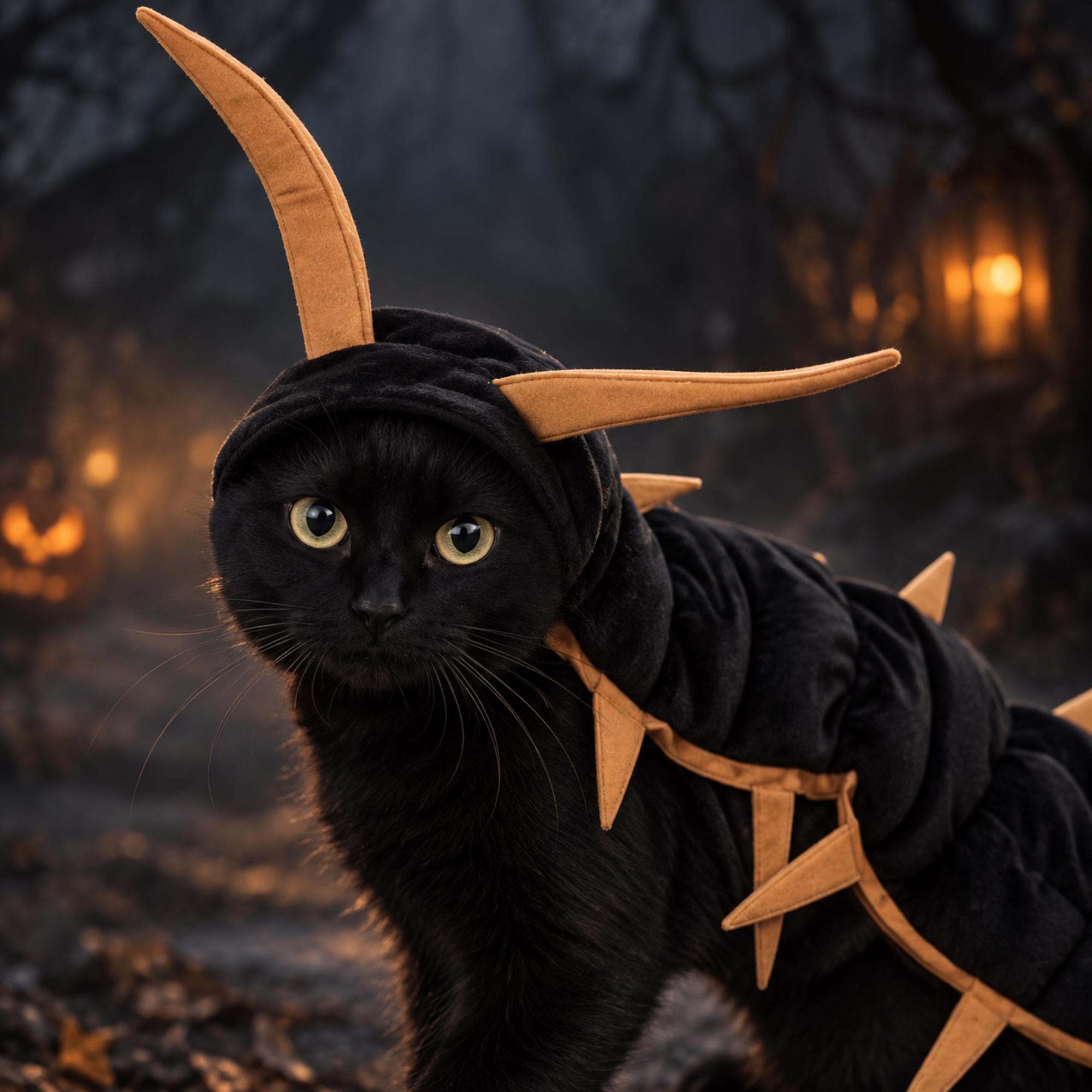
Costumes may include extra shapes, dangling details, or straps that change how a dog moves. A dramatic silhouette is not a reason to overlook the body measurements or assume every costume fits like a basic shirt. For example, the Centipede Cat Costume is described for cats and compatible small dogs depending on size; check the particular listing and compare your dog’s measurements rather than relying on the costume name or intended look.
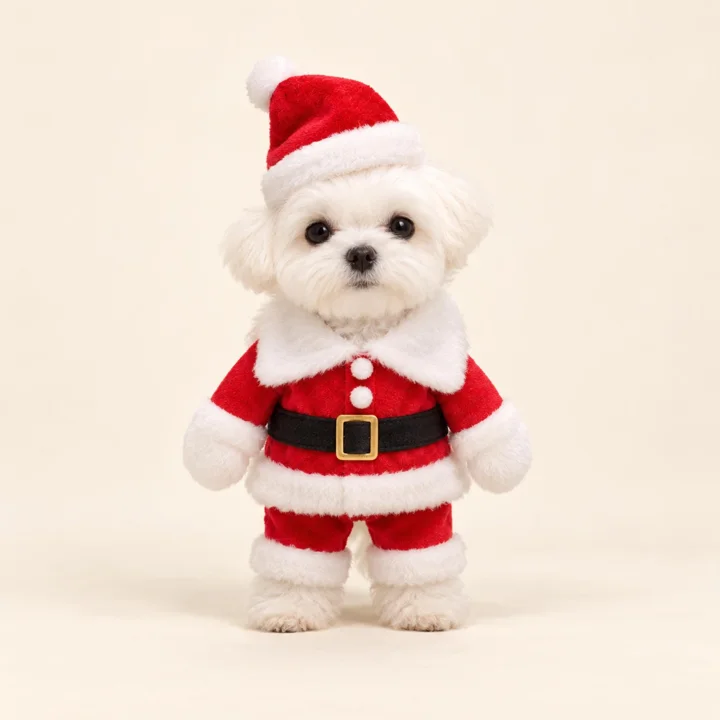
The Standing Santa Dog Costume also uses a distinctive standing-Santa illusion, so consider both the chart and the way the design sits on your dog. Product descriptions can help you understand the style, but they do not substitute for checking fit on the individual pet. Keep decorative pieces clear of the eyes, mouth, feet, and anything that could catch. Never use a costume as walking equipment unless the product information specifically supports that use.
Check movement before an outing
When the outfit arrives, try it on in a familiar room and stay beside your dog. Look for fabric pulling across the chest, tightness around the neck or legs, openings that gape, or straps that shift out of place. Your dog should be able to stand, turn, and walk without the garment forcing an unusual posture. Check that the outfit does not cover the eyes, interfere with breathing, or obstruct normal movement.
Watch your dog’s response as well as the garment. Freezing, repeated attempts to remove it, unusual crouching, or clear distress are reasons to take it off. Do not keep an uncomfortable pet dressed to finish a photo. Supervise any wear, especially when a design has dangling or projecting pieces, and remove the outfit if it catches, twists, or begins to interfere with movement. Some dogs simply prefer not to wear clothes.
Keep a measurement note for next time
Save your dog’s chest girth, neck circumference, and back length with the date you measured them. A brief note about coat thickness, posture, or a fit issue can be useful when shopping again. Measurements can change as a dog grows or changes shape, so recheck them rather than relying on an old number. This is especially helpful if you are buying for a growing dog or choosing a different style.
Keep the numbers in inches or centimeters and check which unit the chart uses before comparing. A quick conversion mistake can turn a sound measurement into the wrong size choice. Record the product and size you tried, too, but treat that as a clue rather than a universal rule for other garments. Different cuts can fit differently, even when the label uses the same size.
A thoughtful next step
Before ordering, measure your dog standing naturally, record chest girth, neck, and back length, and compare each relevant number with the exact garment’s chart. After delivery, try the outfit on under supervision and check breathing, movement, and your dog’s willingness to wear it. If the size is uncertain or your dog seems uncomfortable, contact the seller for guidance or choose no outfit; a good fit should never come at the cost of your dog’s ease.
Explore our Apparel & Costumes collection, check measuring and fit guidance, or ask us about a product detail before choosing.
Pieces mentioned in this guide
These are catalog examples, not a promise of fit or availability. Read each listing and confirm the details before ordering.