

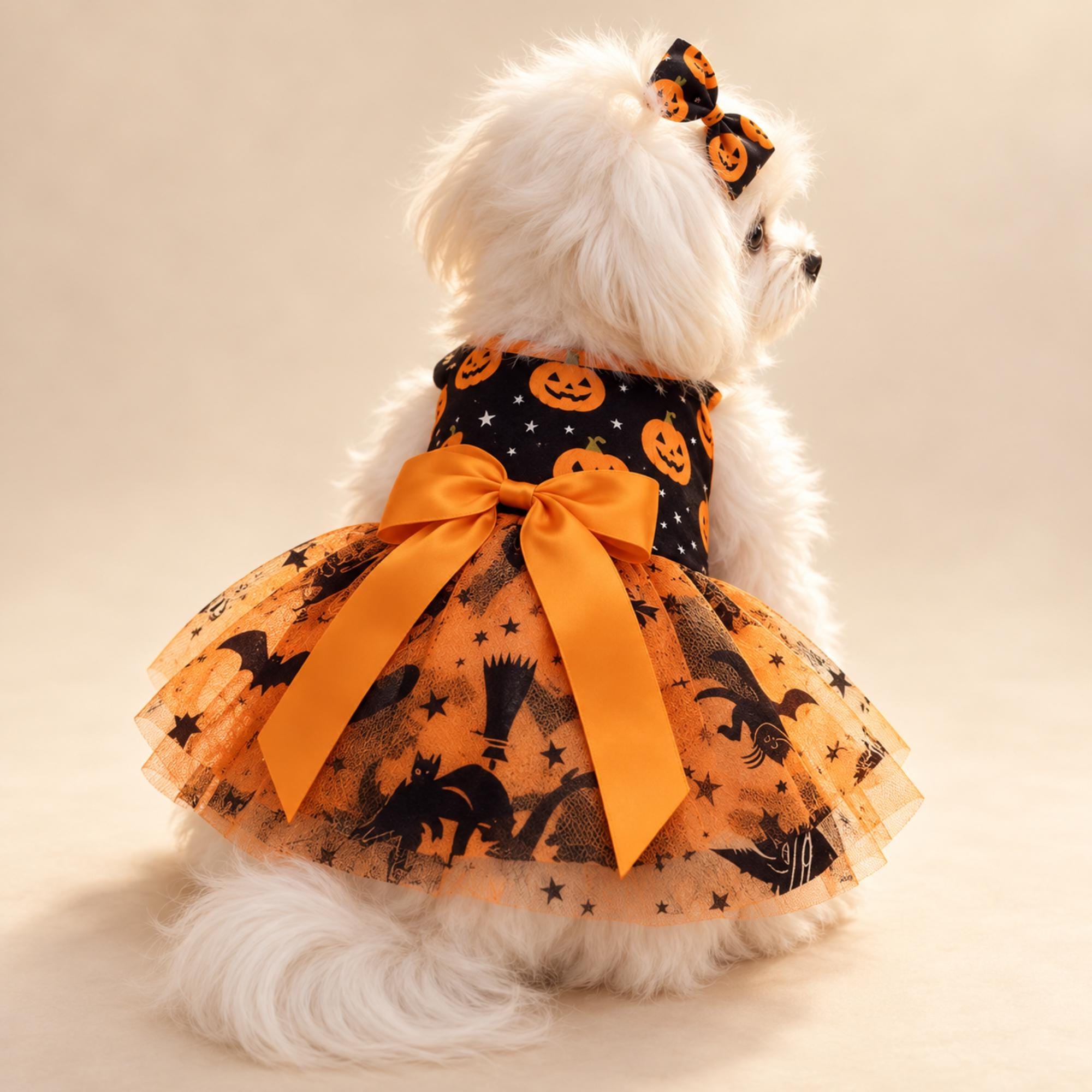
A size label can look reassuring: your dog usually wears a small, so you select a small. But clothing sizes are not standardized across brands or garment styles. One small may be cut for a narrow chest; another may allow more room around the ribs or shoulders. A letter is a starting point, not a measurement, and choosing by weight or breed alone can lead to a garment that twists, pinches, or slips.
A better fit check begins with your dog’s actual measurements and the shape of the item. Compare those numbers with the seller’s chart, then consider the garment’s cut, coverage, and intended use. This matters especially for costumes, where a skirt, cape, or decorative structure may sit differently from an everyday shirt. Fit is not just about getting the garment on; your dog should be able to move normally and remain comfortable.
Why a size letter can mislead
A small is not a fixed set of dimensions. Clothing makers may use different patterns, intended body shapes, and grading rules, so the same letter can represent different chest, neck, or back measurements from one item to another. Even within one catalog, a costume and a simple coat can fit differently. Treat the chart provided for the specific product as the relevant guide; do not carry a size choice over from another brand or style.
Breed labels are just as limited. Two dogs of the same breed can differ in chest depth, body length, muscle, coat, and weight. A compact dog with a broad chest may need a different cut from a longer, slimmer dog at the same weight. If a listing describes an item as suitable for small dogs, read that as a general audience, not a promise that every small dog will fit.
Measure the body, not the guess
Use a soft measuring tape and have your dog stand naturally on a level surface. Measure the chest around its broadest part, often just behind the front legs. Keep the tape close to the body without pulling it tight or leaving it slack. Record the number and units, then repeat the measurement once to check it. A wriggly dog may need a calm pause and a second set of hands to keep the tape in place.
For a garment that covers the back, measure from the base of the neck, where a collar usually rests, to the point where the tail begins. Measure the neck only when the item’s chart calls for it, placing the tape where the garment is meant to sit. Write down each result rather than relying on memory. If the product chart requests different points, follow its directions, since measurement landmarks can vary with garment design.
Read the chart for the exact product
Check which body measurements the chart actually lists and match each one to your notes. A chart may offer chest and back-length ranges, or it may use only one measurement. Do not assume that a number beside a size refers to your dog’s weight unless the listing says so. Also check whether the chart gives garment dimensions or recommended pet measurements; those figures answer different questions and should not be compared as if they were interchangeable.
If your dog falls between two sizes, look for fit guidance in the product details before deciding. A garment that needs room across the chest may call for a different choice from one whose main fit point is back length. Avoid sizing up automatically: extra fabric can bunch, hang low, or interfere with movement. If the chart and description do not explain the tie, ask the seller to clarify rather than treating the letter as a reliable substitute.
Account for the garment’s shape
A fitted shirt, a cape, and a dress do not sit on the body in the same way. Think about where the item rests, which parts it covers, and whether it has a skirt, headpiece, or other decorative structure. The Pumpkin Halloween Dog Dress, for example, has a bodice and a full orange tulle-style skirt with a waist bow. A dog’s chest and back measurements help, but the skirt’s placement also makes freedom of movement worth checking.
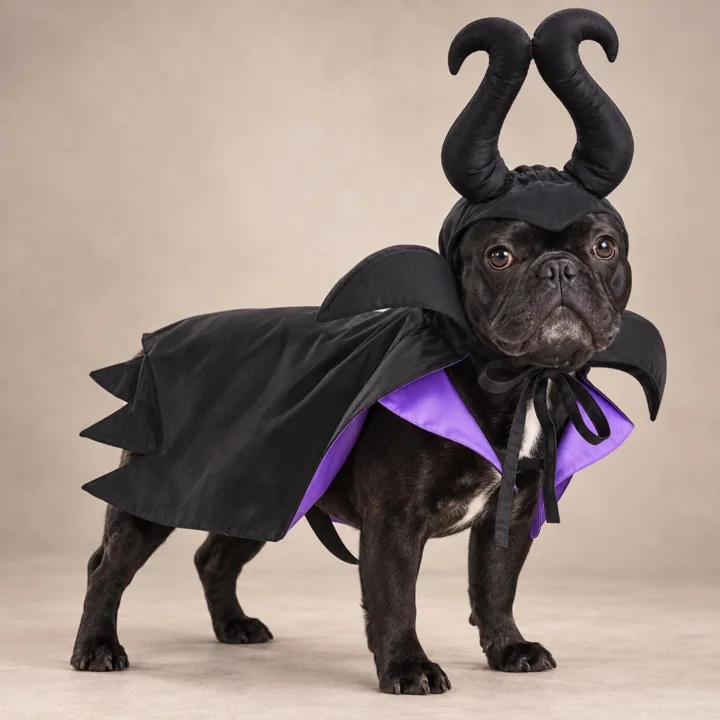
Costume silhouettes can change how fit looks from the front, side, and back. The Headless Horseman costume has a saddle-style base designed to create a riding illusion, while the Black Horned Devil costume pairs a cape with a separate horn headpiece. Those shapes are unlike a basic garment, so the product’s size guidance and construction details matter. A dramatic appearance is no reason to accept a piece that shifts into the eyes or restricts ordinary movement.
Check movement and coverage
Once the garment is on, observe your dog standing, walking, turning, and sitting. Check that the chest is not compressed, fabric does not pull sharply at the shoulders, and the item does not drag or catch underfoot. Watch for straps, hems, or decorative parts that move toward the face. A good-looking fit in a still photo can reveal problems as soon as a dog takes a few steps, so make this check before an outing or photo session.
Look at openings and body coverage, too. The garment should not interfere with breathing, vision, hearing, or the dog’s ability to relieve itself. Check whether a collar or leash can be used as intended without pulling on decorative clothing. Neckwear and costume details are not walking restraints. If the outfit blocks access to a leash attachment point or makes safe handling awkward, choose another option or leave the clothing off.
Notice your dog’s response
Fit is only one part of comfort; a correctly measured outfit can still bother a particular dog. Introduce clothing calmly and watch the response rather than assuming the dog will adapt. Repeated pawing, freezing, crouching, trying to escape, or unusual stillness are reasons to pause and assess. Remove the item if your dog remains uneasy. Do not keep an outfit on simply to finish a photograph or event.
Some dogs accept brief costume wear; others do not enjoy apparel at all. That preference deserves respect, even when the size chart suggests a match. Keep any wear period supervised, particularly when the garment includes a cape, skirt, headpiece, or other loose decoration. If the dog cannot move naturally or seems distressed, stop. A photo taken without an outfit is preferable to forcing a costume that your dog resists.
Use weight and breed as supporting clues
Weight can help you notice whether a chart’s suggested range seems broadly plausible, but it cannot replace a tape measurement. Dogs with equal weight can have different proportions, and a thick coat can make the outline harder to judge. Breed descriptions can offer context, too, but they are not a guarantee of fit. Use these clues to double-check your choice, not to override a measured chest or back length.
For example, a long-backed dog may need more coverage than a compact dog at the same weight, while a deep-chested dog may outgrow a garment across the ribs before it seems short along the back. This is why recording several measurements is useful when the chart provides several fields. If the listing uses only a broad size label and gives no usable measurements, recognize that uncertainty and seek clarification before ordering.
Make a careful decision before ordering
Before choosing, place your dog’s measurements beside the chart for that exact listing and note any point that falls near a size boundary. Read the description for clues about coverage and construction, then decide whether the style suits your dog’s shape and tolerance for clothing. Do not infer an unstated material, stretch level, closure, or adjustment feature. Those details can affect fit, but they should be confirmed rather than guessed from a product photo.
If you need help, send the seller the measurements requested by the chart and ask which size corresponds to them. Include the product name so the answer can be tied to the right style. Avoid asking only, “What size is a small dog?” because that leaves out the proportions that determine fit. When clear sizing information is unavailable, delaying the purchase may be wiser than selecting a letter based on breed or appearance.
A thoughtful next step
For a more dependable choice, measure your dog’s chest and back, check any other dimensions requested, and compare them with the chart for the specific garment. Consider the cut and decorative shape, then assess movement and your dog’s response during a brief, supervised try-on. A size letter can narrow the options, but your dog’s measurements and comfort should make the final decision.
Explore our Apparel & Costumes collection, check measuring and fit guidance, or ask us about a product detail before choosing.
Pieces mentioned in this guide
These are catalog examples, not a promise of fit or availability. Read each listing and confirm the details before ordering.