

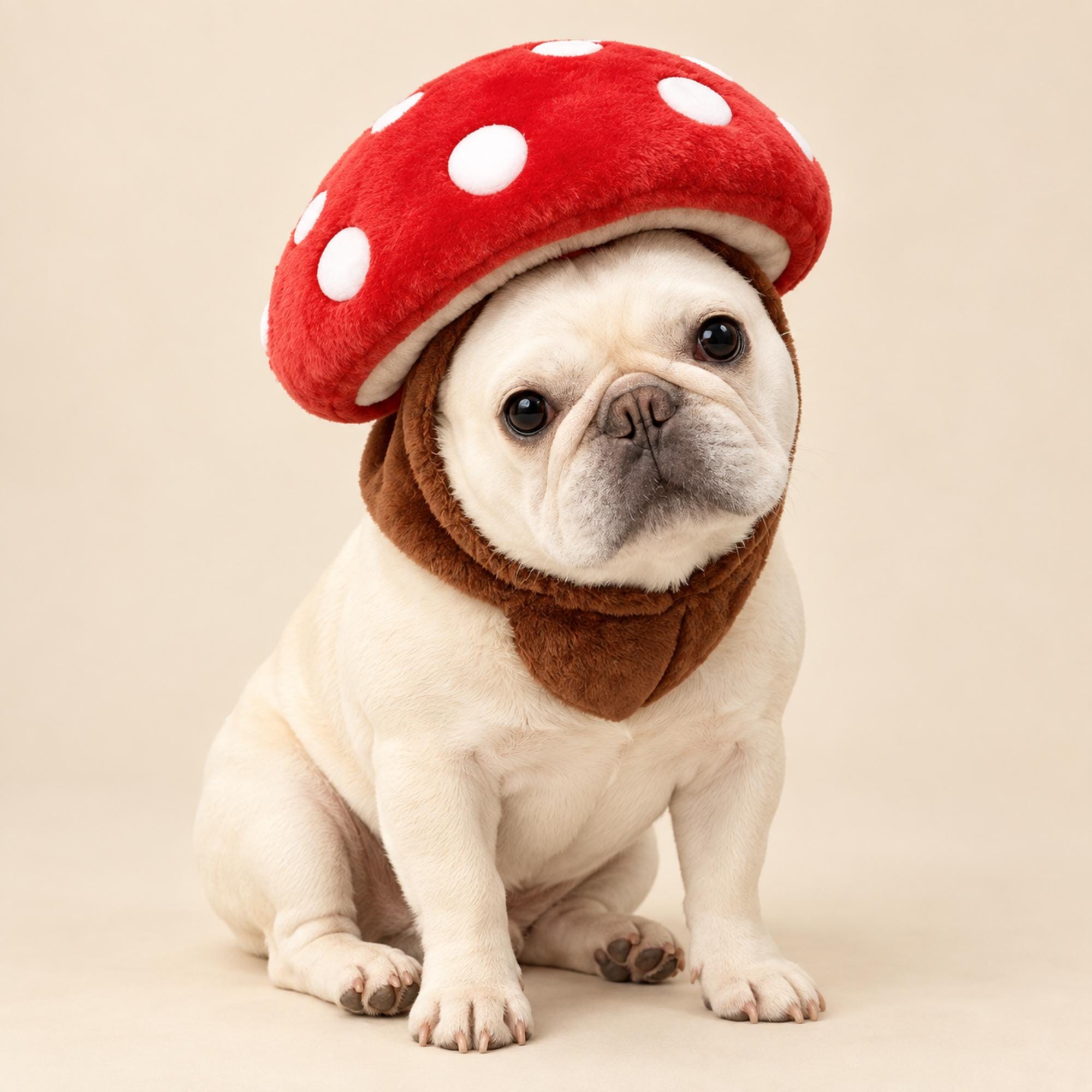
A pet dressed as a snack or ingredient can turn an ordinary snapshot into a portrait worth sharing. The best food-themed costume photos are funny because of a clear visual idea: a round dog as a dumpling, a cat beside a tiny pretend picnic, or a mushroom cap that makes a pet look like a woodland treat. You do not need a complicated setup. A comfortable pet, a simple backdrop, and a few well-chosen details can carry the joke.
Think of the costume as one part of the picture, not the whole event. Keep the session brief, let your pet set the pace, and build the scene around what they already enjoy. Some animals are happy to wear an outfit; others would rather pose beside a prop or skip clothing entirely. Either approach can make a memorable image. The goal is a funny photograph that still looks like your pet—and keeps their comfort ahead of the punchline.
Start with a food joke that reads at a glance
Choose one idea people can understand in a second. A small dog in a red or brown mushroom cap might suggest a fanciful ingredient, while a round blanket-wrapped pose can hint at a burrito without adding anything to the pet’s body. A cat sitting beside a paper menu could be the restaurant critic. One strong visual gag is usually funnier than a pile of unrelated props, especially in a quick phone photo.
Consider your pet’s shape, coat, and usual expression when choosing the joke. A fluffy white dog might make a convincing scoop of whipped cream in a staged dessert scene, while a serious-looking cat can sell a mock food-review concept. You do not need to make the animal resemble a food item from head to paw. Often, the contrast between a familiar pet and a playful food setting creates the humor.
Use one wearable piece as the main visual cue
A single headpiece or garment can be enough to establish a costume, and it leaves more room for your pet to move naturally than an elaborate ensemble. The catalog mushroom pet hat, for example, comes in Brown Spotted, Brown Shiitake, and Red Spotted styles. It is a headpiece only, not a full-body costume. Its toadstool look works well for a woodland-themed portrait or a playful ingredient-inspired scene.
Before ordering any wearable item, read its description and check its sizing guidance rather than guessing from breed or weight. For the mushroom hat, the listing says to choose based on measurements. Put the item on only if your pet accepts it, and make sure it does not obstruct vision, breathing, or movement. Supervise while it is worn, and remove it promptly if your pet seems uncomfortable or tries to escape it.
Let the backdrop supply the rest of the recipe
A plain background can make a small food-themed detail easier to notice. Try a clean kitchen wall, a picnic blanket, or a sheet of butcher paper with a few hand-drawn menu doodles. Keep anything edible, breakable, or tempting out of reach unless you are actively supervising. The scene can suggest a bakery counter or a farmers market without putting food in front of your pet or asking them to hold a prop.
Use color to make the setup feel intentional. A green cloth can suggest herbs or a garden, while a warm neutral background can give a mushroom or pastry-inspired portrait a cozy fall mood. Avoid a busy pattern that competes with the costume. Before bringing your pet into the frame, arrange the background and test the camera angle. That way, the animal spends less time waiting while you move objects around.
Build a photo around your pet’s natural pose
A funny portrait does not require a trained pose. Photograph a dog sitting beside a pretend takeout bag, or capture a cat loafing near a clean, empty serving tray. The pet’s everyday posture can provide the punchline: a curled-up cat beside a paper sign reading “cinnamon roll,” for instance, needs no costume at all. Keep the idea light and avoid positioning, wrapping, or holding your pet in a way they would not choose.
Take pictures at your pet’s eye level when possible. A low angle can make a simple setup feel like a miniature restaurant scene, while a close-up can emphasize a headpiece or an expressive face. Use a toy, a familiar voice, or a treat held near the camera to invite a glance, but do not prolong the session if attention fades. A candid moment often has more personality than a perfectly arranged pose.
Keep props simple, familiar, and out of reach
Choose props that are easy to remove and do not invite chewing or swallowing. Paper signs, a folded picnic cloth, or a large empty cardboard box can suggest a delivery scene without adding small decorative pieces. Skip loose beads, string, toothpicks, food wrappers, and anything your pet may mouth. Even a harmless-looking prop can become distracting or unsafe when an animal decides to investigate it.
Set the scene before your pet joins you, then keep a person nearby throughout the shoot. Never leave a dressed pet unattended with props, and do not place a costume accessory near the eyes, nose, or mouth. If your pet begins sniffing, pawing, or chewing at an item, remove it rather than trying to redirect them repeatedly. The photograph is optional; preventing a stressful or risky interaction matters more than completing the idea.
Adapt the concept for pets who dislike costumes
Not every pet wants to wear a hat, shirt, or costume, and that is a good reason to make the food theme environmental instead. Give your cat a portrait beside a simple menu card or photograph your dog near a picnic blanket. You can also add a playful caption after taking the picture. A pet’s comfort and recognizable personality are more valuable than a costume that looks impressive but makes them tense.
If you try an outfit, introduce it calmly and observe your pet’s response. Stop if they freeze, repeatedly paw at it, hide, flatten their ears, or show other signs of distress. Avoid clothing that restricts movement or blocks the eyes, nose, or mouth, and supervise any wear. For cats especially, be ready to skip apparel altogether. A relaxed pet beside a food-themed prop can deliver the joke just as clearly.
Make the lighting do some of the storytelling
Soft light from a nearby window can bring out costume colors and facial expressions without creating a harsh flash. Place the setup where your pet already likes to sit, then turn off distracting noises and give them time to settle. If the light is uneven, move the background or camera rather than shifting the animal into an unfamiliar position. A calm, well-lit portrait usually feels more natural than a dramatic scene that asks too much of the pet.
Take a few test photos of the empty setup to check for clutter, glare, or shadows across the face. Then keep your camera ready and work in short bursts. A phone camera’s portrait mode can soften a background, but check that it has not blurred an ear or costume edge. You can also use a wider frame to include the joke’s setting, then take a closer picture if your pet stays relaxed.
Use catalog costumes as inspiration, not a requirement
A food-photo idea can borrow from a costume without claiming that every item is food-themed. The mushroom pet hat is a clear fit for an edible-fungi or woodland ingredient concept. For a different kind of playful portrait, a green frog hoodie or blue monster sweatshirt could serve as a contrast character in a pretend produce-market scene. These are animal-inspired and graphic designs, respectively, rather than food costumes, so describe them accurately if you share the picture.
Check each listing for what is actually included, its sizing instructions, and the intended design before making a choice. The mushroom listing is for the headpiece only; it does not include body clothing. The frog hoodie and monster sweatshirt are separate clothing examples, not substitutes for a food costume. If your pet does not enjoy wearing either, use the color or character as inspiration for a prop or backdrop and leave the animal outfit-free.
A thoughtful next step
For a memorable food-themed pet portrait, choose one readable joke, prepare the scene in advance, and let your pet participate only as much as they like. A costume can help, but a prop, a caption, or a familiar pose may work better. Keep objects supervised and out of reach, avoid obstructive clothing, and stop at the first sign of discomfort. The funniest picture is the one that captures your pet’s character without making them endure the setup.
Explore our Apparel & Costumes collection, check measuring and fit guidance, or ask us about a product detail before choosing.
Pieces mentioned in this guide
These are catalog examples, not a promise of fit or availability. Read each listing and confirm the details before ordering.