

A lion, bee, or frog costume gives a pet a clear character at a glance, but the best choice is more than a matter of color. Think about your pet’s usual clothing tolerance, the shape of the outfit, and where you plan to wear it. A costume that looks charming in a still photo may be distracting during a busy gathering, while a simpler design can be easier to introduce and supervise.
Start with your pet, then choose the character. A dog who already wears shirts may be ready for a more detailed look; a cat who dislikes clothing may be better represented by a quick, supervised photo—or no costume at all. Consider how each design frames the face, affects movement, and fits the occasion before settling on a mane, stripes, or frog eyes.
Begin with your pet’s costume comfort
Before comparing characters, notice how your pet responds to ordinary handling and clothing. If a dog willingly wears a familiar shirt, a costume may be a reasonable next step, introduced gradually at home. Watch for repeated attempts to remove it, a tense posture, pinned ears, or trouble moving naturally. Those signs mean it is time to pause or take the outfit off, not to coax your pet into wearing it for a longer photo session.
Cats often have different limits: many dislike the sensation of apparel even when the fit seems correct. Keep any trial brief and closely supervised, and stop if your cat freezes, struggles, hides, or seems distressed. Never leave a dressed pet unattended. For an animal that resists clothing, a seasonal bandana-free portrait setting or a prop placed nearby can suggest the theme without requiring an outfit.
Choose a lion for a bold, classic look
A lion costume is a natural pick for someone who wants an instantly recognizable character with a little theatrical flair. The mane is usually the visual focus, so consider whether your pet accepts fabric or trim near the head and neck. A design that crowds the eyes, ears, mouth, or whiskers is a poor choice, even if it makes the character more convincing. Face visibility and ordinary head movement matter more than a dramatic silhouette.
This character can suit a confident dog who is comfortable being photographed, especially in a quiet setting where the mane is easy to see. Check that the costume does not restrict turning, panting, or walking. If your pet keeps pawing at the headpiece or seems less like themselves, remove it and try a simpler lion-inspired photo setup instead. A costume should not become a requirement for joining the celebration.
Pick a bee for a bright, playful impression
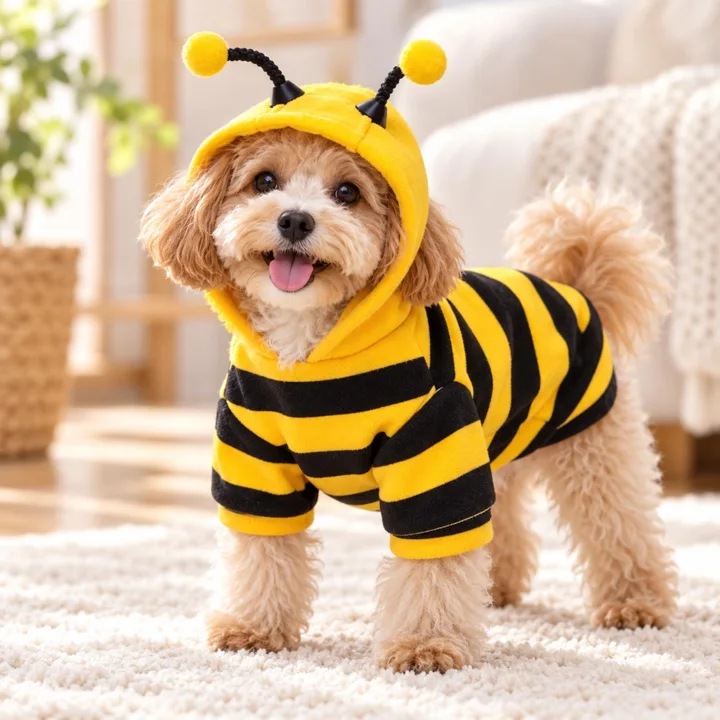
Bee costumes tend to read clearly through high-contrast stripes and a compact, cheerful theme. They can work well for a short portrait or a low-key gathering, particularly when the outfit leaves the face unobstructed. If a design includes wings or other projecting details, check how they sit when your pet turns and walks. Avoid anything that catches on furniture, drags, or interferes with a leash, harness, or another item your pet needs.
The bee character can also be a good choice when you want a recognizable look without a large face-framing mane. Still, details vary between costumes, so inspect the specific design rather than assuming every bee outfit is light or easy to wear. Let your pet sniff the costume, offer a brief fitting, and reward calm behavior if appropriate. Take it off at the first sign of discomfort or restricted movement.
Try a frog for a whimsical photo
A frog costume brings a comic, storybook quality to seasonal pictures. Rounded eye details or a green body shape can make the character readable, but anything near the head deserves careful inspection. Make sure your pet can see clearly, blink, and move their ears without obstruction. If the costume shifts when your pet walks, or your pet keeps trying to rub it off, it is not a suitable choice for an outing.
Frog styling can be especially appealing for a short, planned photo rather than an all-evening outfit. Set up the camera and background before dressing your pet so the wearing time stays brief. Keep the session calm, with a familiar person nearby and a clear path to step away. If your pet is happier without clothing, a green blanket or frog-themed prop in the frame can create the same playful mood.
Match the character to the occasion
A quiet home portrait, a costume contest, and a crowded party ask different things of a pet. A detailed lion mane or frog headpiece may be easiest to appreciate in a controlled photo setting, while a simpler bee look may be less visually busy. For any event, consider noise, unfamiliar people, other animals, and how quickly you can remove the costume. If your pet becomes overwhelmed, leave the outfit off and give them a calm place to settle.
For outdoor events, plan around practical needs rather than assuming a costume is suitable for every condition. Pet costumes are not a substitute for weather-appropriate care, and clothing should never be treated as protection from heat. Keep walks and outings comfortable in other ways, bring water when appropriate, and avoid prolonged wear. Decorative neckwear is not a walking restraint; use a properly fitted harness or collar for leash control.
Check fit and movement before the big day
Use the seller’s size chart and measure your pet as directed instead of choosing by breed name or a guess about weight. The costume should sit securely without pressing, pinching, or limiting a full stride. Check the chest, neck, and any leg openings described for that particular design. Your pet should be able to walk, sit, lie down, and turn their head normally. If the fit is uncertain, do not rely on a quick adjustment during an event.
Try the outfit for a short period in a familiar room, with supervision throughout. Look for rubbing, slipping, loose decorations, or parts your pet can chew or swallow. Confirm that the costume does not cover the eyes, nose, or mouth and does not prevent normal toileting. Remove it before using a crate or leaving your pet alone. These checks are useful for every character, regardless of how simple the costume appears.
Let your pet’s personality guide the choice
Character selection can reflect the mood you want without forcing a personality onto your pet. A relaxed dog might look amusing as a dignified lion; an energetic one may bring lively charm to a bee theme; a curious pet can make a frog costume feel especially playful. These are photo impressions, not predictions of how an animal will behave. Choose the design your pet can wear calmly, even if another character was your first idea.
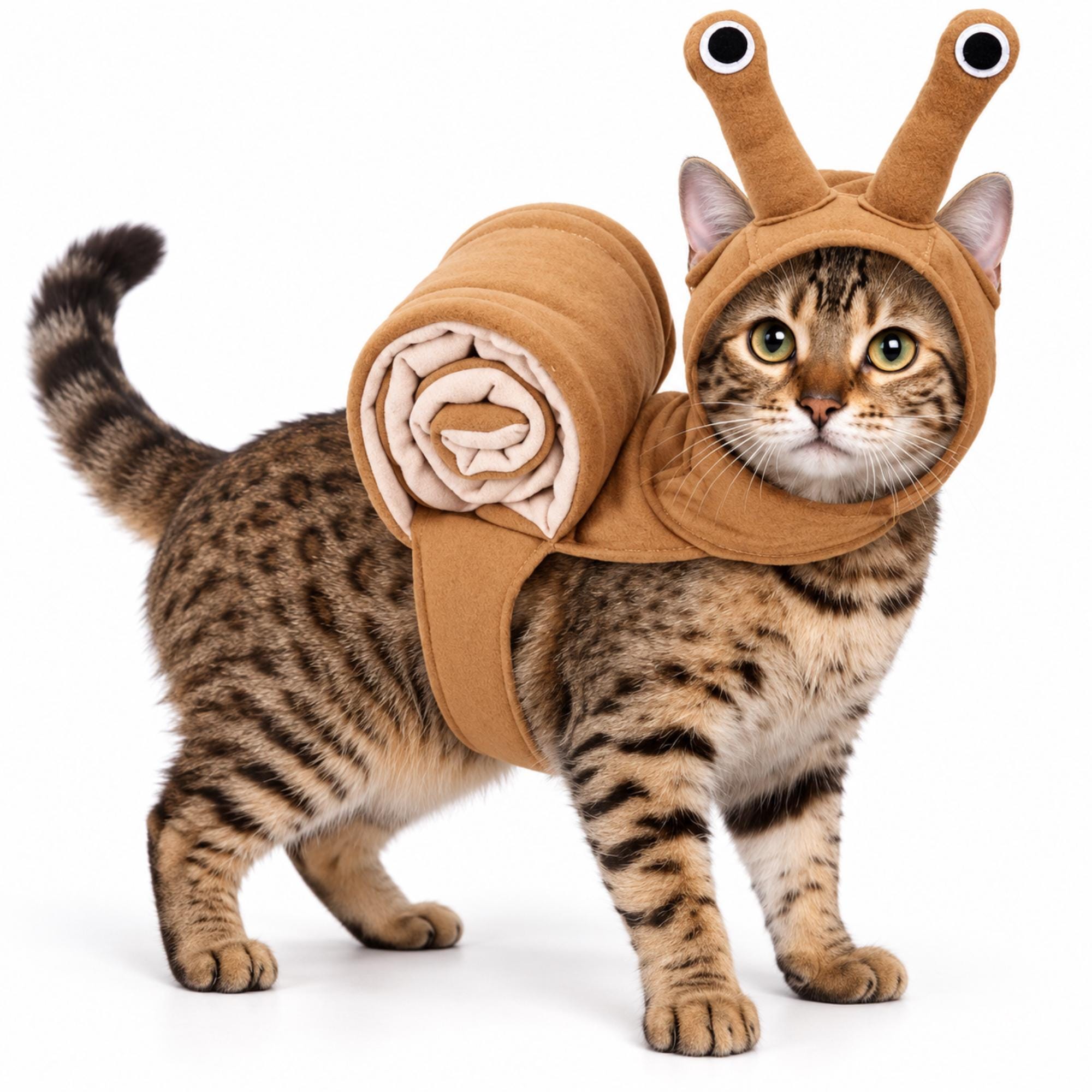
If none of the three feels right, there are other ways to join the seasonal fun. The catalog includes a snail dog costume with a face-framing hood and raised eye-stalk details, as well as a plush monster shirt with a large character face on the back. These are distinct alternatives, not lion, bee, or frog designs. Review the individual product details and fit guidance, and keep the same comfort and supervision standards.
Make photos fun without pushing for a pose
Prepare the setting before dressing your pet: choose a quiet spot, remove hazards, and have the camera ready. Take a few quick pictures while your pet is relaxed rather than repeatedly repositioning them. Treats or a favorite toy can help draw attention if they are safe and welcome, but do not use them to distract from signs of distress. End the session while your pet is still comfortable, even if you have not captured the exact pose you imagined.
A good seasonal photo does not depend on a perfect costume or a long period of wear. Let your pet stand, sit, or look away naturally; those moments often show more character than a forced pose. If the outfit starts shifting or your pet loses interest, remove it and continue with a costume-free picture. Keep pets separate from decorations they might chew, and supervise them around props, lights, and guests.
A thoughtful next step
Choose the character your pet can wear or appear beside comfortably: a lion for a bold mane, a bee for bright stripes, or a frog for a whimsical portrait. Check fit, visibility, and movement before the occasion, and keep any wearing session brief and supervised. If your pet shows discomfort, take the costume off and let the celebration continue without it.
Explore our Apparel & Costumes collection, check measuring and fit guidance, or ask us about a product detail before choosing.
Pieces mentioned in this guide
These are catalog examples, not a promise of fit or availability. Read each listing and confirm the details before ordering.