

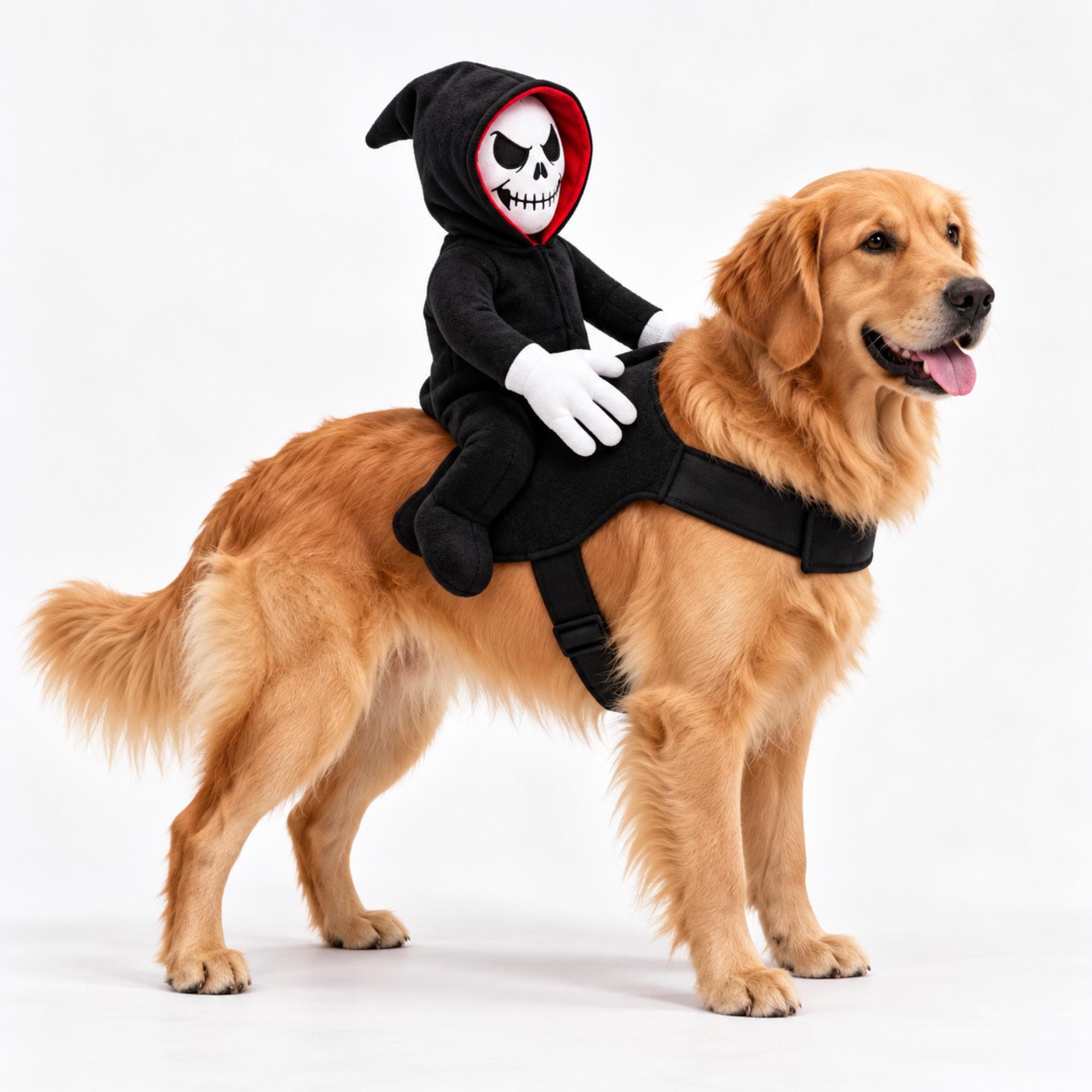
A good Halloween photo session is less about getting a perfect pose and more about giving your pet room to feel secure. A costume can be part of the fun, but it is optional: a festive blanket, a seasonal backdrop, or a few pumpkins beside your pet can make a memorable picture without dressing them up.
Plan for a handful of relaxed moments rather than a long shoot. Choose a familiar spot, keep the camera and props simple, and let your pet set the pace. If your pet shows discomfort or loses interest, remove the outfit and finish with an uncostumed portrait—or call it a day.
Start with your pet, not the costume
Think about what your pet already accepts before browsing costume ideas. A dog who wears a harness without fuss may be more open to a simple outfit than to a hood, while a cat who dislikes handling may prefer a photo without clothing. Consider the movements and textures your pet tolerates, and favor a look that will not cover the eyes, nose, mouth, or ears in a way that interferes with normal awareness.
Temperament matters as much as appearance. A curious pet might investigate a new prop, while a noise-sensitive one may find camera sounds or a rustling costume startling. Keep the plan flexible: the costume is a choice, not a requirement. For cats especially, stop at the first clear sign of discomfort and do not try to hold them in an outfit for the sake of a picture.
Choose a look that suits the session
Match the costume’s visual impact to your pet’s tolerance and the kind of photo you want. A small, recognizable detail can read clearly in a close-up, while a more dramatic design may suit a brief full-body shot. The Grim Reaper Rider costume, for example, uses a three-dimensional hooded figure to create the illusion of a tiny rider. That moving effect may be entertaining, but consider whether your pet is comfortable with an accessory resting on their back.
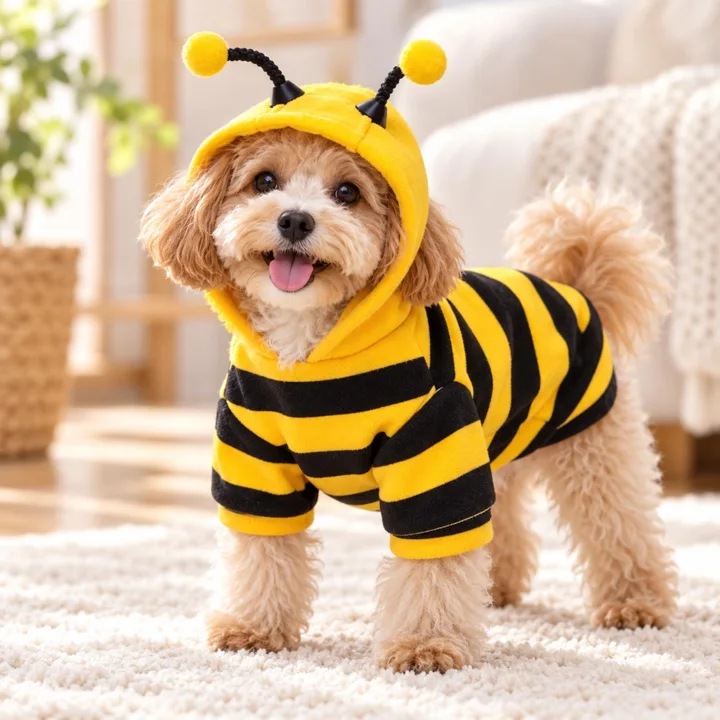
A simpler silhouette can make posing easier. The Bee Pet Hoodie features yellow-and-black stripes, a hood, and antenna details, while the Mouse Pet Costume uses oversized ears and a cheese decoration. These are catalog examples, not recommendations for every animal. Check how each design sits on your particular pet, and skip any detail that shifts, blocks vision, or prompts repeated pawing or shaking.
Check fit before planning the shot
Use the product’s size information rather than estimating from breed or weight. For the Mouse Pet Costume, the listing advises checking the size chart and measuring neck circumference, chest circumference, and back length. Allow time to compare those measurements before ordering. A costume that pulls, bunches, slips, or restricts ordinary movement is not a good photo-session choice, even if the printed size seems to match.
When the outfit arrives, inspect it and try it on during a calm moment with no camera or audience. Watch your pet walk, sit, and turn; do not leave them unattended while wearing it. Check that fabric and decorations do not obstruct breathing, sight, or movement. Decorative neckwear and costume details are not walking restraints. Use your pet’s regular, appropriate walking equipment separately when needed.
Let your pet meet the outfit gradually
Put the costume where your pet can notice it without being approached or cornered. Let them sniff or ignore it, then reward calm curiosity with a familiar treat, praise, or play if those are welcome. On another occasion, try a brief fitting and remove the outfit before your pet becomes unsettled. There is no need to complete every step in one sitting; a short, neutral introduction is useful information.
Look for changes in body language rather than waiting for dramatic resistance. Freezing, crouching, trying to escape, repeated scratching, flattened ears, or unusual agitation are reasons to stop and take the costume off. A pet who seems relaxed at first may change their mind after a few minutes. Do not scold or restrain them to secure a pose; the session can continue without clothing or end.
Build a familiar, uncluttered photo spot
Choose a place your pet already uses comfortably, such as a quiet room or a familiar corner of the yard. Clear away cords, breakable decorations, food they should not reach, and anything that could startle them if bumped. A plain wall, a favorite blanket, or a small seasonal accent is often enough. Keep exits open so your pet can leave the setup instead of feeling trapped.
Avoid turning the photo area into a crowded Halloween scene. A pile of props can compete for attention and create hazards, especially for a pet inclined to chew or investigate. Introduce any pumpkins, paper decorations, or other objects beforehand, one at a time. Keep candles, cords, and small items out of reach. If a prop makes your pet wary, remove it rather than coaxing them toward it.
Keep the session brief and reward-led
Set up the camera and lighting before bringing your pet into the space. Take a few test shots of the empty scene so you are not adjusting equipment over your pet. Use a familiar cue only if your pet knows it, and reward voluntary attention. A quick photo while they look toward a sound or treat may be enough; avoid repeatedly calling, repositioning, or asking for a pose they do not know.
Work in short bursts with breaks between them. Let your pet move around, drink water, or return to a familiar resting place. Keep treats small and appropriate for your pet, and do not use food if it creates competition or stress. If you are photographing more than one animal, take individual portraits first; sharing a small space in costumes can add pressure and make it harder to notice discomfort.
Use camera choices that reduce pressure
A camera can capture a natural moment without asking your pet to hold a pose. Photograph from their level and give them room to look away from the lens. If the shutter sound or flash seems unsettling, silence the sound or use steady room lighting instead. Make one adjustment at a time, and watch your pet’s response before continuing. The goal is a clear, expressive image, not perfect studio polish.
Take a few frames, then check them quietly rather than crowding your pet with a phone or camera. Keep a safe distance from eyes and avoid putting equipment in their face. If a moving costume detail is the point of the picture, use a brief walk only if your pet moves freely and seems at ease. Never encourage running or rough play in an outfit for a more dramatic shot.
Know when to take the costume off
End the dressed portion of the session if your pet repeatedly tries to remove the costume, moves differently, hides, pants unusually, or seems tense. Remove it calmly and check for rubbing, snagging, or a decoration that has shifted. If your pet appears unwell or distressed, stop the photo session and address their needs; a costume is never worth pushing through discomfort.
Supervise pets whenever they wear clothing, and do not leave a dressed pet alone with other animals or unattended props. Some pets will accept an outfit for only a moment; others will not accept one at all. Respect that response. A portrait in a collar they normally wear, beside a seasonal prop, can be just as festive—and may produce a more relaxed expression than a costume ever would.
A thoughtful next step
Before the session, choose a familiar setting, check the costume’s fit, and prepare a simple shot so your pet does not have to wait while you arrange the scene. Offer the outfit only if your pet accepts it, supervise throughout, and stop at signs of discomfort. Take the picture your pet is willing to give you. A calm, uncostumed Halloween portrait is a successful photo, too.
Explore our Apparel & Costumes collection, check measuring and fit guidance, or ask us about a product detail before choosing.
Pieces mentioned in this guide
These are catalog examples, not a promise of fit or availability. Read each listing and confirm the details before ordering.