

A gothic pet look can be theatrical without turning your companion into a miniature costume prop. Think sweeping cape shapes, black lace-inspired details, jewel-toned accents, and a hint of old-fashioned drama. The strongest styling starts with the pet, not the outfit: a dog who enjoys dressing up may tolerate a carefully fitted cape, while a cat who dislikes clothing may be better suited to a brief photo moment—or no costume at all.
Capes are a visual idea, not a guarantee that a particular garment will suit every animal. Check how a piece sits around the neck and shoulders, keep fabric clear of the face and legs, and supervise any dressed-up pet. You can also build a dark Halloween mood with a small decorative accent, a dramatic backdrop, or lighting rather than adding layers. A few considered details often read more clearly than a crowded costume.
Build a Gothic Look Around Your Pet
Start by deciding what kind of gothic character you want to suggest: Victorian portrait subject, moonlit wanderer, tiny vampire, or simply a pet with a dark, polished look. That choice helps keep the outfit coherent. A cape can provide the main silhouette, while one accent—such as a bow, collar, or contrasting lining—adds a focal point. Avoid stacking several statement pieces together; overlapping fabric and dangling details can make movement harder to assess.
Let your pet’s coloring guide the palette rather than assuming every gothic look must be all black. Burgundy or deep purple can stand out against a dark cape, while a pale accessory may show clearly in low-key photographs. The Gothic Victorian Pet Collar, offered in burgundy red and royal purple, is one catalog example of a decorative, dramatic accent. It is intended for styling and photos, not as a walking restraint; use a separate appropriate leash attachment.
Choose Cape Shapes With Movement in Mind
A cape should suggest drama without dragging, tangling, or covering important parts of your pet’s body. Before a photo session, check that the front stays away from the throat and that the fabric does not trail underfoot when your pet turns. A shorter, lighter-looking silhouette may be easier to manage than a long sweep, but fit depends on the individual garment and animal. Do not assume a cape has a particular fastening or safety feature unless its description confirms it.
Consider how your pet normally moves. A dog that likes to stroll may be comfortable posing briefly in a familiar room, but a cape that shifts across the shoulders can distract or startle them. Cats often find clothing restrictive, so do not force a cape onto a cat who resists. Keep any trial short, watch for signs of discomfort, and remove the outfit promptly if your pet freezes, struggles, hides, or repeatedly tries to pull it off.
Use Texture and Details Selectively
Dark styling comes alive through contrast. Pair a matte-looking base with a single ornate detail, or let lace-inspired trim frame a simple cape rather than covering the entire outfit in decoration. Because product descriptions do not always identify every material or care instruction, check the specific listing before buying and do not guess how an item should be cleaned. Keep loose chains, bows, and dangling ornaments away from your pet’s mouth and supervise them while wearing decorative pieces.
For a more restrained look, make the cape the only elaborate element and choose a plain background. For a portrait with a Victorian mood, a decorative collar can provide a layered focal point without requiring a full costume. The catalog Gothic Victorian Pet Collar features layered bows, lace details, draped chains, and a heart centerpiece. It is designed as decorative neckwear, so it should not be treated as a leash attachment or assumed to have a breakaway clasp.
Check Fit Before Halloween Night
A costume that looks right in a product photo may sit differently on your pet. Follow the garment’s own size guidance, and measure only as instructed for that item. For example, the listed mouse costume calls for checking neck circumference, chest circumference, and back length against its size chart. Do not transfer those measurements or sizing assumptions to a cape or collar; each product can use a different fit system.
Try the outfit in a quiet setting well before a party or photo session. Let your pet sniff it, then introduce it for a brief, supervised fitting if they seem willing. Look for rubbing, slipping, restricted steps, or fabric near the eyes and mouth. Fit should never obstruct breathing, vision, or ordinary movement. If you cannot adjust the garment without making it tight or unstable, skip it and use a costume-free styling idea instead.
Adapt the Idea for Cats and Dogs
Dogs who already tolerate clothing may be good candidates for a short cape portrait, especially if they can stand, sit, and turn without the garment shifting. Keep the first session low-key and reward calm participation in ways your dog enjoys. A pet that is comfortable in a hoodie is not automatically comfortable in a cape, so introduce each new outfit on its own terms. Never leave a dressed pet unattended, even when the costume seems secure.
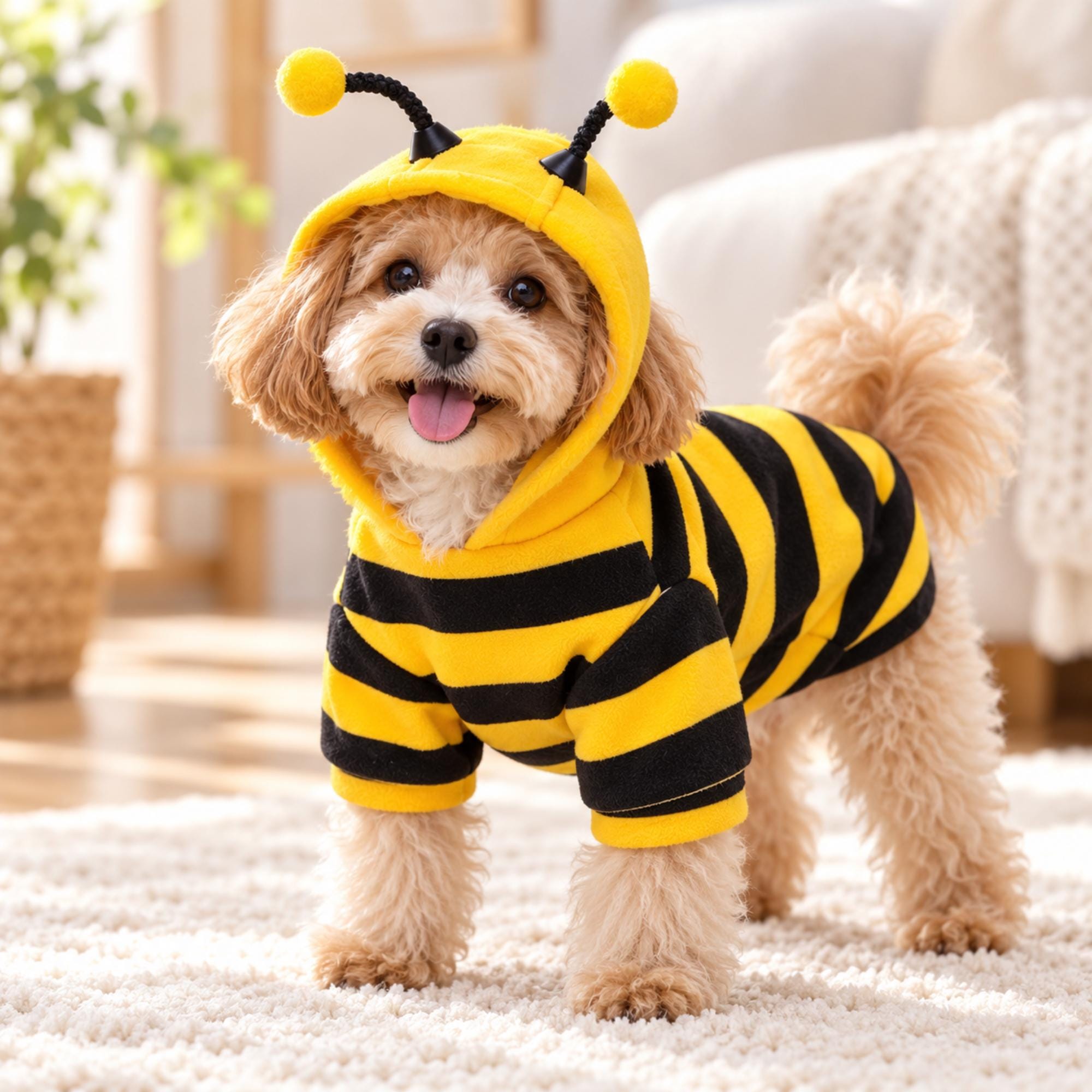
Cats need an especially flexible plan. Some may accept a quick accessory for a supervised photograph; others find any apparel stressful. The catalog Bee Pet Hoodie Costume and Mouse Pet Costume are examples of themed clothing listed for cats and dogs, but their availability as costumes does not mean every individual animal will accept them. If your cat objects, stop. A dark blanket-free backdrop, a toy, or a carefully arranged portrait can carry the theme without dressing them.
Keep Decorations Away From Hazards
Halloween settings can add risks that do not appear in a product photo. Keep pets away from open flames, hot bulbs, cords, small props, and anything they might chew or swallow. Check the costume for loose parts before use, and remove it if stitching, trim, or embellishments begin to come free. A cape is for supervised styling, not a reason to let a pet roam through a crowded party or around unfamiliar decorations.
Do not use a decorative collar or cape as walking equipment. If you take your dog outside, attach the leash to a suitable walking collar or harness designed for that purpose, separate from costume accessories. For cats, avoid taking them into a busy Halloween environment simply to show off an outfit. Familiar surroundings and a short session are often more practical. When in doubt, leave the costume off and prioritize your pet’s usual safe routine.
Create a Dark Portrait Without Overstyling
Lighting and composition can do much of the work. A plain charcoal, deep plum, or muted gray background gives a black cape definition, while a small light source aimed toward your pet’s face helps preserve expression. Keep lights and props at a safe distance, and take pictures where your pet can stand or sit comfortably. Avoid positioning an animal on an unstable surface just to achieve a dramatic angle or elaborate scene.
Photograph in short bursts and pause between them. Watch your pet rather than focusing only on the camera: turning away, pinned ears, tense posture, or attempts to leave are good reasons to stop. A useful portrait does not require a perfect pose. If the cape keeps sliding or the pet seems uneasy, take it off and photograph a decorative accent nearby instead. Their willingness to participate matters more than completing a planned shot.
Plan a Costume-Free Backup
A backup plan makes Halloween styling less stressful. Keep the cape out of the room if your pet shows discomfort, and use color, setting, or a nearby prop to suggest the same theme. A black-and-burgundy backdrop, a simple paper moon placed well out of reach, or a carefully chosen portrait frame can create a gothic mood without putting anything on the animal. Never use props that block exits or tempt a pet to chew.
You can also choose a different costume style if your pet already accepts clothing. The Bee Pet Hoodie Costume offers a bold yellow-and-black theme, while the Mouse Pet Costume uses oversized ears and a cheese detail; both are catalog examples of playful alternatives rather than gothic capes. Review each listing’s details and sizing before ordering. If a costume does not fit your pet’s preferences, no outfit is a perfectly reasonable Halloween choice.
A thoughtful next step
For a practical gothic Halloween look, choose one clear visual idea, check the exact garment’s fit guidance, and introduce it only if your pet is willing. Keep capes and decorative neckwear supervised, away from the face and feet, and separate from walking gear. Take a few relaxed photos, then remove the outfit or skip it altogether if your pet seems uncomfortable. A calm companion makes a better portrait than an elaborate costume ever could.
Explore our Apparel & Costumes collection, check measuring and fit guidance, or ask us about a product detail before choosing.
Pieces mentioned in this guide
These are catalog examples, not a promise of fit or availability. Read each listing and confirm the details before ordering.