

When a customer asks, “What size should I get?” it can be tempting to answer by breed, weight, or the size they bought last time. Those clues may start a conversation, but they cannot settle it: pets with similar weights can have different proportions, and sizing varies between garments. A more useful approach is to help shoppers take a few measurements, compare them with the specific product’s chart, and consider how the animal moves and responds to clothing.
Retailers do not need to promise a perfect fit to make the choice less of a guess. They can explain what to measure, ask what the outfit is for, and point out when a customer should pause before ordering. This process applies to a simple vest as well as a decorative dress. It also gives staff a consistent way to discuss fit without inventing measurements, product features, or guarantees that the listing does not provide.
Start with the garment, not the breed
A breed name can suggest a general body type, but individual pets vary, and labels such as “small dog” do not identify a precise fit. Invite the customer to use the size chart for the exact item under consideration. A cardigan, dress, or vest may sit differently on the same animal because the cut and coverage differ. If a shopper has an old garment that fits, it can be a helpful reference, but its tag alone is not a substitute for current measurements.
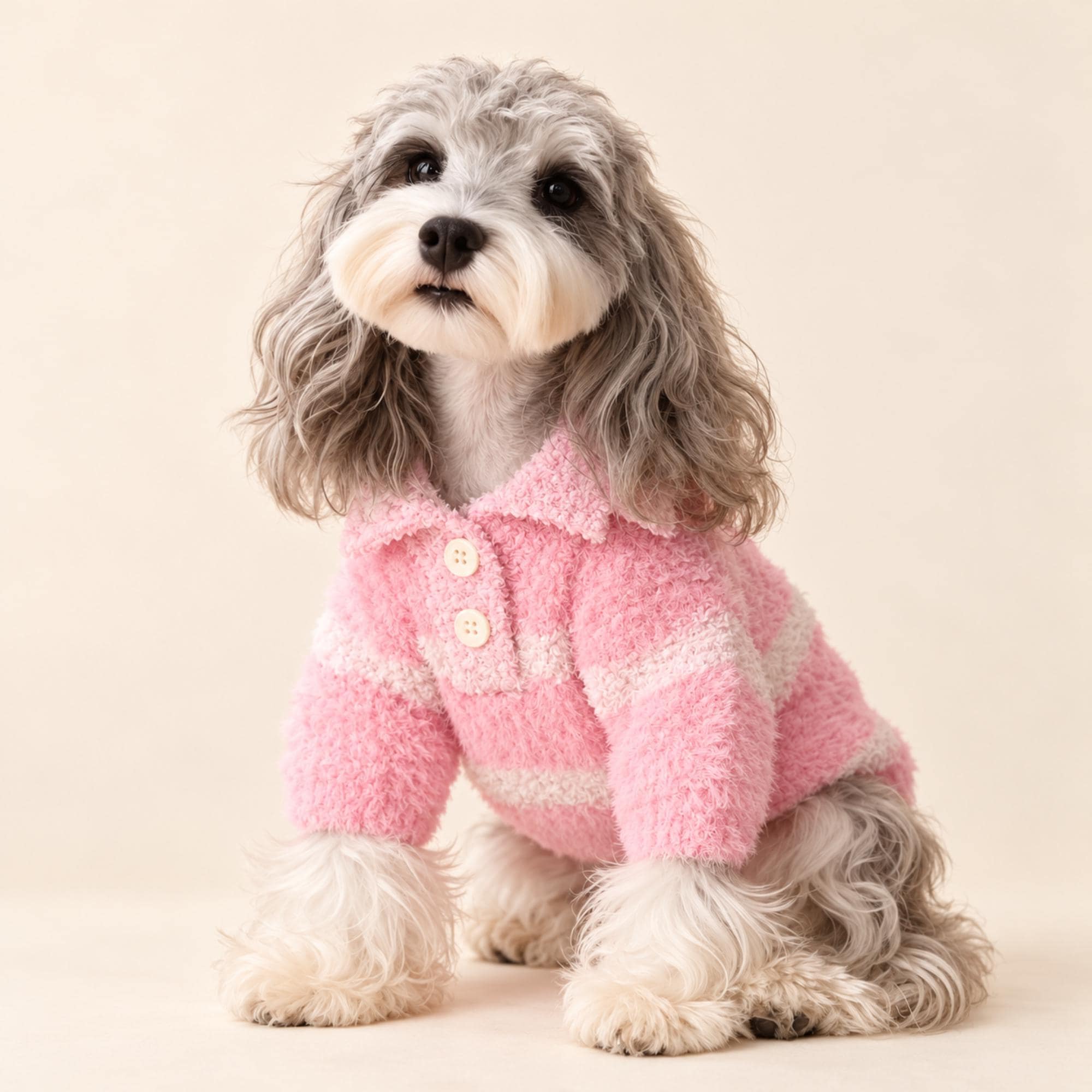
Keep the conversation grounded in what the product information actually says. For example, the Pink Fuzzy Pet Cardigan is described as designed especially for small dogs, and its listing asks shoppers to measure neck, chest, and back length. That is useful guidance, not a universal size formula. Avoid translating the description into a breed list or claiming that a particular breed always wears one size.
Show shoppers how to take three measurements
Explain the measuring process before discussing a size. Use a flexible tape measure and have the pet stand naturally, if it is comfortable doing so. For neck circumference, measure where a collar would ordinarily sit without pulling the tape tight. For chest circumference, measure around the broadest part of the rib cage, usually just behind the front legs. For back length, measure from the base of the neck to the point indicated by the garment’s chart or instructions.
If the animal will not stand still, suggest asking another person to offer calm reassurance or a treat while the customer measures. The tape should lie smoothly against the coat rather than compressing it. Customers can write down each result immediately and repeat any measurement that seems inconsistent. Staff should not add an assumed ease allowance or tell shoppers to size up or down unless the product’s own guidance supports that recommendation.
Compare every measurement with the item’s chart
Once customers have measurements, direct them to the chart for that particular listing and help them compare each number with the corresponding range. Do not rely on a chart from another style, even if the products look similar. If the page does not show enough information to make a confident comparison, say so plainly and help the shopper find the available sizing details before they order.
A pet may fall within one listed range for the chest and another for the back. That is a reason to review the garment’s cut and ask for clarification, not to invent a rule for resolving the mismatch. For the Pink Fuzzy Pet Cardigan, the listing requests all three measurements and tells shoppers to check the size chart carefully. Staff can reinforce those instructions without supplying dimensions that are not shown.
Ask what the outfit needs to do
The intended use can help shoppers decide whether a style suits their plans, even though it does not change the sizing process. A customer looking for a seasonal portrait may prioritize a distinctive detail, while someone choosing an everyday layer may focus first on coverage and an uncomplicated shape. Ask about the occasion, how long the pet may wear the garment, and whether the animal has worn clothing before.
Catalog examples make these distinctions concrete. The Cat Face Pet Dress is presented as a playful choice for photos and special occasions, with a plush decoration and gathered skirt. The Snowman Pet Vest has a sleeveless design and seasonal details for holiday pictures or gatherings. Describe those listed features accurately, then return to the chart: an appealing theme does not establish that the garment will fit a particular pet.
Use design details to prompt fit questions
Before recommending a style, help the customer think through where its details sit and whether they could interfere with ordinary movement. A collar, skirt, sleeve, or dimensional decoration may matter to a pet who dislikes fabric near the neck or has a particular way of walking. Read the product description together and encourage the shopper to consider the pet’s body shape, coat, and tolerance for clothing.
Do not convert a listed feature into a claim about safety or performance. The Snowman Pet Vest is described as sleeveless with an open-leg design, but that alone does not prove it will suit every animal or activity. Likewise, a decorative collar on an outfit is not a walking restraint. If a customer needs a harness or leash connection, they should choose equipment specifically described for that purpose.
Make the first fitting a supervised check
Encourage customers to try apparel on calmly and supervise the pet throughout. They can check whether the garment sits as intended and whether the animal can stand, walk, sit, and turn without the clothing obstructing movement. Watch for a garment shifting, catching, or appearing restrictive. A quick visual check is more useful than assuming that a size label guarantees a suitable fit.
Cats may reject apparel, and individual dogs may dislike it too. If the pet freezes, struggles, repeatedly tries to remove the outfit, or otherwise seems uncomfortable, advise the owner to take it off rather than persist. Never suggest leaving an animal unattended in clothing. If a garment obstructs movement or cannot be fitted without distress, no outfit is the better choice.
Handle uncertainty honestly before checkout
When measurements are missing, unclear, or between chart ranges, treat that as a genuine question—not an opportunity to guess. Help the customer locate the relevant chart or product details, and explain what information is still needed. If the listing does not answer the question, avoid promising a fit or making up a measurement. A clear pause before purchase is more responsible than a confident recommendation without evidence.
For personalized or altered items, confirm the available options and requested details before an order is placed. Do not assume a name, color, or other customization can be added simply because the shopper asks. Keep any follow-up specific: identify the item, the measurements or option in question, and what needs confirmation. This gives the customer a practical next step without implying an unlisted service or outcome.
Give customers a repeatable measuring checklist
A short checklist helps shoppers make a careful decision at home or in the store. Ask them to identify the exact garment, find its own size chart, measure the neck, chest, and back as requested, and compare every result with the chart. Then consider the pet’s proportions, the outfit’s design, and the reason for wearing it. If any key information is absent, resolve that question before choosing.
Staff can use the same sequence at the counter without turning it into a rigid script. For instance, a shopper choosing a cardigan for a small dog may need to check all three measurements, while someone considering the Snowman Pet Vest should also review its listed sleeveless construction and intended seasonal use. The purpose is not to steer every customer toward an outfit; it is to help them make an informed, pet-specific choice.
A thoughtful next step
A useful apparel recommendation starts with the exact product and the pet’s measurements, then accounts for the garment’s design and the animal’s response. Keep the size chart central, describe only the features the listing provides, and be candid when information is missing. After purchase, advise a supervised first fitting and make clear that discomfort or restricted movement means the outfit should come off. That approach helps customers choose thoughtfully—and gives them permission to skip clothing when it is not right for their pet.
Explore our Apparel & Costumes collection, check measuring and fit guidance, or ask us about a product detail before choosing.
Pieces mentioned in this guide
These are catalog examples, not a promise of fit or availability. Read each listing and confirm the details before ordering.