


A hoodie can look charming in a photo, but your pet experiences it as a new sensation: fabric over the back, sleeves or openings near the legs, and possibly a hood around the neck or head. A calm introduction matters more than getting the outfit on quickly. The goal is not to make every pet tolerate clothing; it is to find out whether this particular garment feels acceptable to this particular animal.
Plan for several brief, low-pressure sessions rather than a single dressing attempt. Choose a quiet time, check the garment’s fit and construction, and let your pet decide whether to approach it. Dogs and cats may respond differently, and an animal who freezes, struggles, or tries to escape is telling you to pause. A hoodie is optional; skipping it is the right choice whenever wearing it interferes with ease or normal movement.
Start With Your Pet, Not the Outfit
Consider your pet’s history with handling before you begin. A dog who already accepts a harness may still dislike sleeves, while a cat who enjoys being brushed may object to fabric passing over its head. Notice how your pet responds to gentle touch around the shoulders, chest, and legs during ordinary interactions. If those areas are sensitive, or dressing has caused distress before, do not treat a hoodie as a training challenge to overcome.
Pick a moment when your pet is relaxed but alert, not hungry, overtired, or eager to get outside. Keep the room familiar and let the animal move away freely. Have a few small rewards ready if your pet likes them, but do not use food to lure an animal into clothing it is actively avoiding. A calm start gives you clearer information about the hoodie itself, rather than adding pressure from a busy setting.
Check the Hoodie Before Trying It On
Look over the garment for loose threads, rough seams, dangling decorations, or openings that could catch a claw. Check that the hood can sit without covering the eyes, nose, or ears, and that fabric will not press on the throat. Make sure there is room for natural breathing and movement. Do not assume a hood can safely be left up simply because it is part of the design; it may need to stay down, or the garment may not suit your pet.
Use the sizing guidance supplied for the specific hoodie and compare it with your pet’s measurements instead of relying on breed labels or a guess. The garment should not pinch at the chest, pull across the back, or drag under the body. If you cannot tell whether the fit is right, do not force a trial. A hoodie that restricts movement or shifts into the face is a poor fit, even if your pet initially seems quiet.
Let the Fabric Become Familiar
Place the hoodie on the floor several feet away and allow your pet to investigate at its own pace. A dog might sniff it, circle it, or ignore it; a cat may prefer to watch from a distance. Reward voluntary curiosity with a treat, gentle praise, or play if that is what your pet enjoys. Avoid waving the garment over the animal or placing it on a bed where the pet cannot easily move away.
Once the hoodie seems unremarkable, briefly touch it to the shoulder or side, then remove it. Keep the contact light and pair it with something pleasant. Repeat only if your pet stays loose and comfortable. If the animal backs away, pins its ears, tucks its tail, swats, or stiffens, stop and give it space. The purpose is to build familiarity, not to wait out resistance until the pet gives up.
Practice One Small Step at a Time
When your pet accepts the garment near its body, try a short, simple step—such as resting the hoodie across the back for a second, then taking it off. If the design requires the head to pass through an opening, do not push or pull the fabric over a reluctant animal. Let the head approach the opening voluntarily, and stop if your pet turns away, struggles, or shows tension. A hoodie that is difficult to put on gently may not be a suitable choice.
Build toward putting it on only while your pet remains at ease. Keep the first wear very brief and remove the hoodie before your pet becomes restless. You can practice separate parts of the process on different occasions rather than adding several unfamiliar sensations at once. For example, a dog may need time to accept fabric near its front legs; a cat may need more time simply to tolerate the garment resting on its back.
Watch Movement, Not Just Stillness
After the hoodie is on, check whether your pet can walk, turn, sit, lie down, and raise its head normally. Look for fabric pulling under the legs, twisting around the chest, or slipping toward the face. A pet that stands very still is not necessarily comfortable; freezing can be a sign of stress. Offer a familiar cue or invite a few relaxed steps, without tugging the animal or using the clothing to steer it.
Keep the hood away from the eyes, nose, and ears, and make sure it does not interfere with hearing or ordinary head movement. Watch for repeated scratching, biting at the fabric, crouching, tail tucking, panting unrelated to exertion, or attempts to hide or escape. Remove the hoodie promptly if you see these signs. Do not leave a dressed pet unsupervised, since fabric can shift or snag as the animal moves around.
Keep First Wear Sessions Short
Start with a minute or two at most, adjusting to your pet’s response rather than following a fixed schedule. End while things are going well: remove the hoodie calmly, then offer a reward or return to an activity your pet likes. If your pet becomes uncomfortable sooner, take it off immediately. There is no benefit to extending a session until the animal becomes distressed, and a short positive exposure is more useful than a long struggle.
Over later sessions, add time gradually only if your pet remains relaxed and moves freely. Practice indoors before considering a busier setting, where noise, people, or other animals can make the experience harder. Avoid wearing the hoodie during play that could cause it to snag, or during any activity where it could interfere with a leash, harness, or supervision. Clothing should not replace a properly fitted walking harness or collar.
Respond to Dogs and Cats as Individuals
Dogs may show discomfort by pawing at the garment, rolling, shaking repeatedly, or refusing to move. Some may settle after a slow introduction; others may never like clothing. Do not interpret quiet compliance as approval. If the hoodie changes your dog’s gait, makes it reluctant to sit, or draws its attention away from you, take it off. A dog that seems comfortable indoors should still be watched closely if the surroundings change.
Cats can be especially particular about anything that affects movement or sensation across the body. A cat may tolerate a garment briefly and then try to remove it, so stay close and end the session at the first clear sign of discomfort. Never restrain a cat to get a hoodie on, and do not leave one dressed while unattended. For a cat that resists, a photograph without clothing—or no outfit at all—is a kinder option.
Choose the Right Occasion—or Skip It
Think about why you want your pet to wear the hoodie. A brief supervised photo at home is different from a long outing, and a pet should not have to endure clothing for a picture. If your animal already wears a familiar, comfortable garment, a new hoodie still deserves its own gradual introduction. Decorative alternatives in a catalog may look appealing, but they are not necessarily hoodies or equivalent in fit: for instance, the Red Christmas Pet Cape is a cape with a ribbon-tie neckline, not a pullover hoodie.
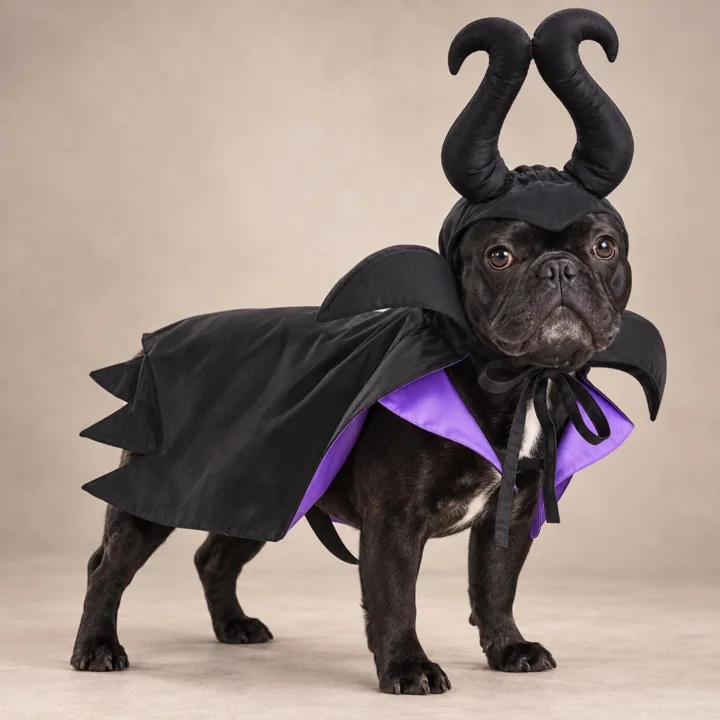
Costume examples also illustrate why a garment’s design matters. Paw Dazzle’s Headless Horseman Cat Costume is a structured costume, while its Black Horned Devil Pet Costume includes a horned headpiece and cape. Neither is a hoodie, and their descriptions do not establish that they suit every animal or occasion. Treat each item according to its actual design and sizing details; never assume that a costume or decorative accessory can be worn as restraint or left on without supervision.
A thoughtful next step
Before each wear, check fit, inspect the fabric, and give your pet the option to approach or move away. Put the hoodie on only when you can do so gently, supervise throughout, and remove it at the first sign of restricted movement or discomfort. If your pet stays relaxed, keep early sessions short and build slowly; if it does not, let the hoodie go. Your pet’s comfort and freedom to move matter more than completing the look.
Explore our Apparel & Costumes collection, check measuring and fit guidance, or ask us about a product detail before choosing.
Pieces mentioned in this guide
These are catalog examples, not a promise of fit or availability. Read each listing and confirm the details before ordering.