

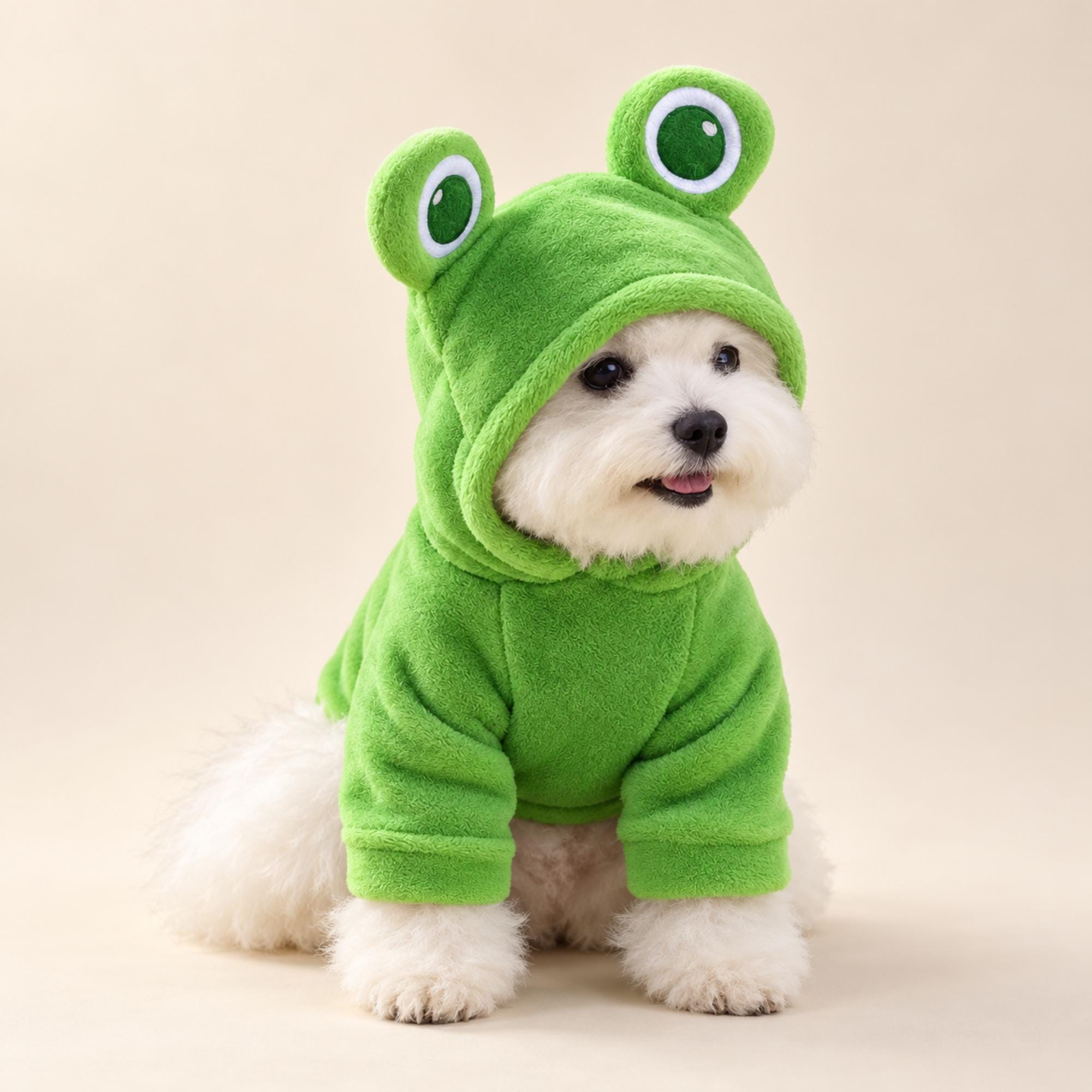
A Halloween costume photo works best when the pet—not the outfit—sets the pace. A dog may sit proudly for a treat, while a cat may prefer one quick portrait before heading off. Plan for the animal in front of you, and you’re more likely to capture an expression that feels lively rather than staged.
You don’t need a studio or elaborate props. A clear patch of light, a familiar room, and a camera ready before the costume goes on can be enough. Keep the session short, watch for signs of discomfort, and treat a usable candid as a success, even if it differs from the picture you imagined.
Put your pet’s comfort ahead of the shot
First, decide whether dressing up suits this particular pet. Some dogs tolerate a costume for a few minutes; some cats dislike clothing altogether. Let your pet inspect the garment, and don’t force it on or keep it in place for a photo. Stop if you notice freezing, repeated attempts to escape, flattened ears, tucked posture, panting, or other signs that the pet is uncomfortable.
Check that the outfit does not restrict movement, breathing, vision, or access to the face. A hood should never cover the eyes or nose, and loose details should not become something the pet can chew. Supervise throughout the session, keep the floor clear, and remove the costume as soon as the pictures are done. If your pet would rather go without an outfit, photograph them naturally.
Choose a costume that reads clearly on camera
A recognizable shape or bold color often photographs better than a complicated look. The Frog Pet Hoodie, for example, has a green plush appearance and raised frog eyes on its hood, giving the picture an immediate theme. Before ordering any garment, check its size chart and compare the listed measurements with your pet rather than relying on weight alone. A costume that fits poorly can distract from the expression you want to capture.
Try the outfit briefly on an ordinary day before Halloween, if your pet accepts it. Notice whether it shifts when they sit, turn, or walk, and check that the face remains unobstructed. A Blue Monster Graphic Pet Sweatshirt offers another simple visual idea: its bright color and monster artwork can carry the Halloween theme without needing a busy set. The right choice is the one your pet can wear comfortably for a short, supervised session.
Prepare the camera and room in advance
Set up the scene before bringing your pet into it. Clear away clutter, move fragile objects, and choose a spot where your pet already feels at ease. Put the camera or phone within reach, check the battery, and take a test frame to see what appears behind the subject. If you’re using a phone, clean the lens; a fingerprint can soften the whole picture.
Decide what you want to show: a close portrait, a full-body costume view, or a candid interaction. A close frame highlights the face and costume details, while a wider one can include a simple seasonal setting. Keep treats or a favorite toy nearby, but out of sight until you need them. If another person can help, ask them to manage the reward or gently draw the pet’s attention.
Use soft light and a simple background
Window light is an easy starting point. Place your pet near a bright window, with the light falling on the face rather than directly behind the animal. Avoid harsh midday sun, which can create sharp shadows and make a pet squint. If the room is dim, move to a brighter area instead of relying on flash; a sudden burst can startle an animal and may make the moment harder to manage.
Choose a background that contrasts with the costume without competing for attention. A green frog hoodie may stand out against a neutral wall, while a blue monster design can pop against a warm-toned blanket or plain floor. Look through the frame for distracting cords, furniture edges, or bright objects near the head. A tidy background helps the costume read clearly, even when the pet is sitting at an angle.
Get down to your pet’s eye level
Photographing from the pet’s height usually creates a more engaging portrait than pointing down from standing. Sit or kneel, and give the animal room to move rather than backing them into a corner. Keep the camera steady and focus on the eyes when they are visible. A little distance can help a shy pet feel less crowded, so use a camera’s modest zoom or crop later rather than leaning close.
For a small dog or cat, a familiar chair or low platform may bring the face nearer to camera height, but only use a stable surface your pet already uses safely. Don’t lift or position an uneasy animal just to improve the composition. Try a profile, a three-quarter turn, and a direct look if your pet offers them naturally. Small changes in viewpoint can make the same costume feel playful, curious, or dramatic.
Keep the session short and reward cooperation
Take a few pictures at a time, then pause. A dog may respond to a brief cue, while a cat may be more interested in watching from a familiar perch than holding a pose. Reward calm behavior with praise, a treat, or a favorite game if that suits your pet. Keep rewards outside the frame until needed, and avoid making the animal repeat a pose over and over.
Watch the pet, not just the screen. If they turn away, start licking their lips, crouch, or try to leave, give them space and end the session if needed. You can often get a natural portrait while they investigate the set or settle beside you. Several relaxed moments are more useful than one forced pose, and a costume-free photo is always a good alternative.
Make props optional, not part of the costume
Props can add a seasonal cue, but they should stay out of the pet’s way. A pumpkin, paper leaves, or a plain orange cloth can sit in the background without being worn or handled. Keep small objects, wires, candles, and anything chewable beyond reach. Never use a prop that blocks the pet’s view, restricts movement, or requires them to hold still in an unfamiliar position.
A DIY Halloween Witch Wand Kit is a craft project for a person to assemble, not a pet accessory or a finished wand included ready to use. If you make one for a photo backdrop, keep it at a safe distance and under adult supervision; don’t hand it to a pet or let them chew it. Often, one small seasonal detail is enough. The costume and the pet’s expression should remain the focus.
Capture variety, then choose the natural frame
Take a short sequence rather than waiting for a perfect still pose. A burst of frames can catch a blink, head tilt, or moment of curiosity, especially when the pet is moving gently. Change one thing at a time—your angle, the distance, or the background—so you can tell what improved the picture. Leave room around the subject; a little extra space makes cropping easier later.
When reviewing, look for a sharp face, unobstructed eyes, and a relaxed posture before judging the costume details. Skip images that make the pet appear distressed, even if the outfit looks especially polished. You can make modest edits to brightness or crop out distractions, but avoid filters that alter the pet’s appearance or hide an ill-fitting garment. The strongest picture often feels like a real moment, not a perfect production.
A thoughtful next step
Before you begin, set out the camera, choose a calm spot, and decide how you’ll tell when your pet has had enough. Photograph a few relaxed moments, reward cooperation, and stop at the first sign the costume or activity is unwelcome. The best Halloween portrait is one your pet can comfortably walk away from.
Explore our Apparel & Costumes collection, check measuring and fit guidance, or ask us about a product detail before choosing.
Pieces mentioned in this guide
These are catalog examples, not a promise of fit or availability. Read each listing and confirm the details before ordering.