

Layering a pet’s clothing can add visual interest and give you options for changing conditions, but more garments do not automatically make a better outfit. Each added layer changes how clothing sits around the neck, shoulders, chest, and legs. A combination that looks polished while a pet is standing still may twist, bunch, or interfere with ordinary movement once they walk, sit, or turn.
The goal is a simple outfit your pet can move in naturally—and can leave behind if they dislike wearing clothes. Start with fit, use only pieces that work together, and watch your pet rather than relying on appearance alone. Dogs and cats have different tolerances, and an outfit is never necessary if it causes stress or gets in the way.
Begin with the pet, not the outfit
Before choosing layers, consider your pet’s size, body shape, coat, age, and usual behavior in clothing. A short-backed dog and a long-bodied dog may need different garment proportions even if their measurements seem similar. Notice how your pet moves without clothes: does the chest expand freely, do the front legs reach forward, and can the animal turn without hesitation? Those observations give you a useful baseline for judging a finished outfit.
For cats, set a more cautious expectation. Many cats dislike apparel, and adding multiple pieces can increase the feeling of restraint. If a cat crouches, freezes, tries repeatedly to escape, or seems distressed, remove the clothing and stop the session. Never insist on an outfit for a photo or occasion. For any pet, choose no clothing when that is the more comfortable and unobstructed option.
Get a fit check on every piece
Measure your pet according to the size guidance supplied for each garment, and compare the measurements with that item rather than assuming one size works across brands or styles. Check the neck, chest, and body length where applicable. A snug-looking fit is not a reason to ignore pulling, pinching, or restricted reach. If the garment shifts sharply when your pet walks, or its edges press into the body, reconsider the size or style.
Try each piece by itself before combining anything. Let your pet stand, walk a few steps, sit, lie down, and turn in a familiar space. Look for fabric that catches behind the front legs, rides toward the throat, or covers the eyes or nose. Check again after movement, since a garment can look correctly positioned at first and then rotate or bunch as the body changes position.
Choose layers that do different jobs
A practical layered outfit usually has a clear reason for each piece. One garment might provide the main coverage, while another adds a light decorative accent. Avoid stacking two bulky items simply because they match. Extra fabric can crowd the same areas and make it harder to see whether the underlying piece fits well. If one garment already meets the occasion, wear it alone and keep the rest of the outfit simple.
Think about how closures, collars, hems, and decorative details will sit together. A collar on one piece may press against another neckline; a belt-style detail may overlap a fastening; and a raised decoration can be trapped beneath an outer layer. Arrange the garments so details do not dig in, snag, or obstruct movement. Do not assume that a layer is suitable for a particular temperature or activity based on its appearance.
Build the outfit one garment at a time
Put on the first piece and allow your pet a moment to adjust before adding anything else. Check posture and movement again rather than rushing through several fastenings. If the first garment already changes a natural stride or prompts persistent attempts to remove it, do not add a second. This gradual approach helps you identify which item is causing a problem instead of having to untangle a complicated outfit.
When a base garment seems acceptable, add the next piece and repeat the same movement check. Watch the combined fit at the chest, under the front legs, and along the back. The outside layer should not pull the first one out of position. If you have to tug repeatedly to make the outfit sit neatly, it may not be a workable combination. Remove a layer instead of tightening or repositioning it over and over.
Keep shoulders, legs, and senses free
Movement checks should include ordinary actions, not only a straight walk. Invite your pet to turn, step over a low object, sit, and lie down without forcing any motion. The garment should not block a full stride or catch as the legs bend. Keep clothing away from the eyes, nose, and mouth, and make sure nothing limits access to food, water, or toileting. A stylish silhouette is not worth obstructing a basic activity.
Pay attention to behavior as carefully as fit. Repeated pawing, biting at fabric, unusual stillness, hiding, or a change in gait can signal that the outfit is unwelcome or interfering. Take the clothing off and give your pet a break. Never leave a pet unattended in layered apparel. Supervision matters because a loose edge or shifted piece may become more troublesome after the initial fitting.
Use catalog styles as starting points
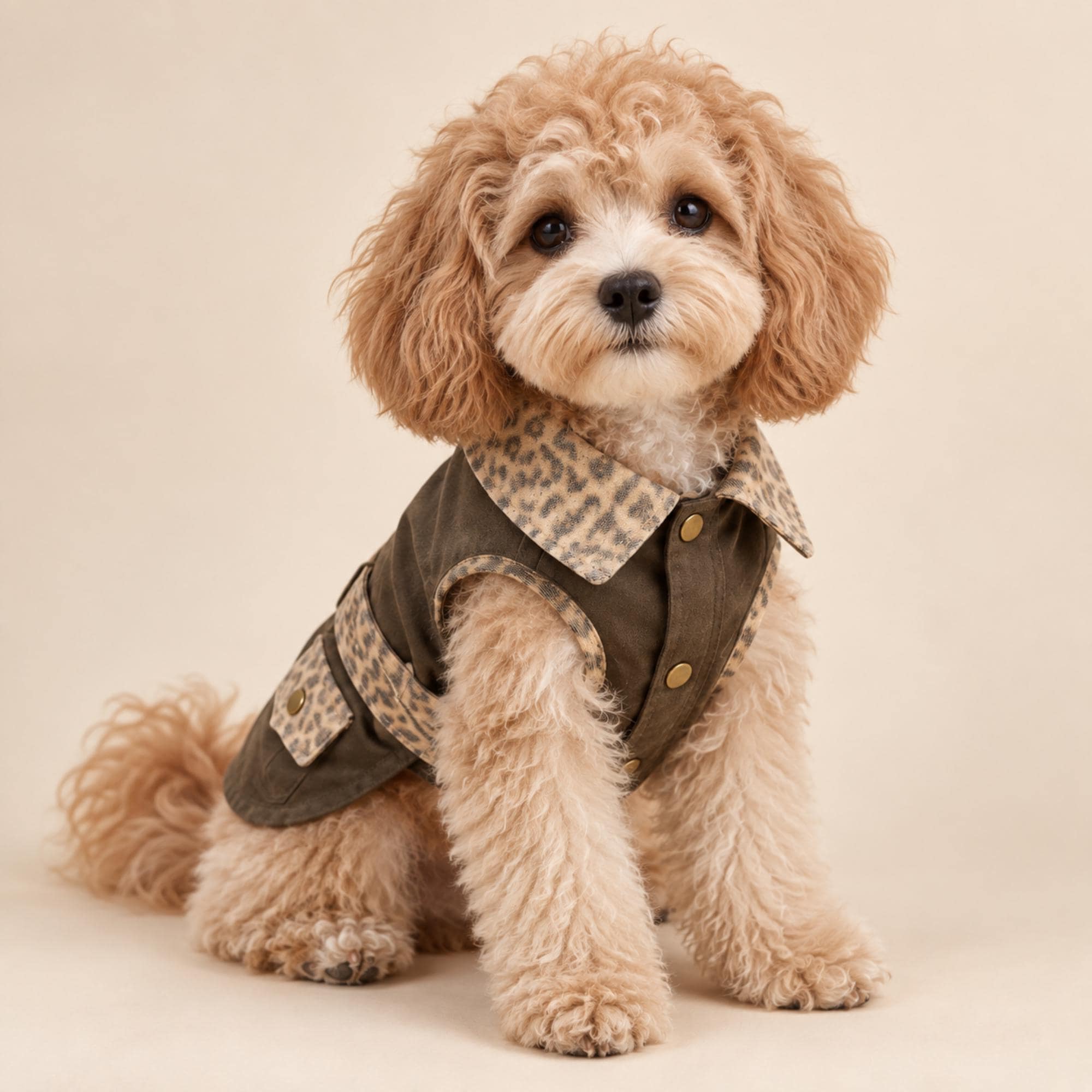
A sleeveless style can be a straightforward place to begin when you want to assess shoulder movement. For example, the Vintage Leopard Dog Vest has a sleeveless design and decorative collar and trim. Check its measurements against your pet, then try it on by itself before pairing it with another garment. Its built-in metal leash attachment ring is a product feature, but the supplied description does not establish a safety rating for walking restraint.
A sweater or cape offers a different silhouette to evaluate. The Blue Teddy Bear Dog Sweater is described with a sleeveless front-leg design, while the Cream Sherpa Christmas Pet Cape is described as cape-style coverage. Those descriptions can help you consider which shape suits your styling idea, but they do not replace an individual fit check. A cape may sit differently from a sweater, and either can be unsuitable for a particular pet.
Treat leash time as a separate fit test
Clothing and walking equipment should be evaluated separately. If your pet wears a harness, check that it sits correctly over or under the garments according to the harness maker’s directions and does not become trapped, shifted, or difficult to fasten. Do not assume an outfit’s ring or decorative hardware is a tested substitute for a properly fitted walking harness. The vest’s listed ring is a catalog feature, not evidence of a safety rating.
Before going outside, observe your pet moving with the complete combination in a secure, familiar place. Confirm that the leash does not pull clothing into the neck or chest and that your pet can turn without tangling. If the layers interfere with harness placement or leash handling, remove a garment or skip the outfit. A simpler setup is preferable to a visually coordinated one that complicates control.
Keep outings short and reassess
A successful indoor fitting does not guarantee that your pet will accept the same outfit for a longer outing. Begin with a brief, supervised period and check the garment again when you return. Look for shifted closures, twisted fabric, dampness, or new signs of irritation. Follow the care directions provided with the product; do not guess at a washing method or assume that materials can be cleaned in a particular way.
Consider the setting as well as the garment. Photos, visitors, and unfamiliar surroundings can make a pet less tolerant of clothing than they were during a quiet fitting. Keep an easy way to remove each piece, and take it off if your pet becomes uncomfortable or movement changes. For cats especially, stop at the first clear sign of distress. The best outfit is the one your pet can comfortably decline.
A thoughtful next step
Layer with restraint: confirm each piece fits alone, add garments gradually, and watch your pet move, rest, and respond. Keep faces and limbs unobstructed, supervise while clothing is on, and use appropriate walking equipment rather than relying on apparel hardware as a restraint. If a layer causes discomfort or gets in the way, remove it. Sometimes one simple piece—or no outfit at all—is the right choice.
Explore our Apparel & Costumes collection, check measuring and fit guidance, or ask us about a product detail before choosing.
Pieces mentioned in this guide
These are catalog examples, not a promise of fit or availability. Read each listing and confirm the details before ordering.