

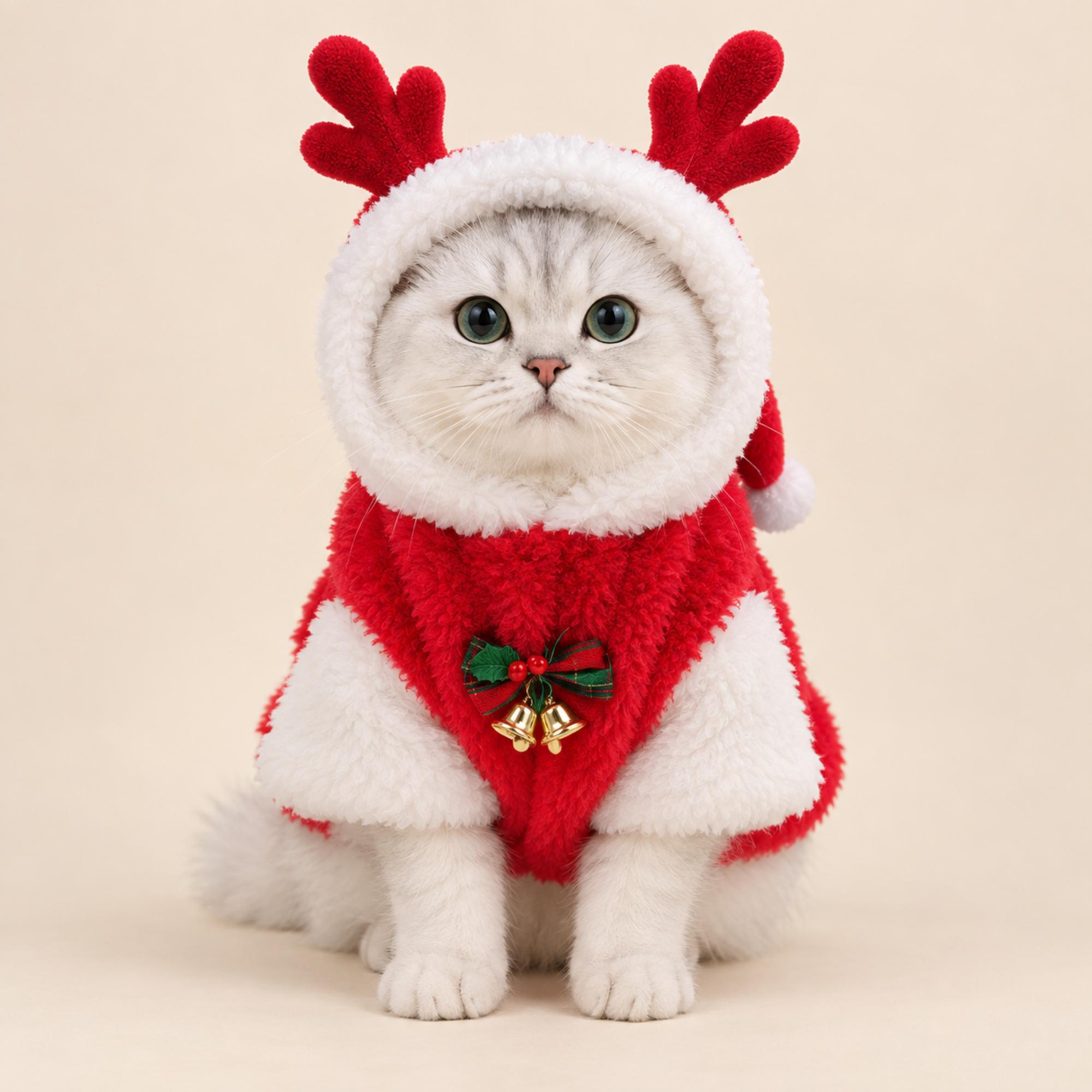
Holiday photos feel more considered when the people, pets, and decorations share a visual thread. That does not mean dressing every family member in the same plaid pajamas—or asking a cat to tolerate a full costume. Coordinated Christmas style can be as simple as repeating a color, balancing textures, or using one festive accent while everyone else wears everyday clothes.
Start with your pet’s preferences and the occasion, then build the look around them. A dog who enjoys wearing clothes might be ready for a reindeer outfit; a cat who dislikes garments can still join the picture beside a red blanket or a person in green. The goal is a photograph that feels connected, not a matching set that makes an animal uncomfortable.
Choose a shared color, not a shared outfit
Pick two or three colors that can appear in different ways across the group. Red and cream might show up in a person’s sweater, a pet’s festive accessory, and a blanket; forest green and gold can tie together a dog’s bandana-style look and a family’s ordinary clothes. Repeating a palette creates a connection even when each person and pet wears a different silhouette. It also leaves room for individual taste.
Consider the room before settling on colors. A bright red outfit can stand out against a neutral wall, while a red pet against red wrapping paper may disappear into the background. If the tree is already colorful, quieter clothing can keep the photograph from feeling busy. Lay out the clothes and background together, then look for a shared shade that reads clearly without making every subject compete.
Let one piece carry the holiday theme
A single recognizable detail often says Christmas more clearly than a head-to-toe costume. A reindeer hood, a bow, or a small patch of red can give the pet a seasonal role while people wear plain sweaters or shirts in complementary colors. For a dog comfortable in costumes, the Red Reindeer Pet Costume has a red body, white trim, antlers, and bow-and-bell details. Treat it as a photo option, not a requirement for the whole event.
You can also reverse the emphasis: keep the pet’s appearance simple and let people wear the novelty sweaters. This works particularly well when the animal will only be in the room briefly or tends to fuss with clothing. A visible holiday color near the pet—on a cushion, a person’s sleeve, or a nearby gift bag—can still make the image feel planned without putting anything on the animal.
Mix textures for a more natural group look
Coordination can come from texture as well as color. Pair a pet’s plush-looking costume with knitwear, denim, corduroy, or a smooth festive ribbon elsewhere in the frame. A softer woodland palette can work with neutral sweaters and natural decorations, while a bright red costume may suit simpler, less textured clothing. Varying surfaces keeps the group from looking like a uniform, even when everyone shares the same holiday colors.
Keep visual texture distinct from assumptions about how a garment feels. Product descriptions and appearance do not tell you whether a particular pet will like wearing an item. Let your animal’s behavior guide the choice, and check the fit and product details before ordering. If a garment causes repeated pawing, freezing, hiding, or attempts to remove it, end the photo session and choose a no-outfit alternative.
Match the mood to the gathering
A polished card portrait calls for a different level of coordination than a casual Christmas-morning snapshot. For a formal photo, choose a restrained palette and one seasonal detail, such as antlers against cream and deep green. For a lively family gathering, a brighter reindeer look can suit the setting. Think about who will be in the picture, where it will be taken, and whether your pet will be expected to stay dressed for more than a few minutes.
A full costume can make sense for a brief, supervised photograph when the pet is relaxed and the garment fits appropriately. A cape-style design, such as the Reindeer Dog Cape, offers a different visual shape from a full-body outfit, with a spotted woodland look, hood, and bow. Check its fit against your pet’s measurements and observe how they move. A different cut is not automatically a better choice for every animal.
Give cats an easy way to take part
Cats may reject apparel, and a holiday photo is not a reason to press the issue. If your cat already accepts clothing, keep any session brief and supervised, and make sure the garment does not obstruct movement, vision, breathing, or access to the litter box. Stop at signs of discomfort, including struggling, crouching, repeated grooming at the garment, or trying to hide. Some cats are happiest wearing nothing at all.
A cat can still belong in a coordinated scene without wearing an outfit. Place them on a familiar chair with a red throw, photograph them near a tree at a comfortable distance, or invite them into a group picture while they sit beside a person in the chosen palette. Keep decorations, cords, and fragile ornaments out of reach. Let the cat leave whenever they choose rather than holding them in position.
Make fit and movement part of the plan
Before buying pet apparel, compare your pet’s measurements with the specific size chart rather than relying only on breed, age, or weight. Check the product description for coverage and design details, then consider whether your pet can walk, sit, and turn without restriction. For a hooded costume, watch that the hood does not interfere with vision or movement. Do not assume a listing detail that is not provided, such as a particular fastener or care method.
Try an outfit at home well before guests arrive or the camera is ready. Give the pet a chance to sniff it, introduce it gradually if they are willing, and remove it if they resist. Supervise any wear, especially around children, other animals, and holiday decorations. Apparel should not be used as a walking restraint; use appropriate walking equipment for outings and keep decorative clothing separate from leash attachment.
Plan the photo around the pet’s attention span
Set the scene before bringing your pet over. Arrange people, adjust the background, and decide where the camera will be so the animal is not left waiting in costume while everyone gets ready. Take a few quick pictures, offer a familiar break, and stop while the session is still going well. A relaxed candid often looks more connected than a carefully staged pose that asks a pet to stay still for too long.
Use a familiar cue, toy, or treat only if it is suitable for your pet and does not create a scramble around the decorations. Keep the photographer’s voice calm and avoid repeatedly repositioning the animal. If you are taking pictures with several pets, photograph each one separately first; combining them later may be easier than expecting them to pose together. The shared colors can carry the theme across separate images.
Coordinate accessories without confusing their purpose
A bow or other decorative neckwear can add a small festive accent when the pet tolerates it and the item is described for that use. Choose it for appearance, not as a substitute for walking equipment. Do not assume decorative neckwear has a breakaway clasp, safety rating, or other feature unless the product description specifically says so. Supervise wear, check for snag hazards, and remove it if the pet scratches, chews, or seems bothered.
For a coordinated group, accessories do not have to match exactly. One person might wear a red scarf, another might use green socks, and the pet might wear a holiday costume for a short portrait—or nothing at all. Keep loose decorations away from pets when they are not being supervised. A consistent palette and a few repeated details are enough to make everyone look part of the same occasion.
A thoughtful next step
Choose a palette, select one or two holiday details, and let each person and pet wear what suits them. Check garment fit, supervise any apparel, and be ready to stop if your animal is uncomfortable. If your pet prefers no outfit, include them through the setting, a nearby color, or a candid photo instead. The most successful Christmas look is one your whole household can enjoy.
Explore our Apparel & Costumes collection, check measuring and fit guidance, or ask us about a product detail before choosing.
Pieces mentioned in this guide
These are catalog examples, not a promise of fit or availability. Read each listing and confirm the details before ordering.