

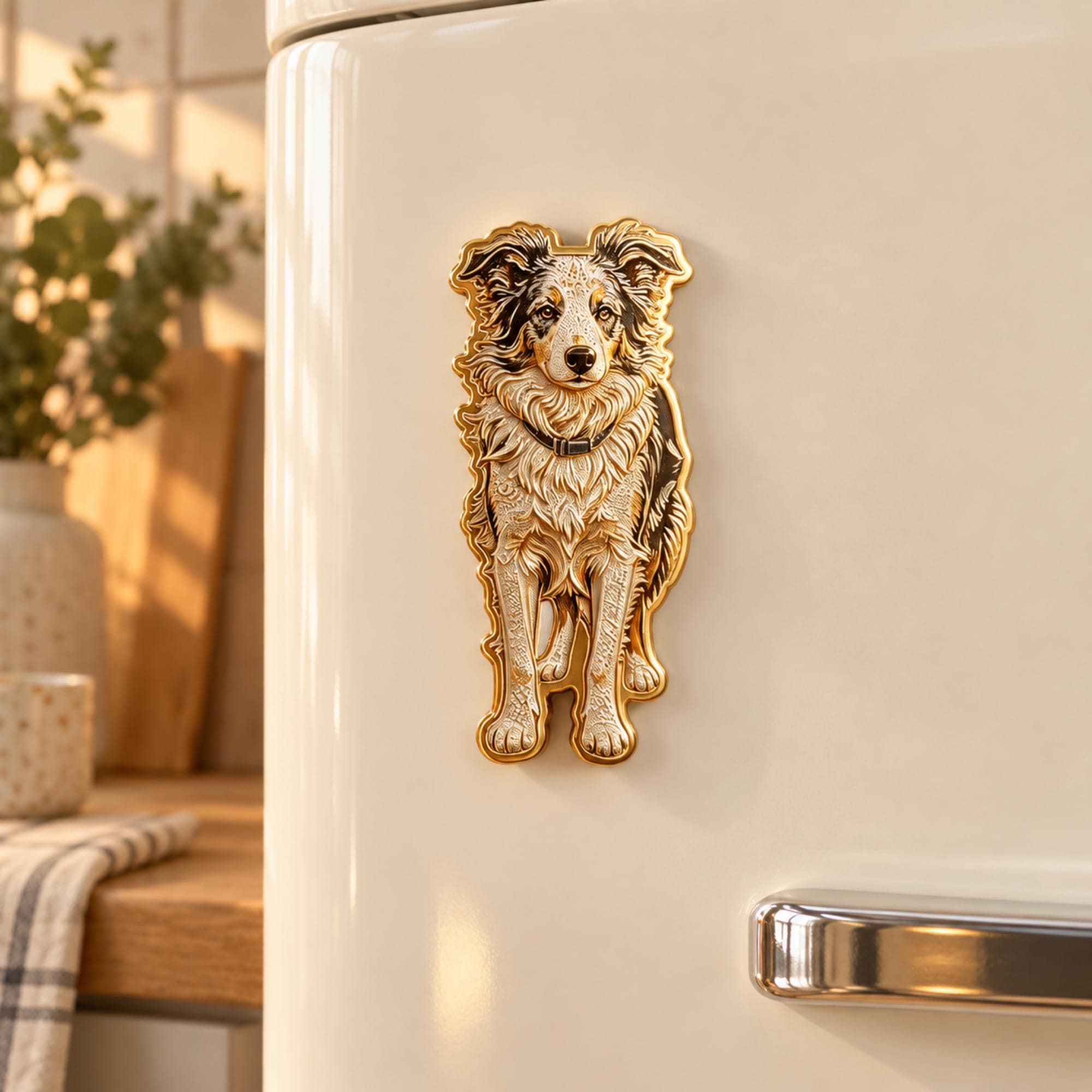
A personalized pet portrait can turn an ordinary snapshot into a keepsake that feels unmistakably connected to one particular animal. The photo you choose matters: it guides which markings, expression, and outline stand out in the finished design. A technically sharp image is helpful, but it is only part of the decision. The best source photo also shows the details that family members recognize at a glance.
Before ordering, look through your camera roll with the finished gift in mind. Consider where it will be displayed, whether the portrait will show one pet or several, and what kind of likeness feels most meaningful to the recipient. A custom metal pet portrait fridge magnet, for example, is shaped around a pet’s portrait and intended for display on a compatible magnetic surface. A strong source image gives that keepsake a clearer starting point.
Start with the feature everyone recognizes
Ask what makes this pet look like themselves. It might be a dark patch over one eye, a freckled nose, a curled tail, or the way their ears sit when they are alert. Choose a photo where those identifying details are visible rather than hidden by a toy, another animal, or a hand. The goal is not simply to document the pet; it is to give the portrait a readable visual identity.
A family member may recognize a senior dog by a pale muzzle or a cat by one distinctive white paw. Those details can matter more than a dramatic pose. Compare a few candidates side by side and notice which image preserves the pet’s characteristic face and markings. If the portrait will be a gift, ask someone who knows the animal well which features they would miss if they were cropped out.
Look for clear, even light
Good light helps separate fur, eyes, and facial markings. Window light or open shade often gives a clearer result than a dim room, where shadows may swallow dark fur or blur fine detail. Avoid a photo with a bright patch behind the head or strong light coming from only one side if it leaves half the face difficult to see. A portrait source should make the pet’s features easy to distinguish without relying on heavy filters.
Check the eyes and nose at full size on your screen. If they look soft or smeared, the image may be too blurry for a detailed portrait, even if it appears fine as a small thumbnail. A recent phone photo can work well when it is in focus and has enough light. Do not assume an image can be improved simply by enlarging it; cropping and zooming usually reveal existing blur rather than restore lost detail.
Choose a useful angle and expression
A front-facing or three-quarter view often makes a pet’s face easy to read, but the most flattering angle depends on the animal. A profile may be the right choice for a dog with a distinctive nose shape or a cat whose whiskers and cheek outline define their look. What matters is that the chosen view shows the features you want remembered. Keep the pet’s head and ears within the frame, with a little breathing room around the outline.
Expression carries personality, so look beyond a conventional posed portrait. A relaxed, curious look may suit a quiet cat, while an open-mouthed grin might capture a lively dog. Still, make sure the expression does not obscure important details: a tongue can cover the muzzle, and a head turn can hide one eye. If the recipient has a favorite candid moment, use it when the face remains clear enough to guide the portrait.
Check the background and framing
A busy background can compete with the pet’s shape. Furniture, patterned blankets, other animals, and household clutter may make it harder to see where fur ends and surroundings begin. A plain wall or simple outdoor setting is helpful, but it is not essential if the pet is sharply separated from the background. Before settling on an image, inspect the full frame and ask whether any object overlaps the ears, tail, or distinctive markings.
Think about the portrait’s likely crop. A close-up can preserve facial expression, while a wider photo may include a recognizable silhouette or posture. Avoid choosing an image where the top of the head, ear tips, or chin are already cut off unless that crop is intentional. For a shaped portrait such as a custom metal fridge magnet, a clear outline can be especially useful. Check the product’s photo instructions, if provided, before submitting an image.
Consider coat color and fine markings
Dark, light, and multicolored coats each present different photo challenges. Black fur photographed in deep shade may merge into the background; white fur in bright sun may lose visible detail. Look for a frame where the coat’s edges and pattern are distinguishable. For a tabby, tortoiseshell, spotted dog, or animal with a facial blaze, the best image is often the one that shows the pattern clearly, even if another photo has a more theatrical pose.
Do not rely on a phone screen’s vivid display alone. Brightness settings and color filters can make an image appear more saturated or contrast-heavy than the original file. Use the unfiltered photo when possible, and avoid screenshots of edited images if the original is available. If you are deciding between a close-up and a full-body image, choose the one that preserves the markings most important to the recipient and fits the portrait format described by the seller.
Use one pet or include a group thoughtfully
For a portrait of one animal, a single-pet photo usually gives the clearest reference. If the gift is meant to show two pets together, choose an image where both faces are visible and similarly well lit. A photo with one animal far behind the other may make their size, expression, and markings harder to distinguish. A collage might seem like an easy fix, but do not assume a seller can combine separate images unless the listing explicitly offers that option.
With several pets, think about the relationship the image should express. A close pair curled together can feel intimate; a side-by-side pose may make each animal easier to recognize. Check that no pet’s face is hidden behind another’s ear or shoulder. If the available photos do not show everyone clearly in one frame, review the personalization instructions or contact the seller to confirm whether separate reference photos are accepted before placing the order.
Match the photo to the gift and recipient
The right image depends partly on how the finished portrait will be used. A custom metal pet portrait fridge magnet is designed for display on a refrigerator, magnetic board, locker, office cabinet, or another compatible magnetic surface. That everyday setting may suit a clear, familiar expression the recipient enjoys seeing often. The catalog description notes a metallic finish and a custom-shaped portrait design, so a source photo with a legible face and outline is a sensible place to start.
For a memorial keepsake, a favorite ordinary moment can feel more personal than a formal pose: a companion watching from a sunny window, for instance, or a dog sitting in a familiar spot. Choose a photo that brings the animal to mind without making the selection feel like a search for a perfect image. If the portrait is a surprise, consider the recipient’s home and display habits, while avoiding assumptions about the exact appearance of the final customized item.
Review the file before you submit it
Select the original image file when you can, rather than a copy downloaded from a messaging app that may have been compressed. Crop only if the seller’s instructions request it; otherwise, preserving the full frame gives the artist or customization process more context. Remove temporary edits, stickers, text, and filters that cover or alter the pet’s features. Confirm that the photo belongs to you or that you have permission to use it for a personalized gift.
Before submitting, zoom in once more and check focus, lighting, framing, and the details you want preserved. Read the listing carefully for accepted formats, cropping guidance, and any limits on the number of pets. If a name, wording, or other personalization is available, confirm those options before ordering rather than assuming they are included. Keep a copy of the selected image and order details so you can refer to the same source if a question comes up.
A thoughtful next step
A good source photo does not need studio lighting or a perfectly posed pet. It needs to show the animal clearly, preserve the features that make them recognizable, and suit the kind of portrait you plan to give. Compare a few images, check the original file, and follow the seller’s specific photo instructions. When you are unsure about cropping, multiple pets, or personalization, ask before ordering. A thoughtful choice makes the keepsake feel much more like the pet it celebrates.
Explore our Personalized Gifts collection, check measuring and fit guidance, or ask us about a product detail before choosing.
Pieces mentioned in this guide
These are catalog examples, not a promise of fit or availability. Read each listing and confirm the details before ordering.