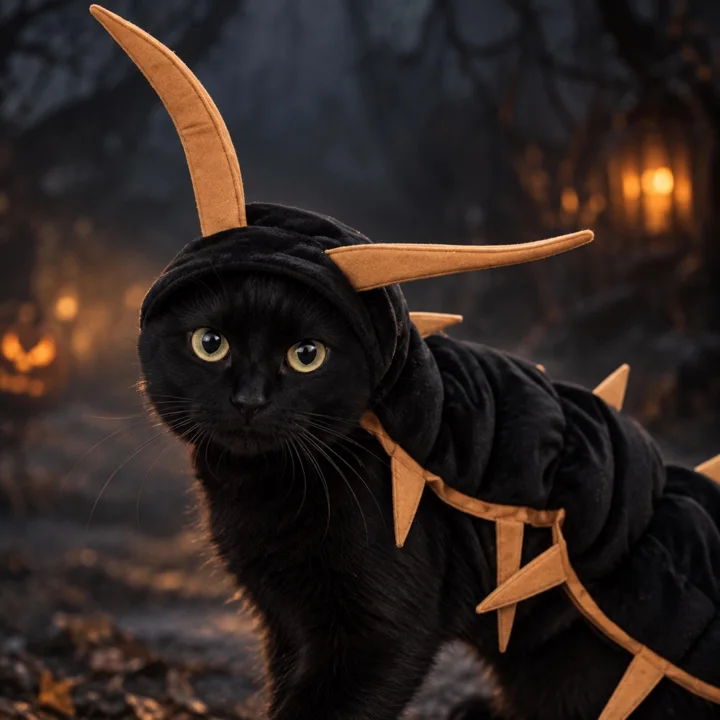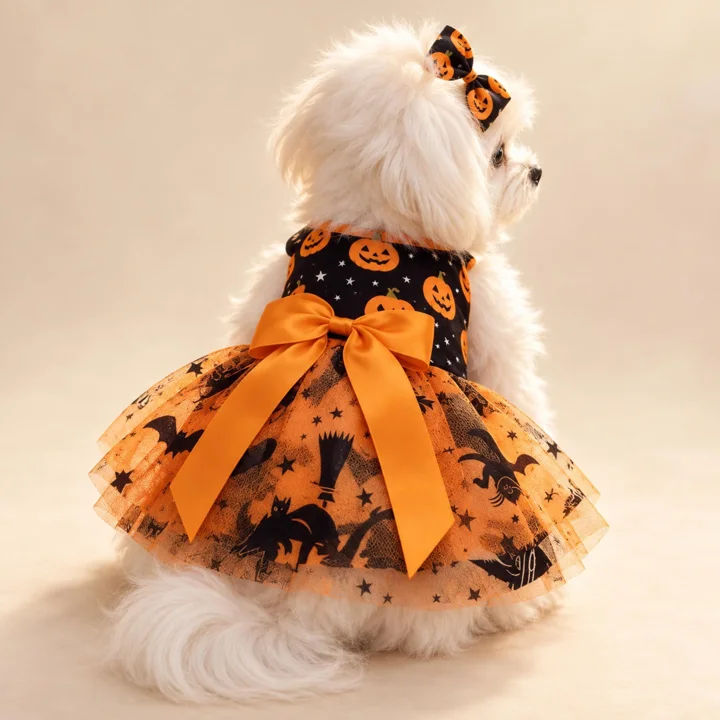


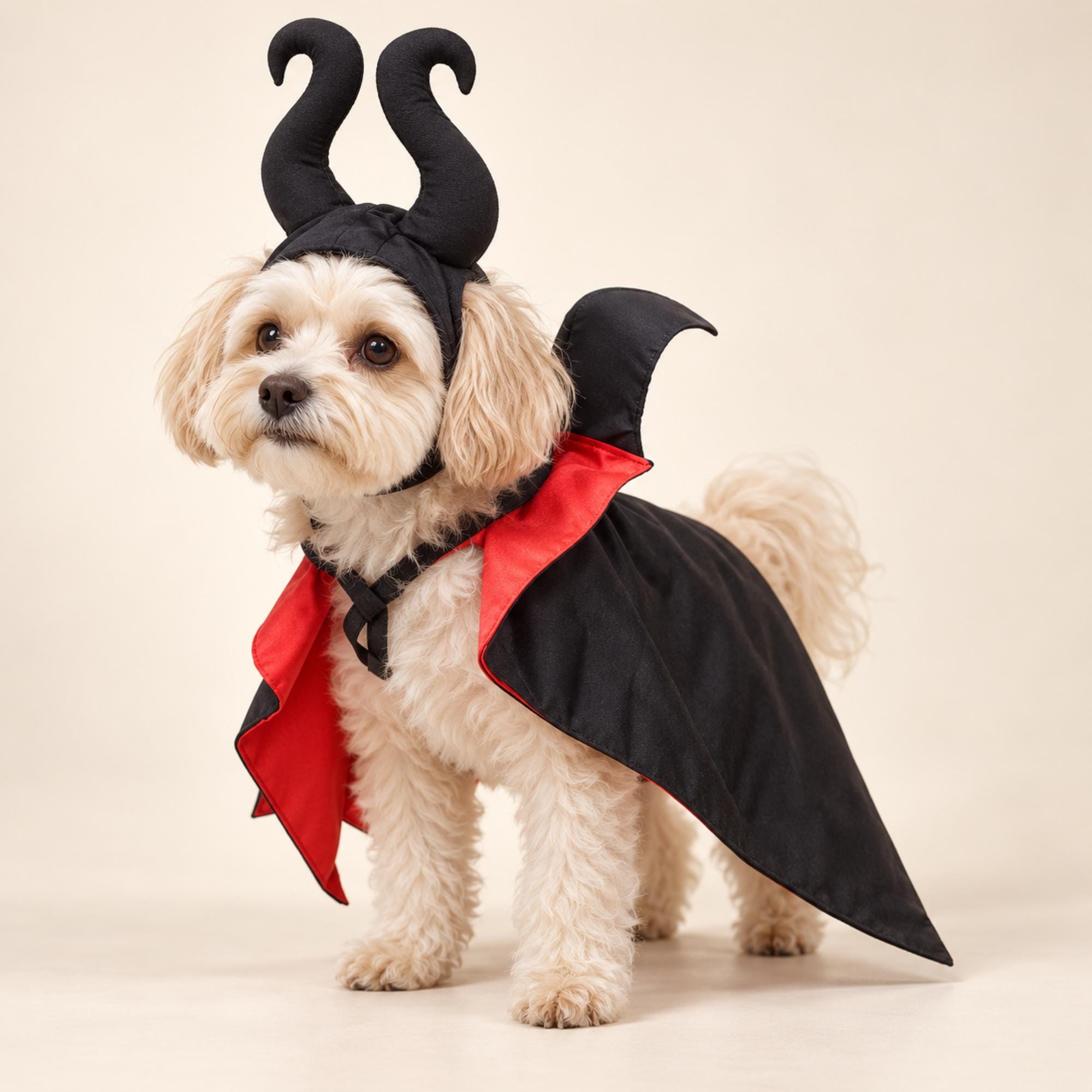
A costume headpiece can make a Halloween photo unmistakably theatrical, but it sits close to a pet’s eyes, ears, and face. That makes fit and visibility more important than getting the most dramatic look. A headpiece should stay in place without squeezing, slipping into the eyes, or interfering with normal movement—and your pet should be able to opt out.
Plan for a brief, supervised photo or celebration rather than assuming a pet will want to wear a costume for hours. Check the fit before the event, watch your pet’s response, and have a simple removal plan ready. If a headpiece causes distress or blocks vision, take it off; the costume can still work without it.
Start With Your Pet, Not the Costume
Before trying anything on, consider your pet’s usual response to handling around the head. A dog that calmly wears a collar may still dislike fabric or decoration near the ears. Many cats find headwear especially unfamiliar and may freeze, paw at it, or try to escape. Those reactions are useful information, not misbehavior to correct. Choose a short, quiet fitting session, and let your pet approach the item if possible.
Check for practical reasons to skip the headpiece that day. A pet with irritated skin, a tender area, recent grooming sensitivity, or a history of distress during dressing may do better without one. Avoid putting anything over the face or in the ears. If your pet resists, don’t hold them still to complete the look. A cape, vest, bandana, or no costume at all can be a better choice.
Check the Fit Without Guessing
Use the product’s stated sizing guidance rather than judging fit from a photo or assuming that a costume labeled for dogs will suit every dog. Measure only where the seller instructs, and compare those measurements with the listed range. For a headpiece, consider where it rests and whether its attachment can sit as intended without pulling at the ears or pressing against the eyes. If sizing information is unclear, ask before ordering.
During a fitting, look at the headpiece from the front, sides, and above. It should not slide toward the eyes when your pet turns or lowers their head. Check that any band, tie, or other attachment—if the product has one—doesn’t pinch, rub, or restrict jaw movement. Don’t improvise a tighter fastening to keep a poor fit in place. If it shifts repeatedly, remove it rather than forcing a fix.
Protect a Clear Field of View
Your pet should be able to look forward and to the sides without decoration covering the eyes. Horns, ears, crowns, and other tall shapes can appear clear in a still photo but wobble into the line of sight during movement. Watch your pet turn toward a sound, glance down, and look up. If the headpiece shifts, casts a distracting shadow, or blocks part of the view, it isn’t suitable for walking around.
Keep headwear away from the nose and mouth, too. A pet needs to breathe, pant, sniff, and open the mouth normally. Never position fabric or decoration where it could catch on whiskers or impede these actions. Even a clear view while standing still doesn’t prove the costume is safe in every setting. For photos, keep your pet in a controlled space, stay close, and remove the headpiece before moving to a busier area.
Notice Ears, Sound, and Balance
A headpiece can alter how a pet hears or reacts to sounds, particularly if it covers or presses against the ears. Look for ear flattening, repeated head shaking, sudden alertness, or hesitation when someone speaks from nearby. Don’t assume an animal is comfortable because they remain still; some pets freeze when unsure. Speak softly and observe whether your pet responds as usual before continuing with a photo or short activity.
Watch posture and coordination as well. A pet that tilts the head, walks cautiously, bumps into nearby objects, or repeatedly tries to shake off the headpiece needs a break. Remove it and let your pet move normally before deciding whether to try again. Don’t ask a pet to climb, jump, use stairs, or navigate unfamiliar surroundings while wearing headwear. A costume accessory should never take priority over ordinary movement and awareness.
Introduce It in Small, Calm Steps
Start with the headpiece on the floor or held at a distance so your pet can investigate without being cornered. Reward relaxed curiosity with praise or a treat if treats are appropriate for your pet. Then briefly touch the item near the shoulder or side of the head before attempting to put it on. Keep each step optional. If your pet turns away, tenses, hides, or bats at the item, pause rather than advancing.
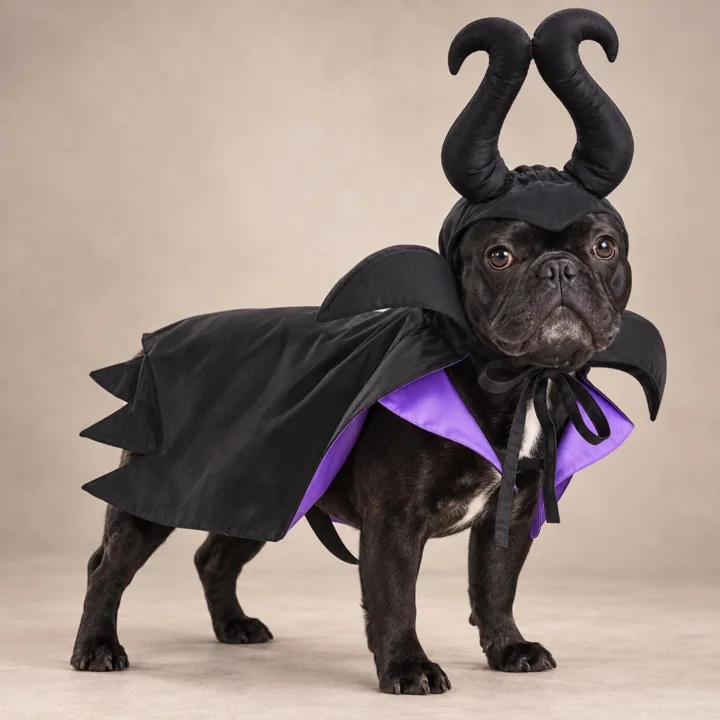
If your pet accepts the first fitting, keep the initial wear very brief and supervise closely. Pair the experience with something calm and familiar, such as sitting with you in a quiet room. Don’t make the first try a crowded party, noisy doorstep, or long photo session. The Black Horned Devil Pet Costume listing describes a curved-horn headpiece for a dramatic Halloween look; as with any decorative design, assess the individual fit and your pet’s response rather than relying on appearance alone.
Supervise Every Wear
Stay within reach whenever a pet wears a headpiece. Pets may paw at unfamiliar items, catch them on furniture, or shake their heads suddenly. Supervision helps you notice a shift before it becomes a vision problem or a snag. Don’t leave a pet alone in costume, even for a quick errand or while you step into another room. Remove the item if you cannot keep watching or if your pet is likely to be around other animals.
Keep the setting simple: clear nearby obstacles, avoid tight spaces, and don’t attach a leash to decorative headwear. Costume accessories are not walking restraints, and a headpiece should never bear leash tension. For outdoor events, crowds, or trick-or-treating, consider leaving the headpiece at home and using a standard harness or collar appropriate for walking. A photo taken safely indoors is preferable to asking a pet to navigate a distracting environment in costume.
Remove It Before Your Pet Gets Upset
Make removal part of the plan before dressing your pet. Identify how the item comes off, and keep scissors out of the process unless the product’s instructions specifically call for them; cutting near a moving animal can cause injury. If there is a tie, band, or fastening, loosen it gently without pulling on fur or ears. Support your pet calmly and stop if handling itself is causing distress.
Don’t wait for a full struggle. Repeated pawing, head shaking, lowered posture, attempts to hide, agitation, or difficulty seeing are reasons to remove the headpiece promptly. Once it is off, give your pet room to settle and check for redness, tangled fur, or signs of irritation. Don’t put it straight back on to get one more picture. If discomfort continues after removal, contact a veterinarian for advice.
Choose a Headpiece-Free Look When Needed
A costume can still read as festive without anything on the head. A cape or simple body garment may suit a pet that dislikes headwear, provided it fits appropriately and doesn’t restrict movement. For example, the Red Christmas Pet Cape is described as a flowing cape with a ribbon-tie neckline; the Honey Bee Plush Dog Vest is a sleeveless vest with bee embroidery. These are catalog examples, not guarantees that a particular style will suit every animal.
You can also use the setting, a seasonal backdrop, or a nearby prop to suggest a theme without dressing your pet. Keep props out of reach if they could be chewed or swallowed, and never pose an animal in a position they resist. If your cat or dog seems uncomfortable in any outfit, take it off and let them participate without clothing. The best costume choice is one your pet can comfortably decline.
A thoughtful next step
Before the event, check the stated sizing guidance, fit the headpiece briefly in a calm place, and confirm that your pet can see, hear, breathe, and move normally. Supervise every moment of wear, remove it at the first sign of discomfort, and skip headwear if you’re unsure. A quick photo—or a costume-free celebration—can be just as memorable.
Explore our Apparel & Costumes collection, check measuring and fit guidance, or ask us about a product detail before choosing.
Pieces mentioned in this guide
These are catalog examples, not a promise of fit or availability. Read each listing and confirm the details before ordering.