

A handmade cat cave can bring a little Christmas color to a quiet corner without turning your cat’s resting place into a costume or photo prop. The best plan starts with the cat: how they like to hide, what kind of opening they use, and whether they are comfortable investigating a new object at all. Treat the project as a small piece of home décor that your cat may choose to use, rather than a gift they are expected to enjoy.
Before gathering supplies, decide whether you are making a sturdy enclosed hideaway, a soft-sided nook, or simply decorating an existing cat bed. Those are different projects, with different construction needs. A thoughtful plan also leaves out tempting hazards such as dangling trim, loose ornaments, and accessible adhesives. The goal is a festive design that remains calm, stable, and easy to inspect, with an equally good option to leave the cat’s space undecorated.
Start with your cat’s preferred hiding spot
Watch where your cat settles before sketching a cave. A cat who naps beneath a side table may prefer a low, wide entrance, while one who retreats into a covered carrier might favor a more enclosed shape. Notice whether the cat likes a view of the room or a tucked-away corner. These observations offer better design clues than choosing a shape from a holiday picture and hoping your cat will adapt to it.
Measure the area where the cave will sit, but avoid treating those measurements as a recipe for the cat’s body. The finished opening should not force a squeeze or block easy exit. Consider nearby doors, heaters, cords, and busy walkways, too. A cave tucked beside a noisy gathering spot may be ignored, even if it looks inviting. Plan for a quiet location where the cat can come and go without being approached or startled.
Choose a structure before shopping for supplies
Pick a construction style that matches your crafting experience and the space available. A fabric-covered frame, a folded felt form, or a decorated existing bed each involves different tools and stability checks. For a first project, adapting a familiar bed or nook may be simpler than building a fully enclosed structure from scratch. Whatever the approach, the cave should remain steady when nudged and should not collapse onto a cat entering or resting inside.
Make a quick sketch showing the entrance, floor, walls, and any decorative area. Mark where seams or supports will go and identify parts that could loosen with ordinary use. Skip complicated features that add little value, such as narrow tunnels or small attached pockets. A straightforward shape is easier to inspect and repair. If your plan depends on a material or construction method you cannot confidently secure, revise it before buying supplies.
Select materials for a calm, usable hideaway
Look for materials that feel familiar and are appropriate for indoor use, rather than choosing solely for their Christmas appearance. A quiet color scheme can make the cave blend into a room and may be less startling than reflective or noisy decoration. Avoid sharp edges, brittle pieces, loose fibers, and small components that could come free. Check every material label and use only items suitable for the intended project; do not assume a craft supply is safe just because it is sold for crafts.
Think through cleaning before construction. A cave with a removable, washable layer may be easier to maintain, but only rely on a cleaning method if the material’s care instructions support it. If the structure cannot be cleaned as needed, that may not be a practical resting place. Keep strong-smelling supplies away from the cat while crafting and while a new project airs out. Do not place wet adhesive, paint, or other unfinished materials where a cat can investigate them.
Keep Christmas decoration away from the entrance
Use holiday details sparingly and attach them securely outside the cat’s path. A simple fabric panel or broad color accent can suggest the season without creating something to bat, chew, or pull. Avoid dangling ribbons, cords, bells, tinsel, loose pom-poms, and small ornaments. These can become tempting playthings or obstruct the opening. Keep the inside plain and comfortable; decoration should not reduce the usable space or make the cave harder to enter.
A useful test is to inspect the project from a cat’s-eye view. Look for a strand that hangs within reach, a sharp corner at nose height, or trim that could snag a claw. Tug gently on attached decorative pieces and reconsider anything that shifts. Do not use scent, food, or a forced introduction to make the cat approach. If the design requires constant supervision to keep a decoration in place, remove that decoration instead.
Plan the work area and assembly steps
Set up the project in a room the cat cannot enter while you cut, sew, glue, or assemble. Gather tools first, protect the work surface, and keep small parts contained in a closed tray. Follow the directions supplied with each material or tool, and allow adhesives or finishes to dry and air out as directed. Never let a cat investigate a hot tool, a wet surface, scraps, or a half-built structure.
Build in stages rather than rushing to finish before a holiday gathering. Assemble the basic shape, check its stability, then add only the decoration you have already planned. Pause to inspect seams, fasteners, and edges after each stage. Keep a simple checklist nearby: secure structure, clear exit, no loose pieces, no sharp edges, and no lingering odor. If any part fails a check, fix it before the cave is placed in the cat’s room.
Make a realistic budget and supply list
List the structure, covering, tools, and decorative elements separately so you can spot what you already own. Set a spending limit before browsing seasonal supplies; festive displays can make a small project accumulate unnecessary extras. Prioritize stability and a suitable surface over novelty trim. If the plan calls for specialized tools you will use once, compare that expense with a simpler design using tools already available.
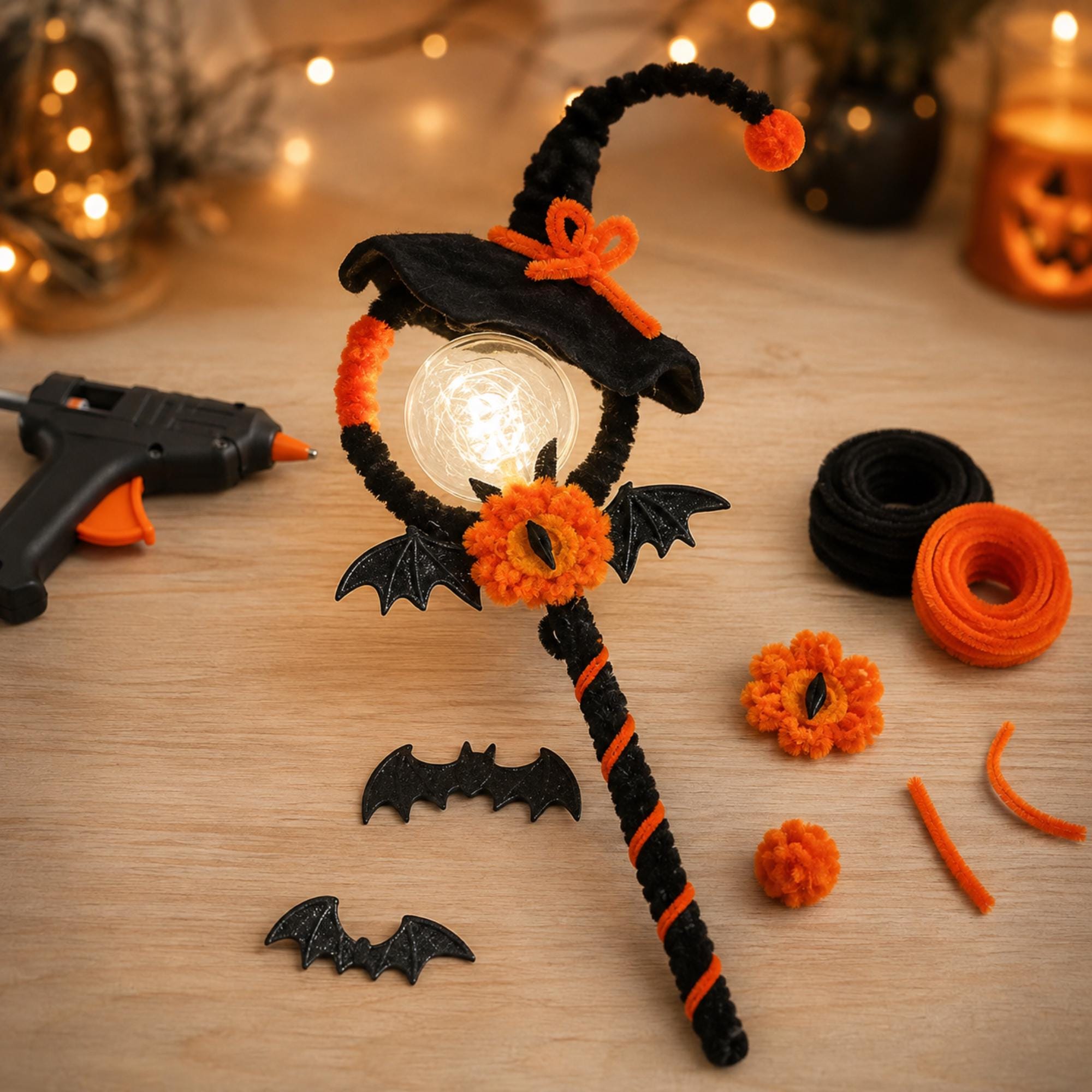
A craft kit can be useful for a separate holiday activity, but do not mistake a kit for a finished cat cave or assume it contains cave-building materials. For example, Paw Dazzle’s DIY Witch Wand Kit is described as a physical Halloween wand craft kit requiring assembly, not as a pet bed or cave supply set. Its seasonal theme is different, too. Read product descriptions closely and confirm that any item you plan to buy is actually intended for your project.
Introduce the finished cave at the cat’s pace
Once the structure is finished, inspect it again in good light and place it in the chosen quiet spot. Let the cat notice it without being carried inside or shut in. Some cats will investigate at once; others may avoid a new object for days or never use it. Leave familiar bedding nearby if appropriate, but do not block the opening or place the cave where the cat must pass a crowd to reach it.
Supervise early interactions, especially if the cat tends to chew, scratch, or pull at new objects. Watch for shifting walls, loose threads, or discomfort, and remove the cave if it becomes unstable or the cat appears distressed. Never use an outfit, decoration, or closed flap to encourage a cat to stay inside. The cat should be able to leave freely. If the cave is ignored, accept that preference and keep the usual resting place available.
Keep the project useful beyond the holidays
A seasonal cave does not need a fixed Christmas date or a pile of themed accessories. Choose accents that can be removed without damaging the structure, or keep the holiday touch limited to a nearby decoration outside the cat’s reach. After the season, check for wear before storing or continuing to use the cave. Inspect the base, seams, and opening for damage, and clean it only according to the care guidance for its materials.
Consider how the cave will fit into the room in January as well as December. If it is easy to move, clean, and inspect, it may remain a useful resting option; if not, plan how you will retire it safely. Store craft leftovers separately from pet supplies, especially tiny pieces and tools. Keeping the project simple makes seasonal decorating easier next year, while leaving your cat free to choose the familiar bed instead.
A thoughtful next step
A good Christmas cat cave begins with observation, not decoration: choose a location your cat already likes, build a stable and easy-to-exit structure, and keep ornaments and loose details out of reach. Introduce it without pressure, supervise its first use, and remove it if it becomes unsafe or unwelcome. The project is successful when it suits your home and respects your cat’s choice, whether that means curling up inside or sticking with a favorite spot.
Explore our DIY & Craft Kits collection, check measuring and fit guidance, or ask us about a product detail before choosing.
Pieces mentioned in this guide
These are catalog examples, not a promise of fit or availability. Read each listing and confirm the details before ordering.