

A seasonal pet costume may only come out for one photo, party, or holiday gathering, but it still needs sensible care once the occasion passes. A little preparation before putting it away can help you find the right piece next year and avoid opening a box to discover tangled ties, flattened details, or a costume that still smells like the celebration.
Start with the item itself, not a one-size-fits-all storage rule. A small headpiece, a hooded hoodie, and a cape have different shapes and details to consider. Follow any care information supplied with the product, avoid guessing at washing methods, and store each item only when it is clean, completely dry, and comfortable for your pet to wear.
Take stock before putting anything away
Gather the costumes and accessories you actually used, then check each piece in good light. Look for loose threads, bent or flattened details, food marks, and anything that may have caught on a collar or furniture. Set aside pieces that need attention rather than packing them with clean items. This quick review also gives you a chance to decide whether an outfit still fits your pet’s current needs or should be retired.
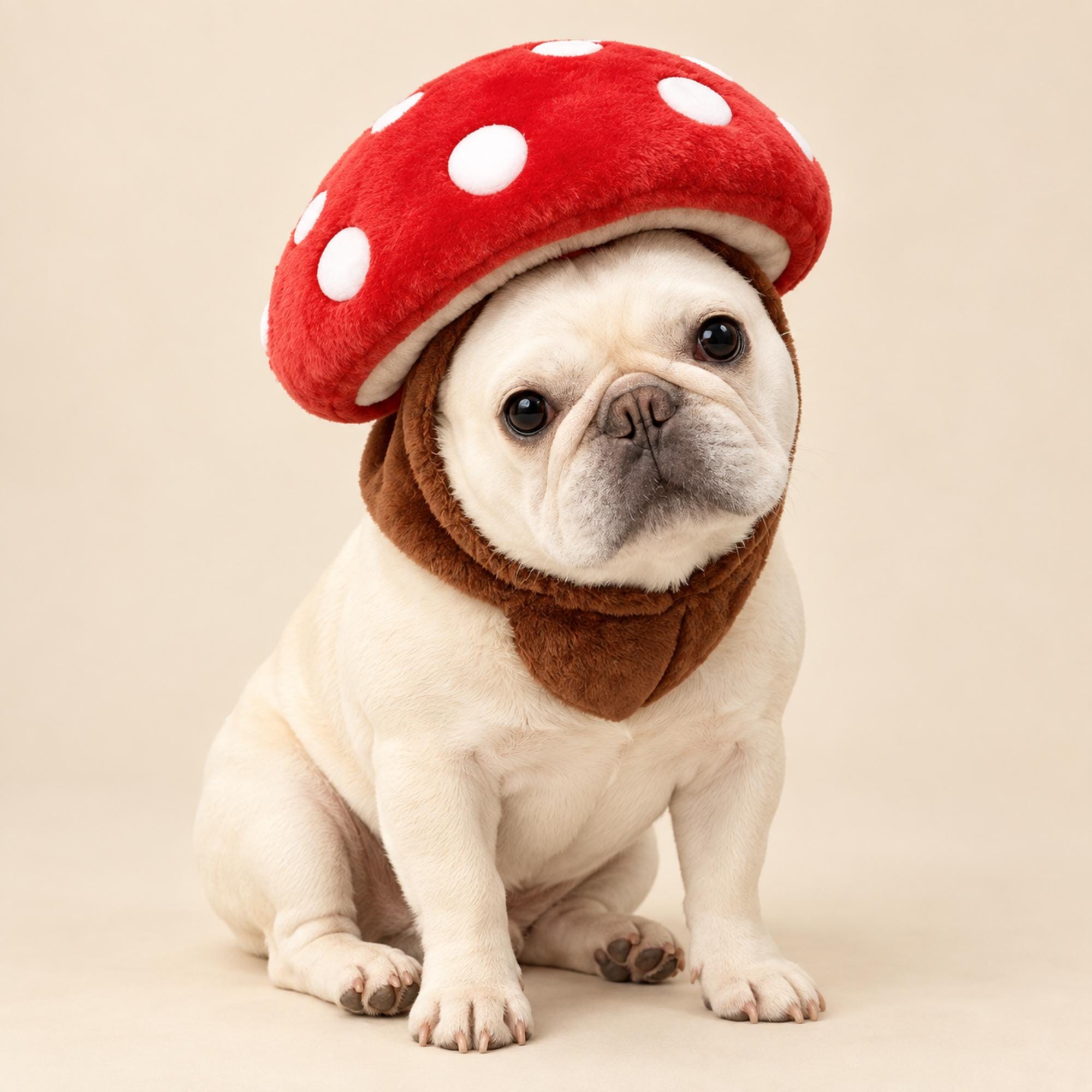
Keep the costume’s intended use in mind. The Mushroom Pet Hat, for example, is a headpiece only; the listing does not include a body costume or clothing. Store it as a shaped accessory rather than folding it into a bundle with garments. A reindeer cape has a hood, antlers, and a bow to consider, while a Christmas hoodie has sleeves and ties that can become tangled.
Remove dirt without guessing at care
Brush or shake away loose debris outdoors or over a bin, and inspect seams and folds where crumbs or fur may collect. For spots or deeper cleaning, consult the product’s care instructions before applying water, detergent, sprays, or heat. If no method is provided, do not assume that a fabric is machine washable or that a particular cleaning product is suitable. A cautious approach is better than risking a changed texture or damaged detail.
Pay attention to small decorative parts as you clean. The Christmas hoodie listing describes plush trim, a pom-pom, and long plush ties; the reindeer cape has antlers, ears, and a satin bow. These details may need gentle handling, but do not infer a specific cleaning method from their appearance. If you cannot confirm an appropriate way to clean a mark, ask the seller or keep the item out of storage until you have guidance.
Let every piece dry fully
Never seal away a costume that is damp from cleaning, rain, or a spill. Allow it to dry completely in a suitable place, following any care directions and keeping it away from direct heat unless the instructions say otherwise. Check hidden areas too: the inside of a hood, a folded hem, or a layered section can stay damp after the outside feels dry. Waiting is simpler than discovering moisture after several months in a closed container.
A costume worn briefly for a photo may still need airing before storage, especially if it was used during a busy gathering. Keep it separate from clean pieces while it dries, and do not put it on your pet again just to check its shape. If your cat or dog seemed uncomfortable in an outfit, there is no need to preserve it for another wear; comfort and safe movement matter more than keeping a seasonal tradition.
Choose a container that suits the costume
Use a clean, dry storage spot away from direct sunlight, leaks, and heavy objects. A lidded box can keep dust off, while a drawer or closet shelf may work for pieces you want to inspect easily. The key is to avoid crushing dimensional features or wedging costume parts into a tight space. Before storing anything, check that the container itself is clean and fully dry.
Give shaped accessories room to keep their form. Place a mushroom hat where heavier garments cannot press its cap flat, and avoid stacking books or seasonal decorations on top. A cape can be laid loosely rather than tightly compressed around its hood. For a hoodie, arrange the sleeves and ties so they are not sharply creased or knotted. These are practical storage choices, not guarantees that any accessory will retain its original appearance.
Sort by holiday, pet, and outfit type
A simple sorting system makes next season’s setup less of a search. Group Halloween and fall accessories together, then keep Christmas pieces in a separate section or container. If more than one pet shares the costume collection, label by pet as well as occasion. A label can note the item type—hat, cape, or hoodie—without relying on a photograph or memory to identify a wrapped-up piece.
Keep components together only when they belong together, and do not imply that a listed accessory comes with clothing it does not include. For example, store the Mushroom Pet Hat as a standalone headpiece. If you have paired it with a separate outfit, label that outfit separately and note that it is not part of the hat listing. This small distinction helps prevent confusion when you plan a costume later.
Keep ties, bows, and details from tangling
Before placing a garment in a drawer or box, arrange ties loosely along the body of the item. Do not tie them into a tight knot for storage, and avoid wrapping them around delicate trim or dimensional decorations. The Christmas hoodie has long plush ties, so keeping them flat and separate from other pieces can make it easier to retrieve without pulling on the hood or pom-pom.
For a cape with a bow or a hood with dimensional details, place the item so those features are not caught beneath a zipper, box edge, or neighboring hanger. If you use a garment bag or organizer, make sure the closure does not press directly against a decorative part. Check the piece when unpacking; if anything looks damaged, skip wearing it until you can assess whether it remains suitable and comfortable.
Store costumes apart from everyday gear
Seasonal dress-up pieces are easier to protect when they are not mixed with leashes, treats, grooming supplies, or outdoor gear. Those everyday items can introduce dirt, odors, or pressure that makes a costume harder to locate and inspect. Keep storage away from food and cleaning products, too. A clearly marked shelf or bin can separate occasional outfits from the things you reach for on a daily walk.
Decorative neckwear and costume accessories are not walking restraints. Do not use a costume tie, bow, or decorative attachment in place of properly fitted walking equipment, and do not store those pieces as though they are functional leash gear. When you take an outfit out for a celebration, supervise your pet and check that nothing blocks movement, vision, or breathing. Stop if your pet shows discomfort.
Review the collection before the next celebration
When a holiday approaches, unpack costumes early enough to inspect them without rushing. Check for damage, lingering odor, dust, flattened shapes, and fit changes since the previous season. Pets grow and change, so an outfit that worked last year may not be suitable now. Try it only if your pet is willing, supervise the fitting, and remove it at once if it interferes with movement or your pet appears uneasy.
Make a practical decision for each item: use it, seek care guidance, repair it if appropriate, or set it aside. Do not keep an uncomfortable outfit in the rotation simply because it is festive or was worn before. Cats may reject apparel, and some dogs may prefer no costume at all. A short photo session without clothing—or with no accessory—is a perfectly reasonable plan.
A thoughtful next step
A clean, dry costume stored with its shape and decorative details in mind is easier to find and inspect when the next celebration arrives. Sort pieces by occasion, keep accessories distinct from garments, and check fit and condition before every use. Most importantly, treat dressing as optional: supervise your pet, avoid anything that obstructs movement or senses, and put the costume away if your pet is uncomfortable.
Explore our Apparel & Costumes collection, check measuring and fit guidance, or ask us about a product detail before choosing.
Pieces mentioned in this guide
These are catalog examples, not a promise of fit or availability. Read each listing and confirm the details before ordering.