

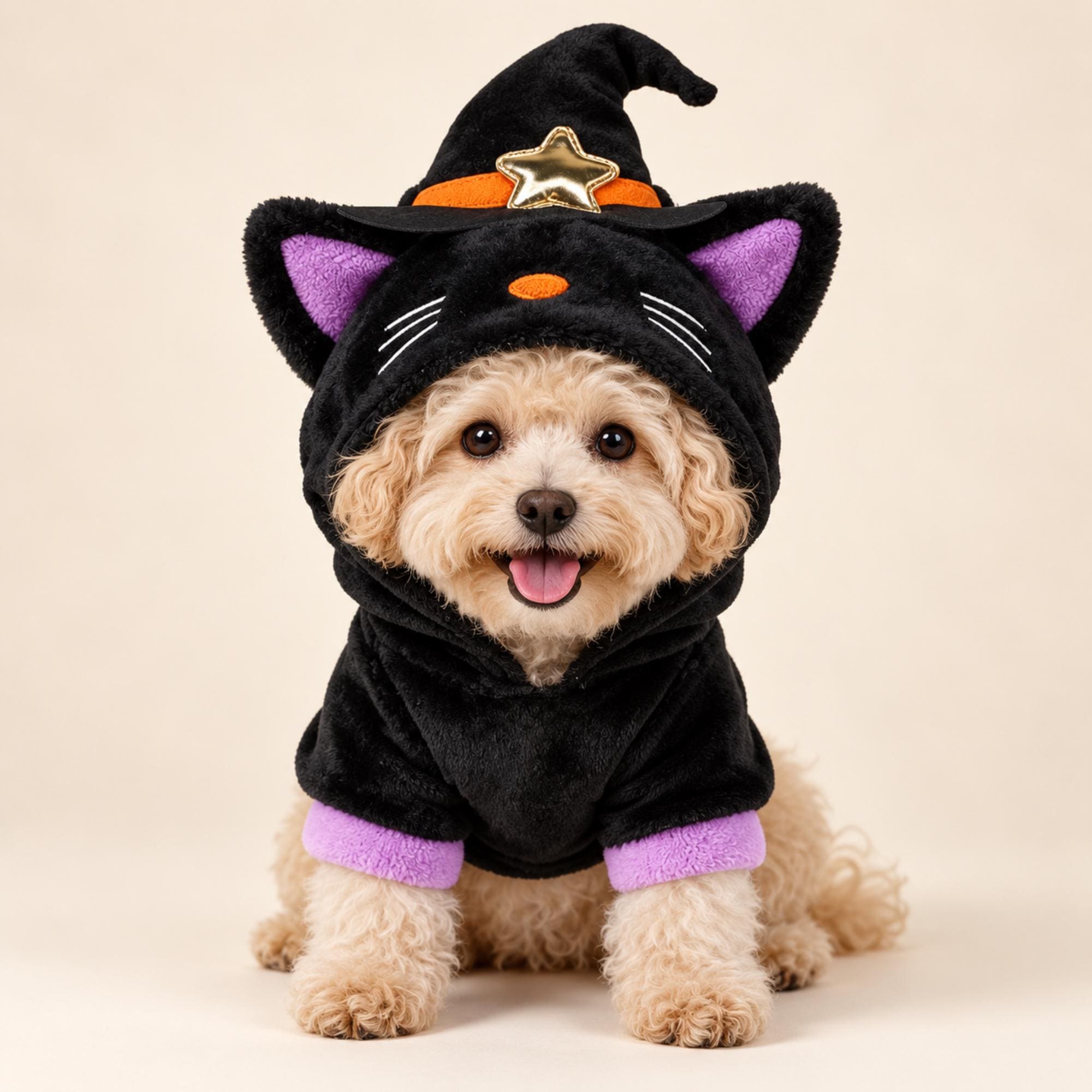
A costume can look charming on a hanger and still be a poor fit for the pet expected to wear it. Before a party or photo session, check more than the color and character: consider how the outfit sits, whether your pet can move freely, and how they respond to wearing it.
The goal is not to keep a costume on at all costs. A few short, supervised minutes may suit one pet, while another is better represented by a festive collar-free portrait or a prop placed nearby. Use this checklist to make a comfort-first decision for dogs and cats.
1. Start with your pet, not the costume
Think about your pet’s ordinary reactions to handling, clothing, and new objects. A dog who calmly wears a coat may still dislike a hood, while a cat who tolerates a brief touch may object to fabric resting on the body. Past behavior is a useful clue, but not a promise. Choose a quiet moment to introduce the idea, rather than beginning with a crowded gathering or a camera pointed at your pet.
Set a modest goal: perhaps a few photos, not an entire evening in costume. If your pet tenses, hides, repeatedly paws at the outfit, or tries to escape, take it off and reassess. Cats in particular may reject apparel, and that response deserves respect. A costume-free pet is a perfectly good participant; never force clothing to complete a theme.
2. Check measurements and the product description
Use the sizing guidance supplied for the specific costume, and measure your pet as directed before choosing a size. Do not estimate from breed, weight, or a previous outfit alone: body shape and proportions vary, even among pets of similar size. If the listing does not provide the information you need, seek clarification before ordering rather than guessing or assuming a size will stretch.
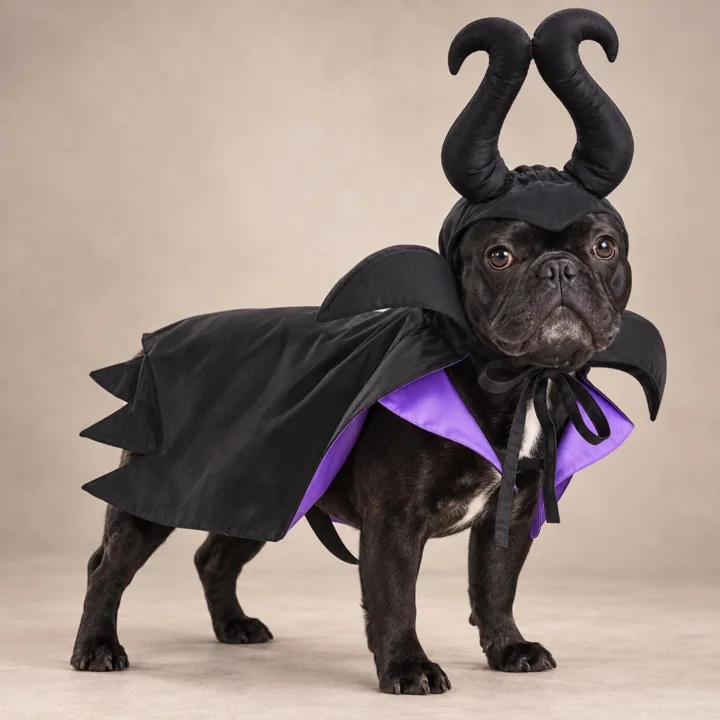
Read the description for the actual style and coverage. A hooded costume, a full-body jumpsuit, and a cape interact with a pet’s body in different ways. For example, a wizard cape has a different shape from a skeleton jumpsuit. Product names and photos can help you picture the look, but they do not replace checking fit on your own pet.
3. Inspect the fit at every opening
Once the costume is on, look carefully around the neck, chest, legs, and any other openings. The fabric should not press tightly, bunch into a hard fold, or slide into a position that distracts your pet. Check that no edge rubs the skin or catches on fur. If your pet flinches when you touch a particular area, remove the outfit and inspect that spot before considering another try.
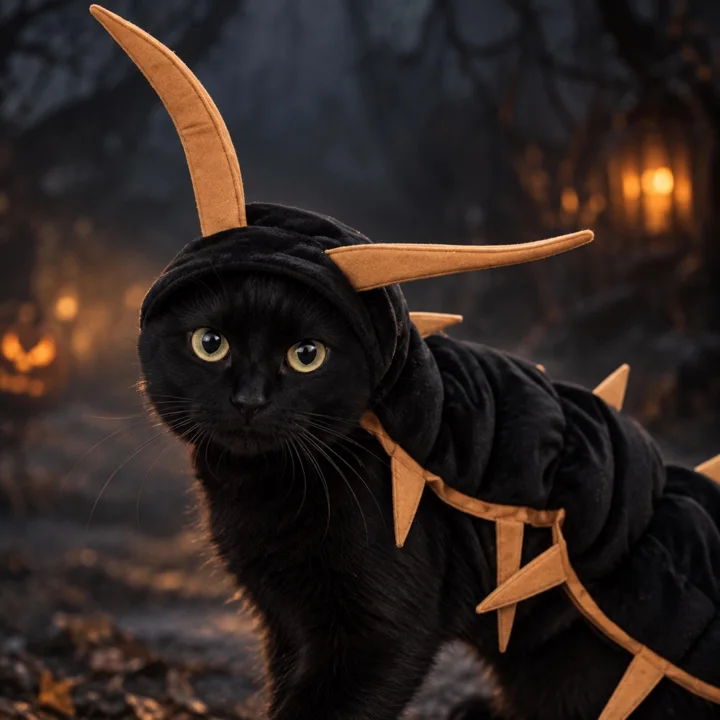
Pay attention to the head and face on hooded designs. The eyes, nose, mouth, and ears should remain unobstructed, and your pet should be able to turn their head normally. A decorative hood is not worth impaired vision or breathing. If the hood shifts, covers an eye, or prompts persistent head shaking, take it off; do not keep adjusting it while your pet struggles.
4. Test ordinary movements before photos
Give your pet room to stand, sit, walk, and turn around while you supervise. Watch for short, stiff steps, a lowered head, repeated stumbling, or a refusal to move. A costume that looks fine while a pet is sitting still may become awkward as soon as they take a step. Keep the first test brief and in a familiar, uncluttered space where you can remove the outfit promptly.
For a dog, check that the costume does not interfere with normal movement or make it difficult to use the bathroom. For a cat, observe whether they can walk and settle without getting caught or becoming distressed. Do not leave either pet unattended in costume. If you cannot supervise closely, or the outfit restricts ordinary movement, remove it rather than hoping your pet will adapt.
5. Consider texture, weight, and sensory load
Notice how the fabric and decorative elements feel against your pet, not just how they appear in a photograph. Plush-style designs, dangling details, trim, or a hood can introduce unfamiliar sensations. Some pets may tolerate a light cape better than a close-fitting outfit; others may dislike any fabric touching their back. There is no single costume style that suits every animal.
Give your pet time to investigate the costume while it is off their body, if they choose to do so. Then try a short fitting and watch their response instead of relying on a label such as “cozy” or “soft.” Descriptions communicate design, not a guarantee that an individual pet will be comfortable. Remove the costume if your pet keeps biting, scratching, shaking, or trying to hide.
6. Keep costume details separate from restraint
Treat a costume as decorative clothing, not as walking equipment. Do not assume a costume’s neckline, cape, or fastening is designed to hold a leash or withstand pulling. If you need to walk your dog, use appropriate walking gear separately and make sure it can be used without trapping, tightening, or snagging the costume. If the layers interfere with each other, skip the outfit for the walk.
Before leaving home, look for loose or dangling parts that your pet could catch or chew. Keep an eye on bows, trim, and decorative accents, and remove the costume if a detail becomes loose. Never assume a clasp is breakaway or that a costume has a particular safety rating unless its description explicitly says so. When in doubt, choose a simpler look and keep your pet under direct supervision.
7. Make the setting part of the comfort check
A costume that seems manageable at home may feel different amid doorbells, bright lights, unfamiliar people, and other animals. Try the outfit in the setting where you plan to take photos, if it is safe and practical, and keep an easy exit available. For a busy event, consider dressing your pet only for a brief portrait before removing the costume and letting them relax.
Use the same caution outdoors. A photo stop or quick visit can be very different from a long outing, and clothing should never distract you from monitoring your pet. Do not rely on a costume to protect against heat, cold, or other environmental hazards. Plan for the weather and your pet’s needs independently, and choose no outfit when conditions or activity make clothing inappropriate.
8. Plan a short trial and a clear stop point
Practice putting the costume on and taking it off before the event. Keep the first session brief, offer calm praise or a familiar reward if appropriate, and end while your pet is still relaxed. A few minutes can tell you more than an extended trial: notice whether your pet settles, moves normally, and remains engaged with their surroundings. Do not prolong the session to get one more picture.
Decide in advance what will make you stop: repeated attempts to remove the outfit, freezing, hiding, distressed vocalizing, or any restriction around the face or movement. Remove the costume immediately if you see a concerning response. For example, a witch-style hood may suit a brief supervised photo for one pet but not another. The costume is optional; your pet’s signals are not.
A thoughtful next step
Before dressing your pet, confirm the sizing information, inspect the openings and face, and test ordinary movement in a familiar place. Keep the trial short, supervise throughout, and remove the outfit at the first sign of discomfort or obstruction. If the costume does not work, preserve the occasion with a nearby seasonal prop or a simple photo. A comfortable pet—and a willing one—matters more than a complete costume.
Explore our Apparel & Costumes collection, check measuring and fit guidance, or ask us about a product detail before choosing.
Pieces mentioned in this guide
These are catalog examples, not a promise of fit or availability. Read each listing and confirm the details before ordering.